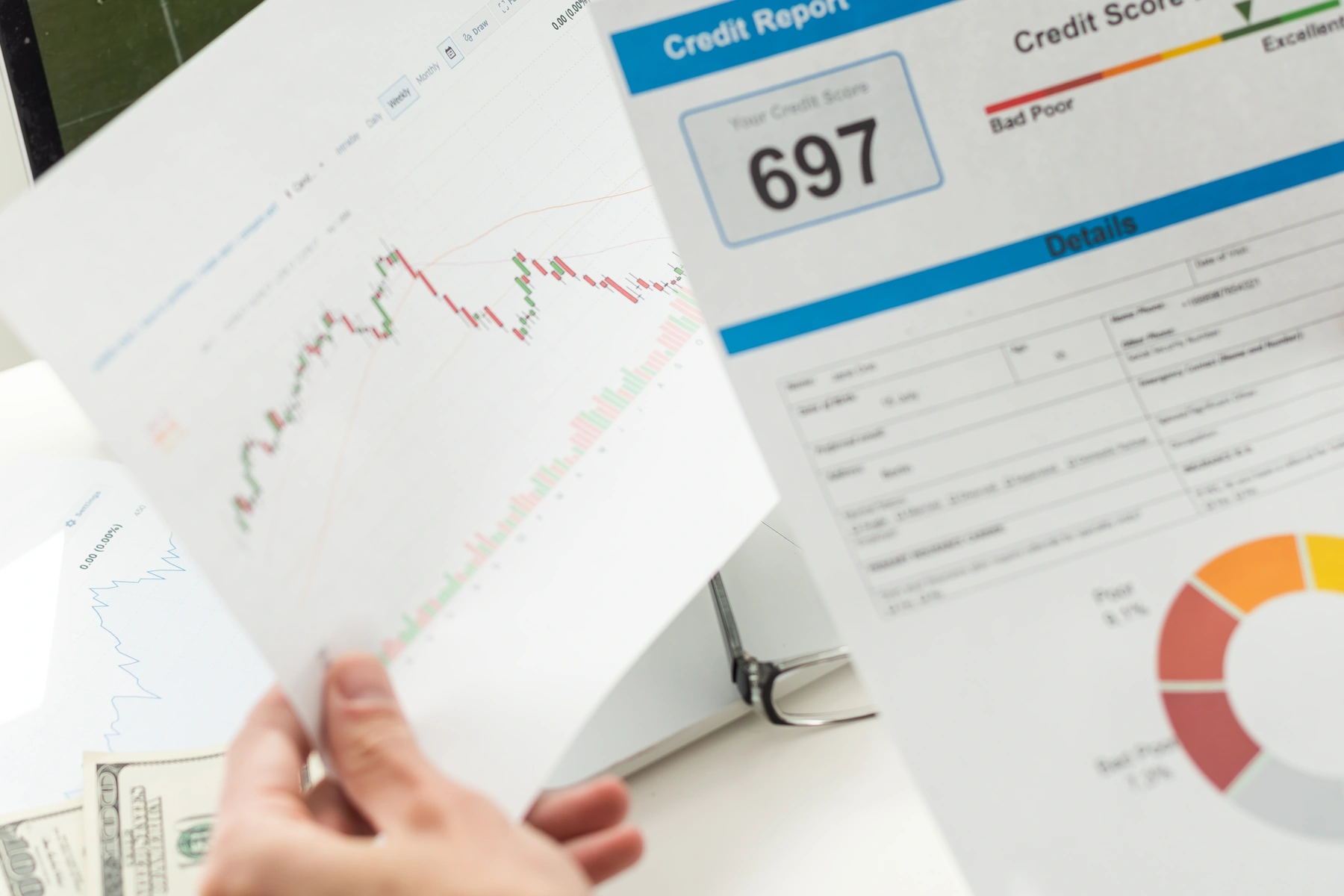

You logged into your credit score app yesterday and it was all good.
Now you log back in, and it’s tanked. A hundred points wiped out overnight, no explanations given, no advance notice.
This is one of the most common, and most painful, experiences in consumer finance. It happens to millions of Americans every year, and the reasons are not always what you suspect.
A 100-point credit score drop is like a crime scene. Something went down. Clues are left behind. And if you know what to look for, you can reconstruct exactly what happened and start building a plan for recovery.
A 100-point drop hurts your pride. But it can also drop you from a “good” credit score to “fair” or even “poor,” shifting the terms of every financial product available to you.
Mortgage rates go up. Auto loan approvals get harder. Landlords will deny you. Insurance premiums will increase quietly. The financial shockwave of a triple-digit drop reverberates through almost every aspect of daily life.
Credit reporting is now the number-one source of consumer complaints to the federal government. In 2024, credit and consumer reporting issues accounted for roughly 85 percent of all complaints filed with the Consumer Financial Protection Bureau (CFPB).
That astonishing volume tells you something the credit industry does not want you to know: the system that controls your financial reputation is far more fragile and error-prone than most people understand.
The Usual Suspects: What Causes a 100-Point Collapse
The Missed Payment That Detonates a Perfect Record
Payment history is the most heavily weighted factor in credit scoring, accounting for 35 percent of a FICO score. A single 30-day late payment reported to the bureaus can inflict severe damage, but the extent of the damage depends almost entirely on where you started.
FICO’s own published simulation data shows a pattern that is deeply unfair. A consumer with a 793 credit score who misses one payment by 30 days will lose between 63 and 83 points. That same missed payment will cost someone starting at 607 just 17 to 37 points. Scale it to a 90-day delinquency, and the 793-score borrower will crash by 113 to 133 points while the lower-score borrower will lose only 27 to 47.
This asymmetry is the credit system’s cruelest design feature. The more carefully you have managed your credit over the years, the harder you will fall from a single mistake. The pristine record that took a decade to build is no shield. In fact, it compounds the penalty.
Collections, Charge-Offs, and the Debt Collector’s Fingerprint
When a creditor abandons its attempts to collect a debt and sells it to a third-party collector, two entries are usually made on your credit report. The original account is charged off, and a new collection account is added from the collector who bought it. A charge-off can lower a good credit score by 100 points or more. A collection account, reported as a separate event, can lower it even more.
These aren’t two aspects of the same occurrence, as far as the scoring model is concerned. They are considered two completely different derogatory items, each dragging your score down by itself.
Debt collectors understand the leverage this lends them. A collection account showing up on your report without proper verification, without the correct date, or for a debt you don’t owe isn’t just an annoyance. It may be a violation of the FDCPA and the FCRA, and it could be the sort of error you can dispute and have removed.
The Utilization Spike Nobody Warned You About
Credit utilization, the amount of your available credit currently in use, accounts for about 30 percent of your FICO credit score. If you usually carry a $500 balance on a $10,000 credit limit, and then charge $8,000 for some unexpected emergency, your utilization jumps from 5 percent to 80 percent.
That one action can lower your credit score by 50 to 100 points or more (depending on the rest of your credit history). Consumers with thin files (fewer than five credit accounts) are penalized more severely, simply because there isn’t as much positive information to cushion the blow. Some 24.8 million Americans have credit files too thin to produce a valid credit score, and millions more are barely above that threshold.
One thing to note about the damage from utilization, a theme we will revisit later, is that it’s the one 100-point drop with no memory in the FICO scoring model, and it can be immediately reversed.
Hidden Culprits: Causes That Blindside Consumers
Credit Report Errors That Create Phantom Damage
Not every 100-point credit score drop happens because of something you’ve actually done.
The landmark FTC study on credit report accuracy found one in five consumers had at least one verified error on one of their credit reports. Five percent of consumers had errors so serious they’d changed the consumer’s credit risk tier entirely, which meant they were paying more for credit (or being denied credit) based on inaccurate information. More recent studies reveal the issue persists.
A 2024 survey by Consumer Reports of more than 4,000 people found 44 percent of respondents who reviewed their reports discovered at least one error and 27 percent found significant errors such as accounts that didn’t belong to them, accounts reported as late, or debts in collection that weren’t theirs.
One of the most damaging report errors is a mixed file. This occurs when a credit reporting agency combines your file with someone who has a similar name, Social Security number, or address. Their late payments, collections, and charge-offs show up on your report as if they are yours.
In 2013, an Oregon woman named Julie Miller contacted Equifax eight times over the course of two years in an attempt to correct a mixed file. Eventually, a jury awarded her $18.6 million for Equifax’s failure to correct the error.
The Great Student Loan Credit Score Train Wreck of 2025
In early 2025, millions of Americans experienced the largest mass 100-point credit score drop in recent U.S. history. After a five-year pause in reporting delinquencies on federal student loans that began during the pandemic, student loan servicers once again started sending data to the credit reporting agencies, with little notice to borrowers.
Data from the Federal Reserve Bank of New York showed that more than 2.2 million borrowers saw their scores decline by more than 100 points and more than 1 million lost more than 150 points. Those whose scores were over 720 experienced an average drop of 177 points. In many cases, borrowers were unaware that payments had resumed on their student loans or thought they still remained in forbearance.
While there are likely millions of stories like this, one example that received widespread media coverage was that of a 39-year-old nurse whose credit score dropped from 720 to 620 because she became delinquent on a student loan she didn’t realize was no longer in forbearance.
According to her mortgage broker, that drop would likely increase her monthly mortgage payment by about $400. Millions of borrowers were penalized, not because of bad behavior, but because they were confused, and the system failed to notify them properly.
Identity Theft and Ghost Accounts
If someone opens new accounts in your name or racks up unauthorized charges on your stolen or compromised credit cards, the resulting delinquencies will show up on your credit report as though you were responsible. Identity theft can cause overnight drops of 100 points or more if multiple unauthorized accounts appear on your report at the same time.
Recovering from identity theft is a painfully slow process.
According to the Identity Theft Resource Center, 48 percent of identity theft victims still had unresolved issues one year after discovering they were victims of identity theft. To undo damage to your credit score caused by identity theft, you’ll have to prove you weren’t the one responsible for the debt. This can involve police reports, identity theft affidavits, and a dispute process for each credit reporting agency.
Pitfall #1: Good Deed Goes Unrewarded: Paying Off a Collections Debt
The Collections Debt Payoff Trap
If you pay off a collections account, FICO 8, the credit scoring model used by 90% of lenders, will not reward you. In fact, it can temporarily penalize you with a 10 to 20-point drop in credit score. The FICO 8 algorithm reads the recent payment as recent negative activity because the payment updated the date of the last activity on the account.
FICO 8 does not differentiate between paid and unpaid collections if the original debt was over $100. Only the FICO 9, FICO 10, or VantageScore 3.0 or 4.0 versions ignore a paid collection, but most lenders have not adopted those models yet.
This collections debt trap is especially important to recognize when trying to correct your credit report because it punishes the consumer for doing the right thing. It rewards the consumer for ignoring the debt. The scoring model is used for tracking debt not resolving it.
Pitfall #2: Misleading Information: Comparing Apples and Oranges With Your Credit Monitoring Score
The Monitoring Credit Score Illusion
90% of free credit monitoring tools use the VantageScore 3.0 model, while 90% of lenders use the FICO score model. FICO and VantageScore 3.0 are not comparable scores. Your FICO and VantageScore 3.0 can differ by 20 to 50 points, or more, on the same day for the same consumer.
In addition to the models not being comparable, the FICO model does not ignore paid collections like the VantageScore 3.0 model does.
Furthermore, the FICO model does not ignore medical debt. Another significant difference between the scoring models is the minimum amount of credit history you need for a score. The FICO model requires a minimum of 6 months of credit history to generate a score, while the Vantage model requires only 1 month of credit history.
This means millions of consumers believe they have good or excellent credit based on their credit monitoring app but find that their actual credit score is different when applying for a mortgage or car loan.
The score difference also matters when trying to identify why your credit score dropped. For example, a 100-point drop in your credit monitoring score may not represent the same drop as your FICO score. Until you have access to your FICO scores through myfico.com or a lender, you do not have all the information.
How to Identify and Recover From the Drop in Your Credit Score
Step #1: Gather All the Facts and Organize Your Evidence
If your credit score dropped dramatically, pull your credit reports from all three credit bureaus at AnnualCreditReport.com. You can access your reports for free weekly. The free credit monitoring tool will provide you with a summary of the information in your credit reports. Do not rely solely on the summary.
Compare your reports line-by-line to identify any accounts you do not recognize, accounts that have the wrong balance, payments marked as late that you know you paid on time, and new collections accounts that you did not know existed. Each of these instances is evidence.
Organize and record all your evidence. The information you should gather is the account number, credit bureau reporting, the date it was reported, and what exactly is inaccurate. You will use this information if you need to file a formal dispute or if the issue escalates to a legal case.
Step #2: The Amount of Time It Takes to Recover Depends on the Reason for the Drop
The strategy for recovering from a credit score drop depends entirely on the reason for the drop. Any drops in your score from credit utilization issues are the quickest to resolve because FICO does not retain any memory of this factor.
Your balances: Your credit score will improve when the credit reporting agency (CRA) processes the balance decrease. Typically, this happens when your credit card issuer sends the new balance to the CRA at the end of the current billing cycle. If your credit score fell by 100 points because of a high credit utilization ratio, you may be able to get those points back within one to two months.
Missed payments: According to FICO, someone whose credit score was in the “high 700s” and missed a single payment could expect to wait about three years for their credit score to recover completely from the late payment.
However, the greatest improvement will occur within the first year (or two) after the late payment. The late payment will remain on your credit report for seven years but will have less of an impact as time passes.
Collection accounts & charge-offs: These accounts will remain on your credit report for seven years, starting from the original missed payment date.
Bankruptcies: A Chapter 13 bankruptcy will stay on your report for seven years, and a Chapter 7 bankruptcy will remain for 10 years. However, you may be able to improve your credit score to over 700 within a year or two after the bankruptcy discharge if you properly use a secured credit card and make on-time payments.
Rebuilding After the Damage
The Path Forward Is Not a Mystery
Losing 100 points off your credit score might feel like the end of the world, but it’s not. It’s not permanent, and it’s not something you have to live with if you don’t want to. The CSI approach works. Figure out what caused the drop. Determine if the information showing on your report is accurate or not. Take specific action based on your findings.
If the reason for the drop was a missed payment or a high credit utilization ratio, then the solution is simple even if it’s painful. Get your payments back on track. Pay down your debt. Wait for your score to improve with responsible behavior moving forward. The FICO scoring model is built to respond to that kind of recovery.
But if the drop happened because of something inaccurate on your report, like an incorrect collection account or a mixed credit file, or if a debt collector put something on your report that it can’t verify, then time isn’t going to fix your problem. Those are the times when federal law says you have the right to insist on a correction, and when the information on your credit report is the start of a formal dispute.
When the Evidence Points to an Error, Fight It
“For decades, Experian and others have conducted terrible and perfunctory so-called investigations when consumers tried to fix errors on their credit reports,” said Chi Chi Wu, director of consumer reporting and data advocacy at the National Consumer Law Center, in a statement. That same criticism can be applied to every credit reporting agency.
FightCollections.com is here for those situations. When you lose points on your credit score because of collection accounts that shouldn’t be there, debt collectors who report information they can’t verify, or accounts that violate your rights under the FCRA or FDCPA, those aren’t the kinds of things you should learn to live with while you wait for time to pass.
Our specialists will review the information on your credit report to identify potential errors, inaccuracies, or misreporting, and help you build a dispute to bring to the bureaus and original creditors. In a world where 45% of people who request their reports find mistakes on them, the real question isn’t if there are errors on your reports. The real question is if you’re willing to do anything about it.
Request your free credit report review now and let us evaluate the evidence. The law is on your side.