
If you have ever missed a credit card payment by even a day, or fallen behind on a car note or medical bill, you have had delinquent debt.
The term sounds ominous, like something out of a courtroom, but in reality it simply means that you owe money and you're late with a payment. That disconnect between the ominous-sounding term and the mundane reality is where a lot of confusion, fear, and bad decision making come in.
To the lending industry, debt is delinquent the moment a payment is past due. Even if you forgot, or didn't have enough money to cover it, or simply never got a bill in the first place.
To the lender, the clock starts ticking the day after a missed payment, and every phase that follows will have increasingly dire consequences to your credit, finances, and your peace of mind.
Why the Term Matters More Than You Think
Delinquent debt is not a static state. It's a sliding scale, from a single missed payment all the way up to an account that's been charged off and sent to a third-party collection agency. Where you are on that sliding scale will determine what shows up on your credit report, what rights you have under federal law, and what your options are.
Understanding the terminology is the first step to regaining control. When a debt collector calls you and starts throwing around words like charge-off, past-due balance, or delinquency status, their goal is usually to create enough confusion and sense of urgency that you react before you actually think about it.
This article will translate every phase of delinquent debt into plain English, so you can make informed decisions instead of panicked ones.
The Delinquency Timeline: Month by Month
Days 1-30: The Lag Most People Don't Notice
The first 30 days after a missed payment is a kind of grace period. The creditor knows that you missed the payment due date, and they may have sent you a reminder or even charged you a late fee, but they haven't yet reported it to the credit bureaus. In fact, most creditors will not report a payment as delinquent until it's been at least 30 days past due.
This 30 days is important, because if you make the payment in that window, it can head off the delinquency before it ever hits your credit report.
Once that 31st day arrives, and the creditor reports it to Equifax, Experian, or TransUnion, the damage is done. According to FICO research, a single 30-day delinquency can shave anywhere from 50-110 points off of your credit score, with borrowers who started with higher credit scores taking the biggest hit.
Days 31-180: The Ratcheting Period
Once the 30-day threshold has been crossed, delinquencies are reported in 30-day increments. Your credit report will show that account as 30 days delinquent, then 60 days, then 90 days, then 120 days, etc. Each of those milestones adds another derogatory mark to your credit report, and is a sign to future lenders that you represent an increasingly higher risk.
During this phase, the original creditor is still the entity that's trying to collect from you. You will probably be getting letters, phone calls, and maybe even emails. The creditor might offer hardship programs, lower interest rates, or alternative payment plans.
However, these deals will get worse the longer you wait, because the creditor is also preparing for the very real possibility that it will never collect the debt.
120 Days Late: Internal Collections and Serious Delinquency
Around the 120-day mark, the creditor's internal collections department will typically take over for standard customer service. The communications may transition from friendly to formal. At this point, the account is considered seriously delinquent, and when a lender pulls your credit report, it will be viewed as a major red flag.
181 Days Late and Later: Charge-Off and the Secondary Market
Once you've missed about 180 days' worth of payments, federal banking regulators will require the original creditor to charge off your debt. This is largely an accounting measure, as the creditor will write the debt off its books as a loss and deduct the amount from its taxable income.
But the important thing to understand is that you still owe the money.
Charge-off does not absolve consumers of their debts. It simply means the original creditor has thrown in the towel and will now either place the account with a third-party debt collector or sell it to a debt buyer for pennies on the dollar. The charge-off and any ensuing collection account can be reported on your credit report at the same time.
Unfortunately, this leads many consumers to believe the same debt is being reported twice.
Where the Debt Goes After Charge-Off
Sold for Pennies on the Dollar
The debt buying business model is simple: purchase defaulted debts for fractions of their face value and then try to collect as close to 100 percent of the balance as possible.
According to a landmark study conducted by the Federal Trade Commission, debt buyers pay an average of just 4 cents per dollar of face value. The going rate these days ranges from roughly 7-15 cents for fresh debts (less than six months old) to less than a penny on the dollar for debts that have already been worked over by a few different agencies. And that creates a bad dynamic.
If a debt buyer pays $400 for a $10,000 debt and manages to collect even 20 or 30 percent of the balance, it will still reap a huge profit. That's why debt collectors are so relentless, why they use such abusive tactics, and why they continue to pursue debts that are years and years old, and/or debts you don't even remember.
The Scope of the Issue
Roughly 77 million Americans, about 35 percent of adults with credit files, have debts in collection, according to a report from the Urban Institute. The average collection debt is $5,178, though the median amount is just $1,349. That means that while some people owe really big bucks, most folks dealing with debt collectors owe smaller sums that simply got out of control.
"For the vast majority of consumers who are dealing with debt collectors, it's not that they won't pay, it's that they can't pay because of things like stagnant wages, job loss, divorce, health problems and other issues that cause people to fall into collections," said April Kuehnhoff, a staff attorney at the National Consumer Law Center. "Debt collectors are contacting consumers more than 1 billion times per year."
When you don't pay a bill on time, your creditor may turn it over to a debt collection agency in an effort to collect the amount you owe.
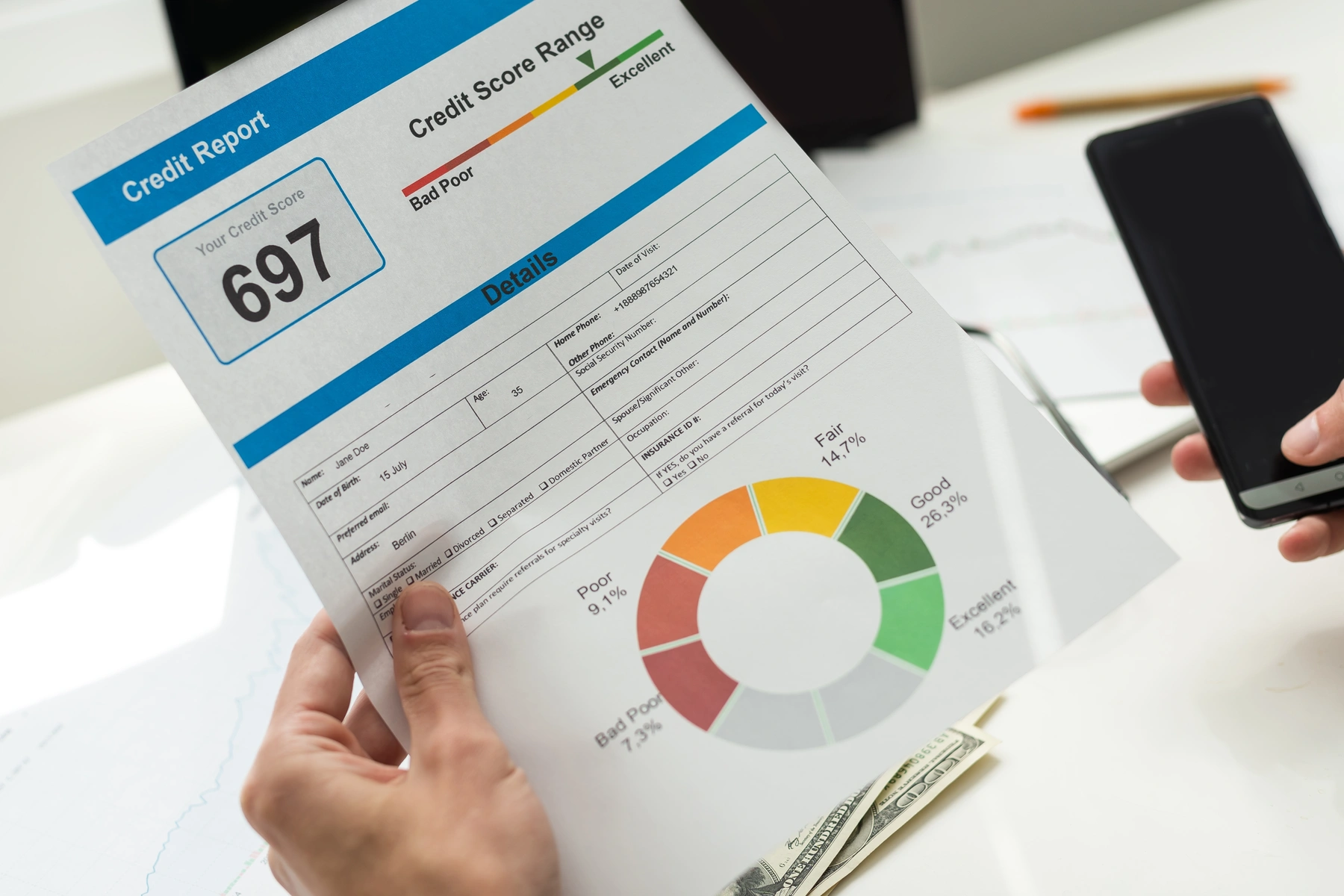
Credit reporting agencies, including the three major credit bureaus, Equifax, Experian and TransUnion, can then list that delinquent debt on your credit report. Your credit report shows a history of your credit behavior, including any accounts that you've fallen behind on. Any outstanding debts you have will be factored into your credit score, which lenders use to determine your creditworthiness.
For instance, if you apply for a car loan or credit card, the lender will probably look at your credit score to decide how likely you are to pay back what you borrow. A poor credit score can also make it harder for you to find a rental property or get a loan from a bank.
There are two major credit scoring models, FICO and VantageScore.
Both scoring models have different versions, and FICO 8 is the most commonly used credit score. Newer versions of FICO and VantageScore include FICO 9, FICO 10, FICO 10T, VantageScore 3.0 and VantageScore 4.0. If you pay a collection account, it may have a different effect on your credit score depending on the credit scoring model that's being used.
For example: Under FICO Score 8, which remains the most widely used scoring model among lenders, paid and unpaid collection accounts are treated identically. That means paying off a collection under this model provides zero benefit to the score itself.
Newer versions of FICO, such as FICO 9 and FICO 10T, ignore paid collection accounts. VantageScore 3.0 and VantageScore 4.0 also ignore paid collections.
The Fair Credit Reporting Act limits how long information can stay on your credit report. Most delinquent debts, including collection accounts and charge-offs, will remain on your credit report for 7 years from the original date that you missed a payment.
However, if the account was sent to a collection agency, 180 days will be added to the original date of delinquency. You cannot legally restart this clock by paying a partial payment to your creditor or making a partial payment to a debt collector. However, some debt collection agencies use a practice called re-aging to illegally extend the time period during which they can report a delinquent debt to the credit reporting agencies.
Re-aging occurs when a debt collector intentionally misstates the original date of delinquency on a collection account. This can cause the credit reporting agency to keep the debt on your credit report for longer than the maximum 7 years and 180 days.
If you see a collection account on your credit report that lists an incorrect date of delinquency, you should dispute the listing with the credit reporting agency.
Debt collection agencies that buy debts from original creditors and attempt to collect the debts often use a variety of methods to convince you to pay. Federal law limits the actions that third-party debt collectors can take to collect a debt. For example:
- A debt collector may not call you before 8 a.m. or after 9 p.m. unless you agree to it.
- A debt collector may not call you more than 7 times within 7 consecutive days for the same debt.
- A debt collector may not threaten to have you arrested.
- A debt collector may not use profanity or obscenity.
- A debt collector may not contact your employer, friends or family about the details of your debt.
Despite these restrictions, many consumers report illegal behavior from debt collectors. In 2024, the Consumer Financial Protection Bureau received 207,800 debt collection complaints, which was nearly double the number of complaints received in the prior year.
The most common complaint received by the Consumer Financial Protection Bureau was attempts to collect debt not owed. 45% of all complaints to the Consumer Financial Protection Bureau involved debt collection agencies that were attempting to collect a debt that the consumer did not owe.
In some cases, these debts are entirely fabricated and are referred to as phantom debts.
The Federal Trade Commission recently took an enforcement action against a phantom debt collection ring. The debt collectors made calls to consumers under fictitious business names, claiming the consumers owed money on payday loans they never took out. They also threatened the consumers with arrest and wage garnishment. The debt collection ring took in over $7.6 million from consumers.
"This phantom debt collection ring used intimidation and lies to extort millions of dollars from consumers," said Christopher Mufarrige, Director of the FTC's Bureau of Consumer Protection. "The FTC will not hesitate to act against collectors who deceive and harass people for debts they do not owe."
For consumers, these cases serve as a reminder of the importance of validating any debt before admitting to it or paying it.
Your Rights Are Stronger Than Collectors Want You to Believe
The Validation Letter Is Your First Line of Defense
Under federal law, a debt collector must send a written validation notice within five days of first contacting you. The notice must include the amount of the debt, the name of the original creditor, and a statement of your right to dispute. If you send a written dispute within 30 days of receiving that notice, the collector must stop all collection activity until they provide verification.
The validation requirement is one of the most powerful tools available to consumers, but it remains underutilized because most people do not know it exists. A collector who cannot verify the debt with documentation from the original creditor has no legal basis to continue pursuing you.
Requesting validation also creates a paper trail that can be critical if the account is being reported inaccurately on your credit report.
Disputing Errors on Your Credit Report
If there is an error with a delinquent account on your credit report, the balance is wrong, the date of first delinquency is wrong, the account does not belong to you, federal law allows you to dispute that error directly with the credit bureaus. The bureau must investigate the dispute within 30 days, and they must correct or remove any information they cannot verify.
In reality, errors on credit reports are more common than you might think. An FTC study found that about one in five consumers had at least one potential material error on at least one of their credit reports, and five percent had errors that were significant enough to cause them to be charged higher interest rates or denied credit entirely.
For accounts in collections, more than 80 percent of disputes claimed the item did not belong to the consumer, highlighting the misattribution that often occurs in the debt buying chain.
Taking the First Step Toward a Cleaner Credit Report
Knowledge Is Leverage
Delinquent debt sounds like a ruling, but it is actually just a status. And statuses can change. The system is designed to feel overwhelming, and collectors make money off the confusion technical jargon inspires. When you know what delinquent debt really means, how the timeline really works, and what rights are yours under federal law, you can begin to tip the scales in your favor.
Every collection account on your credit report should be verified for accuracy, including the balance, the date of first delinquency, and whether the debt actually belongs to you in the first place. An error in any one of these areas could provide grounds for a dispute that may result in removal of the item from your report.
Let FightCollections.com Work on Your Behalf
Going it alone in the dispute process can be time consuming, confusing, and emotionally draining.
At FightCollections.com, we specialize in identifying inaccurate, unverifiable, and illegally reported items on consumer credit reports, and fighting to have them removed. Our team knows the games collection agencies play and the federal laws they are required to follow.
If you have delinquent accounts, charge-offs, or collections on your credit report, request a free consultation with FightCollections.com today.
You do not have to take a collector's claims at face value. And you do not have to face the process alone.