
The idea of buying a car as a way to improve your credit score is a popular one.
If you have poor or no credit, a car loan can seem like a fresh start. If you make the payments, your credit score will improve, right?
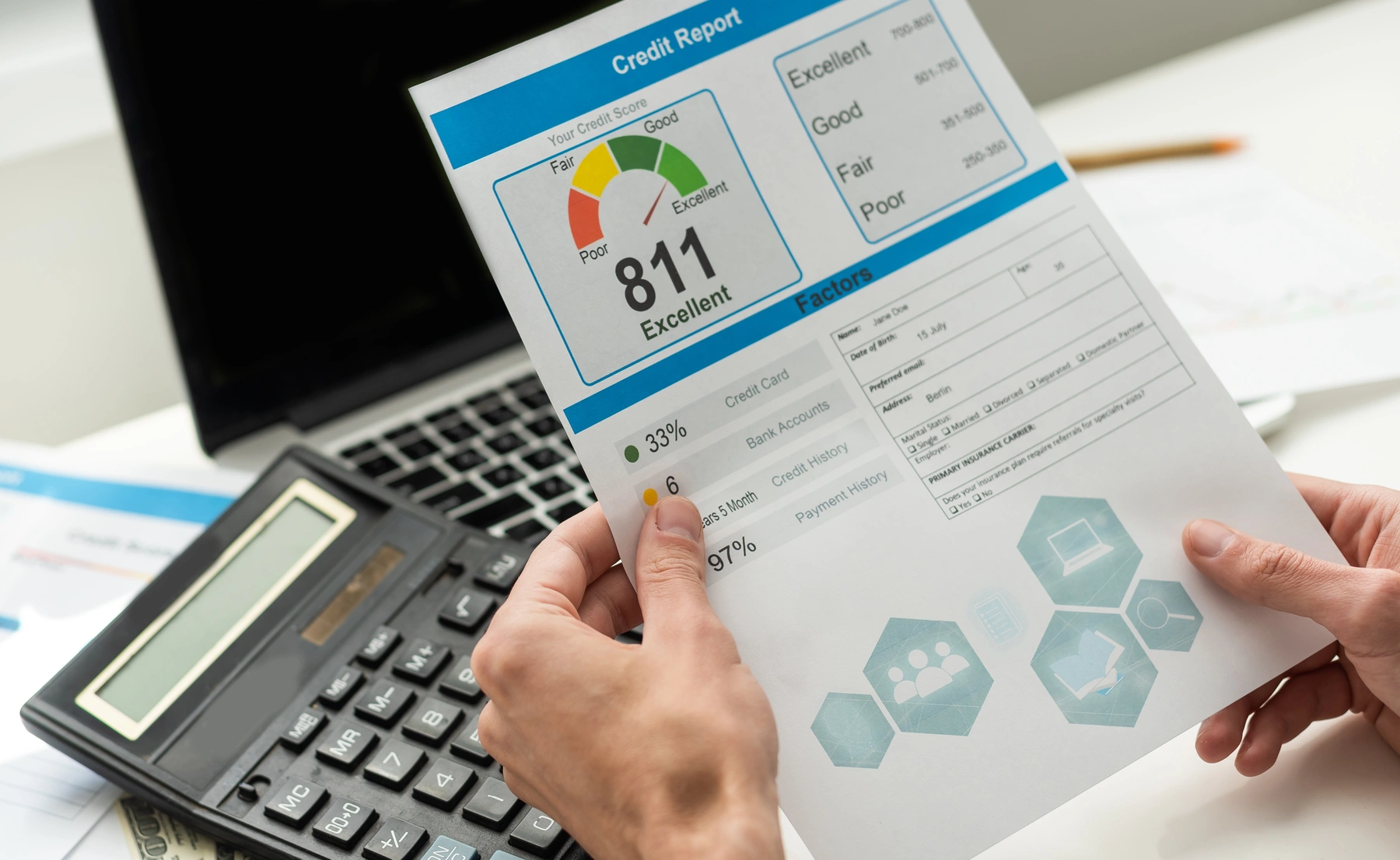
The answer is mostly yes, but with some important caveats. When you apply for a car loan and make the payments as agreed, you are essentially positively influencing 45 percent of the FICO credit scoring model, with 35 percent coming from the payment history category and 10 percent from the credit mix category.
However, if you fail to make the payments on time, the auto loan can negatively impact those same two areas. For that reason, it’s crucial to carefully review the terms of the loan, and your own financial situation, before signing on the dotted line.
Why Should I Care?
As of the fourth quarter of 2025, there was $1.67 trillion in outstanding auto loan debt in the U.S., according to data from the Federal Reserve Bank of New York, making it the second-largest consumer debt segment, behind only mortgages. Further, there were about 100 million active auto finance accounts in the U.S., as of Q2 2025, according to credit reporting agency Experian.
If you are thinking of financing a car as a way to improve your credit, it’s helpful to understand the impact a car loan can have on your credit score.
Here’s how it works, and why the outcome is not always a slam dunk.
How Do Car Loans Affect Your Credit Score?
The credit scoring model created by FICO weighs five main categories of information when calculating credit scores:
- Payment history (35 percent)
- Credit utilization (30 percent)
- Length of credit history (15 percent)
- Credit mix (10 percent)
- New credit (10 percent)
If you are taking on a car loan, you are using an installment loan, which can help your credit mix, because it shows that you can handle different types of credit, such as a revolving account, like a credit card, and an installment loan, like a car loan. The payments you make are used to calculate your payment history, and the car loan becomes a part of your credit history. With on-time payments, all these factors can improve your credit score.
Here’s how long it typically takes for a car loan to affect your credit score:
- Within three to six months: Most borrowers will see an improvement in their credit score within a few months of making regular on-time payments.
- Within six to 12 months: You may see more significant credit score improvement within a year of on-time payments, especially if you started out with no credit or poor credit.
- Within one to two years or more: After a year or two of consistent on-time payments, you may see the most significant credit score improvement.
- The life of the loan: Generally, car loans run three to six years. For the term of the loan, you will need to continue making payments on time to see credit score improvement.
Keep in mind that this is a general outline, and everyone’s situation is different. Credit score improvement varies based on individual factors, including your credit history, how much debt you have, and how many credit accounts you have open.
How Much Will a Car Loan Improve My Credit Score?
There’s no way to predict exactly how many points your credit score will increase as a result of a car loan. Anyone who tells you otherwise is being dishonest. That’s because your credit score is based on a number of factors, including information from various credit accounts, and is calculated based on a complex algorithm that is not publicly known.
Additionally, everyone’s credit history and financial situation is different, making individual outcomes impossible to predict.
What to Be Aware of When Financing a Car to Improve Your Credit
While a car loan can improve your credit, there are some important things to be aware of, especially if you are taking out the loan for the express purpose of rebuilding your credit.
- High interest rates: If you have no credit or poor credit, you may be offered a high interest rate on your car loan. This increases your monthly payments and the total amount you pay over the life of the loan.
- Fees: Some car loans, particularly subprime car loans, come with extra fees, such as an origination fee, which is a fee you pay for the loan.
- Long loan term: A longer loan term lowers your monthly payments, but it also means you pay more in interest over the life of the loan.
- Negative equity: If you trade in your car, you might still owe more on it than it’s worth. This is known as negative equity, or being “upside-down,” and it can decrease the amount you have to put toward a down payment on a new car. For example, let’s say you owe $18,000 on your car, but it is worth only $15,000. When you trade it in, you will still owe $3,000, which will be rolled into your new loan.
- Missed payments: Missed payments can hurt your credit score, so make sure you budget for your car loan payments. If you do miss a payment, or you are late, it can negatively affect your credit score.
Common Misconceptions
There are some common misconceptions about how car loans affect credit scores. Here are a few to be aware of:
- I will definitely improve my credit score if I take out a car loan. As long as you make your car loan payments on time, you will improve your credit score. While making on-time payments can improve your credit score, it’s not a given. Whether a car loan will actually improve your credit score depends on a number of factors, including how much debt you have, how many credit accounts you have open, and your credit history.
- I should focus only on my payment history. While your payment history is an important factor in determining your credit score, it is only one aspect of your overall credit picture. When evaluating credit decisions, including a car loan, consider all the factors that affect your credit score, including credit utilization, length of credit history, credit mix and new credit inquiries.
- Taking out a car loan will always improve my credit utilization ratio. Your credit utilization ratio is the amount of credit you use compared with the amount of credit you have available. It’s an important factor in determining your credit score. Taking out a car loan is likely to improve your credit mix because it adds diversity to the types of credit you have in your credit profile. However, whether a car loan will improve your credit utilization ratio depends on your individual circumstances, including how much you borrow and whether you pile on too much other debt.
The Bottom Line
Whether a car loan improves your credit score depends on a variety of factors, including your individual financial situation and credit history.
Generally, as long as you make timely payments, a car loan can improve your credit score. However, you need to carefully consider the terms of the loan to make sure it fits your budget and financial situation.
One nuance that might surprise borrowers is that applying for an auto loan results in a hard inquiry. Each hard inquiry generally drops your score by less than five points and stops affecting your credit within a few months.
If you rate-shop and apply for multiple loans, FICO will treat all auto-loan inquiries within a 14-day window as a single inquiry, so do your comparison shopping within a short time frame rather than drawing it out over several weeks.
The Dark Side of Auto Financing
Subprime Delinquencies Hit an All-Time Record
Here’s where the credit-building narrative falls apart. While auto loans can build credit if properly managed, the truth is that more and more borrowers are falling behind on their payments, and the effect on their credit scores is disastrous. Fitch Ratings found that 60-day-plus delinquencies on subprime auto asset-backed securities hit 6.65 percent in October 2025, the highest level since Fitch started tracking that data back in 1994.
That’s not a typo. Subprime auto delinquencies are now worse than they were during the Great Recession. The pain isn’t just limited to subprime borrowers, either. The New York Federal Reserve determined that 5.0 percent of all outstanding auto debt was at least 90 days delinquent in the third quarter of 2025, nearing the all-time peak of 5.3 percent that was reached during the height of the 2008 financial crisis.
What does a missed payment actually do to your credit?
FICO’s own research shows a stark imbalance. A single 30-day late payment can ding a borrower with a 793 credit score by anywhere from 63 to 83 points. A 90-day delinquency can cost that same borrower between 113 to 133 points. Building credit takes time. Destroying it takes just one missed payment.
The Negative Equity Trap
There’s one more risk that almost never gets mentioned in the credit-building discussion, and it’s one of the most ominous trends in auto lending today.
A record 28.1 percent of trade-ins carried negative equity in the third quarter of 2025, according to Edmunds, meaning that more than one in four car buyers owed more on their vehicle than it was actually worth. The average amount owed on these underwater loans hit an all-time record of $6,905.
Among buyers who rolled that negative equity into a new loan, monthly payments averaged $915, well above the industry average. When borrowers can’t keep up with those inflated payments, delinquencies inevitably follow, and credit scores in turn get crushed.
Ivan Drury of Edmunds put it best when he said that consumers being underwater on their car loans is not new, but the stakes are higher than ever in today’s financial landscape. The key driver is longer loan terms. Borrowers with 84-month loans carried a median negative equity of $8,485, while those with 36-month loans actually had positive equity of $7,783.
The takeaway is simple: The longer your loan term, the more likely an auto loan is to trap you rather than help you build credit.
The Promise vs. the Reality
If you have bad credit, you’ve seen the ads. No credit check. We finance anyone. Rebuild your credit today. Buy-here-pay-here (BHPH) dealerships heavily target people who feel they have no other financing options, and nearly every dealer promises credit-building as a benefit.
The reality isn’t nearly so rosy. The Consumer Financial Protection Bureau (CFPB) explicitly states, “Buy-here-pay-here dealers may promise you that you can rebuild your credit. But the dealer may report only the negative information, such as late payments, and not the positive information, such as on-time payments.”
In fact, multiple sources, including Experian, Credit Karma, and Capital One, tell us that most BHPH dealers do not report positive payment history to the credit bureaus, and many BHPH dealers don’t report anything at all.
That means you could make every payment on time for three years and have nothing to show for it on your credit report. But miss one payment, and there’s a good chance that delinquency will be reported, harming the credit you’re trying to build.
What Regulators Have Found
The terms of BHPH financing exacerbate the credit-reporting issue. Average interest rates are around 20%, and some dealers charge as much as 30%. More than one in three BHPH borrowers defaulted in 2019, according to industry data from the National Independent Automobile Dealers Association. And 45% of BHPH dealers use GPS tracking or starter-interrupt devices in the vehicles they sell, making repossession quick and sometimes embarrassing.
In 2014, the CFPB took action against CarHop, one of the largest BHPH chains in the country. CarHop promised customers that making payments would help them build credit. Instead, the company inaccurately reported credit information on more than 84,000 accounts, including voluntarily returned vehicles as repossessed. The CFPB penalized CarHop $6.465 million.
Then-CFPB Director Richard Cordray said it clearly: “Many consumers turned to CarHop because they needed transportation and wanted to build up a good record of paying their bills, but CarHop thwarted those expectations by inaccurately furnishing negative credit information. If a lender is not accurately reporting your positive payment history, your auto loan is not building your credit. It is just building their profits.”
How to Maximize Credit-Building When Financing a Car
Choose the Right Lender
The most important credit-building decision you can make is to work with a lender that reports your payment history to all three major credit bureaus: Equifax, Experian, and TransUnion.
Banks and credit unions consistently report to all three bureaus, making them the most reliable credit-building option. Credit unions have nearly 24% of the auto finance market share and report the lowest delinquency rates, with only 0.93% of borrowers delinquent on their auto loans.
Captive lenders, which are financing companies owned by car manufacturers (e.g., Toyota Financial Services, Ford Credit), also report to all three bureaus and may offer promotional rates. However, those promotional rates usually require a credit score of 670 or better, which puts them out of reach for many borrowers rebuilding credit.
If your credit scores are lower, consider a credit union’s second-chance auto loan program, which is specifically for members with FICO scores below 640 or for those with thin credit files. These programs include reporting to all three credit bureaus, along with financial education and, in some cases, interest-rate discounts as your credit improves.
Protect Yourself During the Process
Before you sign anything, get pre-approved through your own bank or credit union. Walking into a dealership with pre-approval in hand gives you negotiating power and a rate to compare against whatever financing the dealer offers. If you’re trying to build credit, it’s important to work with a lender that reports to all three credit bureaus.
Some lenders may only report to one or two of the major credit bureaus, which means you won’t get the full credit-building benefit of your loan. Dealerships often increase the interest rate you pay on a third-party loan as a way of making a little extra money on the deal.
In 2013, the Consumer Financial Protection Bureau reached a $98 million settlement with Ally Financial to resolve allegations of discriminatory pricing in auto loans.
Keep Your Loan Term as Short as Possible
The shorter your loan term, the better. There’s no wiggle room on this one. The numbers are clear. Consumers with shorter loan terms are less likely to be upside-down on their loan, and they pay less in interest over the life of the loan. A 48- or 60-month loan is safer than the 72- or 84-month loans that are popular today.
Be Mindful of Add-Ons Financed into Your Loan
Dealerships love to pack all sorts of goodies into your auto loan to get you to sign on the dotted line. Extended warranties, paint protection plans, anti-theft etching, and GAP coverage all add thousands of dollars to your loan that don’t help you build credit. Inflated loan balances mean a higher debt-to-income ratio and a higher likelihood of ending up upside-down on your loan.
Monitor Your Credit Reports
Once your loan is underway, make sure you monitor your credit reports to ensure the lender is making timely payments. You’re entitled to one free credit report from each of the three major credit reporting agencies every year, which you can access through AnnualCreditReport.com.
If you’re not seeing your loan payments on your credit report, dispute the information in writing with your lender and request that they start reporting. If the lender refuses, that’s a big red flag about the company you’re working with. It’s also important to ensure the information they are reporting is accurate. You might be surprised how often errors occur in auto loan reporting.
The CFPB found in its October 2024 Supervisory Highlights that some auto lenders continued to furnish inaccurate information to the credit bureaus for more than a year after the error was discovered. A negative mark on your credit report due to an auto loan mistake can haunt you for seven years if you don’t catch it and dispute it.
Conclusion
The Bottom Line
There’s no question that financing a car can help you build credit. A history of on-time payments, the diversity of an installment loan in your credit mix, and several years of positive reporting all leave the kind of record that credit scoring models like to see. For consumers with a thin file or a damaged credit history, a well-managed auto loan can be a useful way to get on better financial footing.
But for credit building to work, you need a lender that reports to all three bureaus. You need a monthly payment you can actually afford without maxing out your budget. You need a loan term that’s short enough to keep you out of the negative equity trap. And you need to ensure the payments are showing up on your credit reports.
If you don’t have those things, you’re not building credit by financing a car. You’re building debt. And debt that goes wrong can quickly become a collection account, a repossession that appears on your credit report, or a deficiency balance that a debt collector will dog you over for years.
What to Do if Your Auto Loan Is Already Hurting Your Credit
If you’re already dealing with bad information on your credit report from an auto loan, or if a collection agency is calling you about a deficiency balance following a repossession, don’t try to handle it on your own. Collection agencies rely on consumers not knowing their rights, and they frequently report information that’s inaccurate, incomplete, or not provable.
At FightCollections.com, we know how to identify and dispute the kinds of errors that can appear on your credit report, from inaccurate auto loan account information to improper repossession notations to deficiency balances that a collection agency is not properly able to validate. Every consumer deserves an accurate credit report under federal law, and we’re here to ensure they get it.
Reach out to us today for a free consultation. You deserve a credit report that tells the truth, not reflects the mistakes of a lender or the strong-arm tactics of a debt collector.