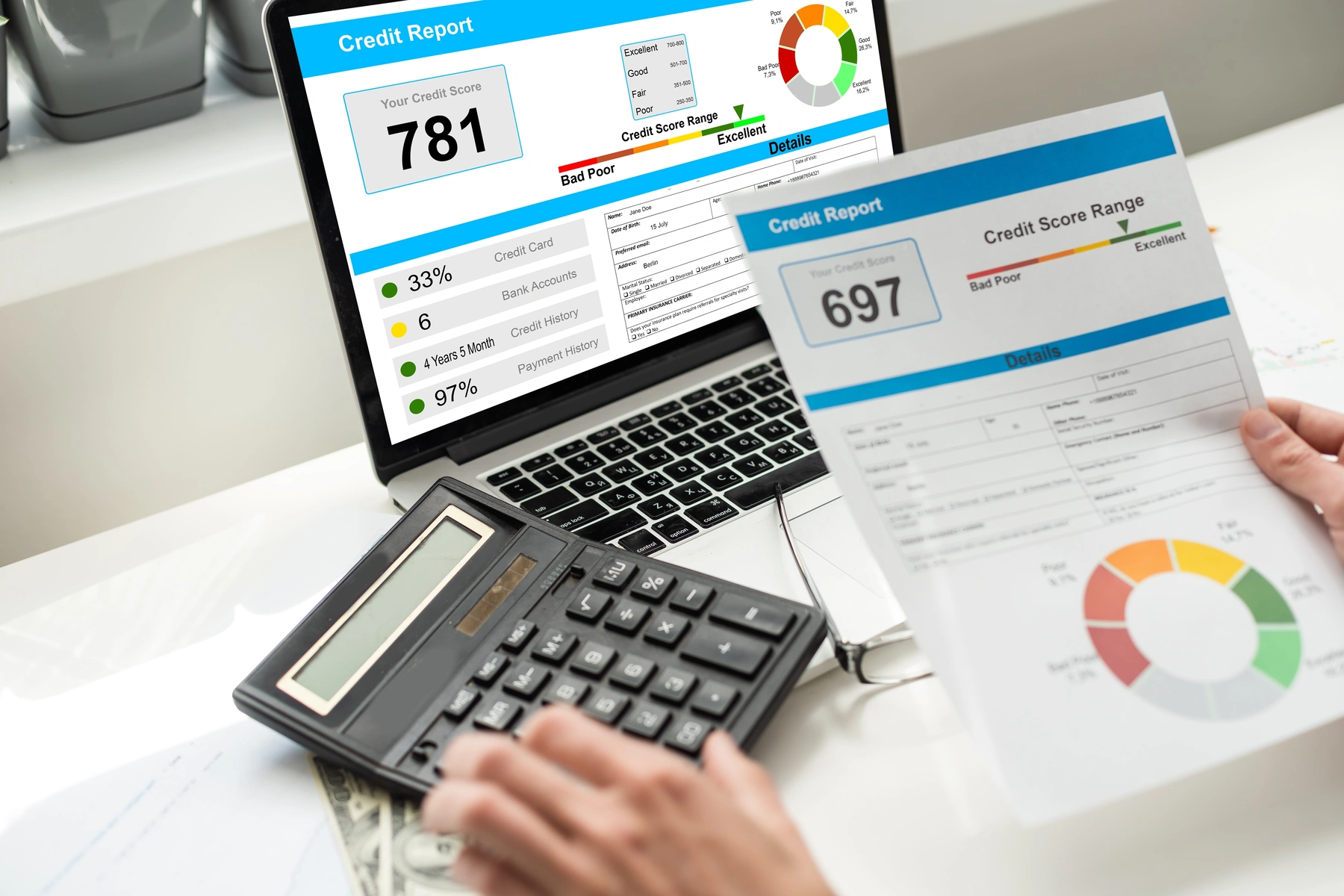
Imagine paying your bills on time every month for years, yet getting zero credit for it when you apply for a loan or credit card.
You avoid late fees, stay connected to the grid, and keep your lights and internet on. But as far as the credit scoring system is concerned, you might as well have never paid those bills at all.
Welcome to the wild world of utility credit. Every month, tens of millions of Americans pay their electric, gas, water, and phone bills. But the credit reporting system doesn’t recognize those payments, even though a single missed payment can wreak havoc on your credit report.
According to the Consumer Financial Protection Bureau, most utility companies don’t report your payments to Equifax, Experian, or TransUnion. If you pay your electric bill on time for a decade, your credit report won’t reflect that. But if you let a single utility account go to collections, your credit score could take a huge hit.
Why does this matter?
For starters, one 30-day late payment can lower your credit score by 60 to 110 points, depending on your starting score. If you’re trying to qualify for a mortgage and your credit score is 680, that could be the difference between approval and denial.
And here’s the kicker: Utility bills represent one of the most reliable forms of credit behavior out there. Almost every American pays their utility bills, and most of them pay on time.
So what’s the problem?
The credit reporting system, and the fact that it only accounts for the negative. Only 2.4 percent of credit reports contain information about utility payments, while only 5 percent contain telecom information. But over 60 percent of Americans pay utility bills, while more than 90 percent have cell phones.
So why isn’t anyone getting credit for their on-time utility payments? Major utility companies like Pacific Gas and Electric, Duke Energy, AT&T, Verizon, and Comcast don’t report your payments to the credit bureaus. But once an account is 60 days delinquent, they either report it themselves or sell the debt to a collection agency that will.
Rod Griffin, Senior Director of Consumer Education and Advocacy at Experian, has acknowledged this imbalance directly. He has stated that negative information could appear and hurt consumers, but positive information was never added to help them. That’s a pretty accurate summary of the whole debacle.
The Dark Secret of Final Bills and Small Balances
One of the most common ways utility bills end up damaging credit reports is through “final bills” that never reach consumers. Many utility customers inadvertently rack up credit damage when they move to a new address and fail to receive (and pay) their final bills. And because the bills are typically small, consumers may not even notice they never paid them.
And it’s not just final bills. Small balances on closed accounts can also wreak havoc if you’re not careful. When you close an account, check your credit report to make sure the balance is zero. Otherwise, you could be on the hook for an unexpected bill, and an unexpected hit to your credit score.
The Verdict: Utility Bills Are Bad News for Your Credit Report
The moral of the story? Paying your utility bills on time may help keep the lights on and the wolves from your door, but it won’t do much for your credit report. And if you let an account go delinquent, even inadvertently, you could pay the price for years to come. Just ask anyone who’s ever been forced to negotiate with a collection agency over a past-due utility bill they never even received.
After a customer moves, they receive one final bill at their old address. If that bill fails to be forwarded to the customer, or if it is lost, then a $40-$80 account will quietly be sent to collections. We see this pattern in consumer complaints to the CFPB.
After moving, a consumer will discover months later that a small outstanding balance on their final utility bill has been sent to a third-party debt collector, which has subsequently reported that account to all three credit bureaus. But by the time the consumer becomes aware of the account, it has already negatively affected their credit score.
This is a scenario in which it is especially important for consumers to know their rights.
The Fair Debt Collection Practices Act requires collection agencies to provide written validation of a debt to the consumer they are attempting to collect from. If a collections account appears on your credit report from a utility bill you believe was paid, or that you never received notice of, then you have the right to dispute the item.
The 32 Million Americans Locked Out of the Credit System
Credit Invisibility by the Numbers
The failure to report utility payments does not just harm consumers who are trying to boost their scores. It also helps keep millions of Americans outside the credit system altogether.
A revised 2025 CFPB analysis found that approximately 7 million U.S. adults have no credit file at any of the three bureaus, and an additional 25.3 million have files that are so thin that they cannot generate a credit score. That is roughly 32 million Americans who are locked out of mainstream credit.
The demographics are telling. Approximately 15 percent of Black and Hispanic consumers are credit invisible, compared to 9 percent of White consumers. Nearly 30 percent of consumers in low-income neighborhoods have no credit file at all. Over 80 percent of adults aged 18-19 are either credit invisible or have unscorable records.
For all of these consumers, utility bills are among the very few financial obligations that they can point to. They pay rent. They pay electric. They pay their phone bill. But none of that activity counts toward building a credit history under the current system.
Why This Disproportionately Affects Renters
White Americans have a homeownership rate of 72 percent compared to a 43 percent homeownership rate among Black Americans. That means that Black households are much more likely to be renters whose largest monthly expense, rent, traditionally does not build credit. The same is true for utility payments made by renters.
The Joint Economic Committee of the U.S. Senate found that in 2021 46 percent of Black Americans and 37 percent of Hispanic Americans reported being denied credit or receiving less credit than they applied for. When financial behaviors that demonstrate creditworthiness are excluded from the system, those disparities will only worsen.
Former CFPB Director Richard Cordray has pointed out that alternative data from unconventional sources can help consumers who are locked outside of the system to build credit and gain access to mainstream credit. Utility payment data is perhaps the most obvious example of that alternative data, and yet decades of industry inertia has kept it on the sidelines.
Tools for Getting Utility Bills to Count Toward Your Credit Score
Experian Boost by the Numbers
Experian Boost, which debuted in 2019, is the most popular tool for reporting utility and phone payments to a credit report. You link it to your bank account, and it identifies qualifying on-time payments to report to your Experian credit report. The service is free, reports only on-time payments and can be discontinued at any time.
According to Experian, 8.6 million consumers have used Boost, which has added more than 50 million points to their FICO scores and made more than $1.7 billion in additional credit available to users. Users who saw a score improvement experienced an average increase of 13 points.
For users with scores below 580, the improvement was more substantial: 87 percent saw an average 22-point increase. Consumers with thin files saw the greatest benefit: 85 percent saw an average score increase of 19 points, and 41 percent of thin-file users lost that designation. Nearly half of previously unscorable consumers became scorable for the first time.
What Consumers Need to Know About the Limitations
Experian Boost’s numbers are encouraging, but the tool has some significant limitations that consumers should keep in mind. The first is its scope: Experian Boost affects only your Experian credit report. If a lender pulls your TransUnion or Equifax credit report, they won’t see the difference. If a lender pulls two or three of your reports, you won’t get the full benefit.
The second is which credit scores incorporate the information. Most mortgage lenders use FICO Scores 2, 4 and 5, not the FICO 8 that Experian Boost primarily impacts. In fact, some in the mortgage industry say Experian Boost can even cause confusion in the underwriting process by having utility payments incorrectly factored into debt-to-income ratios.
That bears out in reports from myFICO forum users. Some say they’ve experienced overnight increases of 40 to 54 points, while others, particularly those who already have established credit profiles, saw increases of zero to five points. “I just got a 5-point boost, and quite frankly it’s not worth giving Experian access to my banking information,” said one user with a score above 800.
Other Ways to Report Your Utility Payments
If you want to cast a wider net, there are options, but you’ll have to pay for them. For example:
- eCredable Lift costs $9.95 per month and reports utility payments as a tradeline directly to TransUnion. (Like Experian Boost, it’s free to sign up.) Unlike Boost, though, it reports both positive and negative information, so missed payments will show up on your TransUnion report.
- Self Financial charges $6.95 per month to report utility payments to TransUnion.
- If you’re trying to report rent payments, you have a couple of choices: Boom reports to all three bureaus for $3 per month, while Rental Kharma reports to TransUnion and Equifax for a $75 setup fee, then $8.95 per month.
TransUnion research found that when consumers’ rent payments were added to their reports, they experienced average score increases of nearly 60 points. Each tool approaches the reporting problem from a slightly different angle, but none of them truly solves the problem. And that’s despite the fact that consumers have to opt in, often pay a fee and can only report data to one or two of the bureaus.
A Huge Milestone in the Mortgage Lender Use of Credit Scores
VantageScore 4.0 Now Available in the Mortgage Market
July 8, 2025: The Federal Housing Finance Agency (FHFA) has approved VantageScore 4.0 for use in the conforming mortgage market effective immediately. This means that mortgage lenders who sell loans to Fannie Mae and Freddie Mac may use VantageScore 4.0 on a loan-by-loan basis in conjunction with the legacy FICO model.
This development is relevant to utility payments because VantageScore 4.0 is the first tri-bureau credit scoring model that is specifically designed to use alternative credit data including utility and telecom payments if they are available in the credit file.
VantageScore 4.0 can create a credit score with one month of credit history and claims that it can score 33 million more people than legacy models. VantageScore reports that it has seen a 74 percent year-over-year increase in mortgage score usage in the first half of 2025.
This indicates that mortgage lenders are actively using the model. Equifax is pricing VantageScore 4.0 at more than 50 percent less than FICO’s 2026 rates. This creates strong economic incentives for lenders to adopt the model.
What This Could Mean for Consumers
If VantageScore 4.0 achieves significant market share in the mortgage market, it may create a virtuous cycle for consumers who report utility payments. The more lenders who use the model, the more likely consumers and third-party services are to try to make sure that utility payments reach the credit bureaus.
This in turn could help address the long-standing reporting asymmetry that has penalized consumers. FICO 10T, which evaluates 24 months of trended credit data, is expected to be introduced into the conforming mortgage market by mid-to-late 2026.
While FICO 10T does not explicitly incorporate alternative data, its focus on the trends in on-time payments over time may still benefit people who display strong payment behavior across all account types.
Please note that none of this will necessarily result in specific score increases for any individual consumer. Credit scores are complex, and the results will depend on your unique credit profile. But it’s clear that the trend is toward incorporating more of the payment information that was previously being ignored.
Why You Should Focus on Disputing Errors Instead of Improving Your Credit Score
The Danger of Utility Collections
Utility collections are among the most error-prone items on credit reports.
Disputes over final bills, billing errors after service transfers and debts assigned to the wrong consumer are just a few of the common problems. Thousands of complaints have been lodged with the Consumer Financial Protection Bureau (CFPB) about utility-related collections appearing on credit reports without adequate notice or verification.
No amount of positive data can offset the damage from an inaccurate collection. A single erroneous utility collection can drop your credit score by 100 points or more, eliminating the benefits of reporting on-time payments. You have the right under the FCRA to challenge any credit report entry that you think is inaccurate, incomplete, or unverifiable.
The credit reporting agency has 30 days to verify the entry and must delete or correct it if it is unverifiable.
This is one of the most powerful rights you have as a consumer, and you don’t have to pay a dime to use it.
Take Charge of Your Credit Report
Before you spend any time or money on a utility reporting service, the best thing you can do as a consumer is to check your credit reports for mistakes.
Get your reports from each of the three bureaus at AnnualCreditReport.com and then review them carefully for utility-related collections you don’t recognize, balances you know you paid, and accounts that don’t belong to you at all. If you find incorrect utility collections on your credit report, disputing them can deliver bigger results than any opt-in reporting tool.
Deleting a single incorrect collections account can boost your score by more than the 13-point average Experian Boost customers have seen. The credit reporting system wasn’t designed with your needs in mind. It was designed for lenders and data brokers.
Learning how the system works, including its failures, is the first step toward using it to your advantage instead of your detriment.
A Missed Opportunity Becomes a Strategy
Where We Are Now
The answer to the question “Does paying utilities improve your credit score?” is evolving from a simple “No” to a more nuanced “Maybe.”
Millions of consumers have already used opt-in tools like Experian Boost to add positive utility information to your credit reports, and the recent approval of VantageScore 4.0 for mortgage lending is a sign that the industry is inching toward adopting these payments. But the system remains imperfect, incomplete, and stacked against consumers.
The best credit improvement strategy isn’t to chase a few extra points through utility reporting. The best strategy is to make sure your credit report is an accurate reflection of your credit history by identifying and disputing any incorrect information on it, particularly collections accounts related to utility debts you don’t owe or weren’t properly notified about.
How FightCollections.com Can Help
If you have utility collections on your credit report that you believe are incorrect, unverified, or the result of deceptive debt collection practices, FightCollections.com can help. Our team specializes in disputing incorrect credit report information and bringing collection agencies to justice when they violate the Fair Debt Collection Practices Act (FDCPA) or the FCRA.
You shouldn’t have to live with a damaged credit score because of a $50 utility final bill you never got or a collections account that was reported to the credit bureaus without proper verification.
Check out FightCollections.com to learn more about your credit rights and our credit dispute process. The credit reporting system may not have been designed with you in mind, but that doesn’t mean you have to accept the damage it inflicts.