
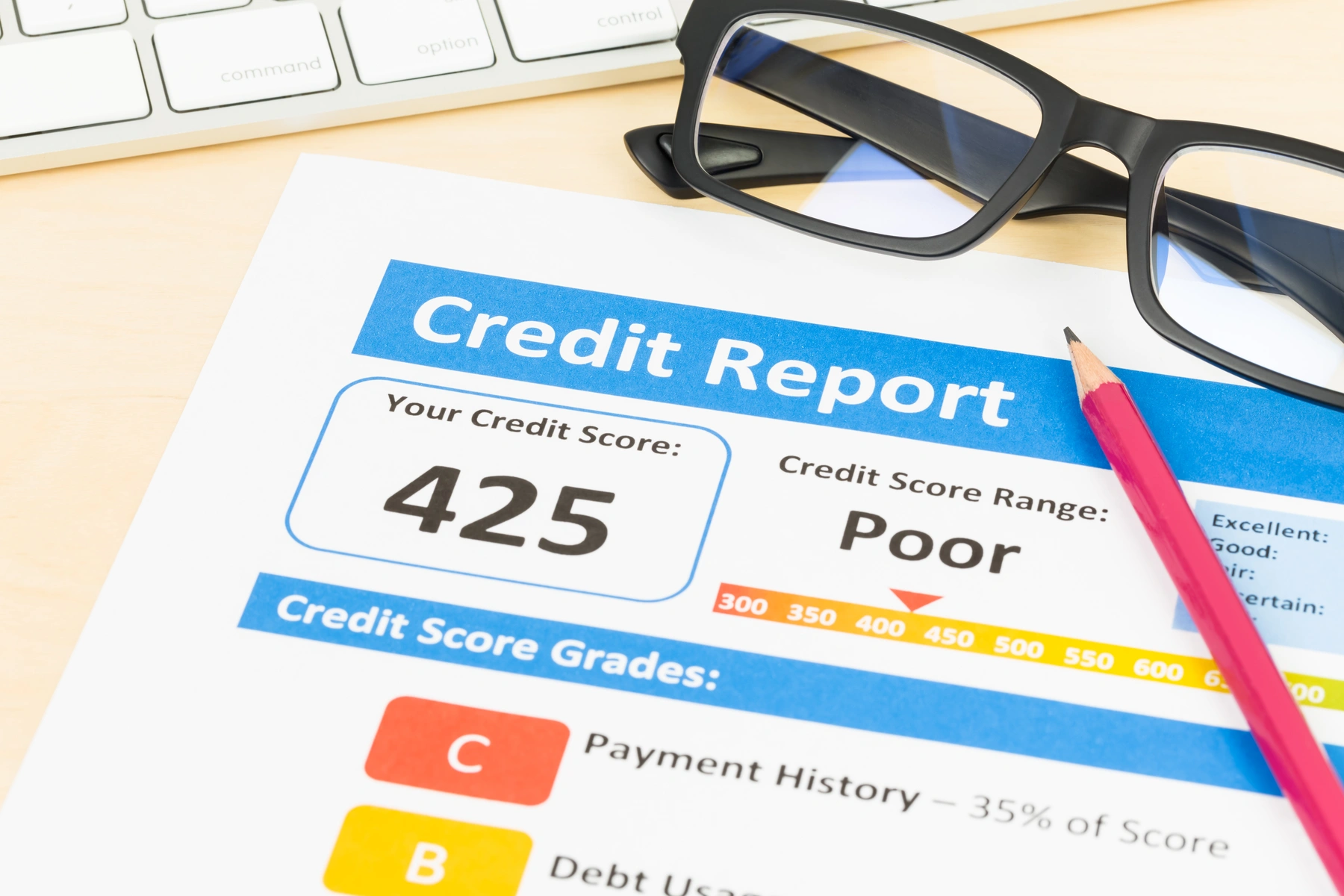
Your credit score operates on a schedule you're not privy to.
When consumers pay off a credit card balance, dispute a collections tradeline, or pay off a loan, they assume that the credit score will change as soon as the transaction occurs.
This is not how credit scoring works. Your credit score is not a real time metric. It's a snapshot based on data that's sent to the credit reporting agencies from creditors, lenders, and collection agencies on their schedule. There may be weeks or months between when you take a certain action and when it appears on your credit report.
During this interim, a lender may pull a score that doesn't reflect your current credit situation. Understanding when and why credit scores update is not purely an academic exercise. For consumers who are trying to resolve disputed debts, remove incorrect collection accounts from their credit reports, or are on a deadline to apply for financing, the timing of the credit reporting cycle is a matter of approval or denial.
Why Credit Reporting Time Matters More Than Most Financial Advisors Will Admit
Your credit score plays a significant role in determining your mortgage interest rate, the terms of your auto loan, your insurance premiums, whether your apartment application will be approved, and in some states, whether you'll be hired for a job. If your credit score doesn't reflect your credit behavior, you could end up paying thousands more in interest or be denied for credit altogether.
The credit reporting system was built for the convenience of banks and lenders, not consumers. Understanding the clock it operates on puts you at an advantage when you're disputing errors on your credit report, preparing for a major purchase, or navigating the resolution of a collections account.
The Inside of a 30-to-45-Day Cycle: How Credit Data Gets to the Bureaus
Every credit account you carry operates on a credit reporting cycle that's controlled solely by the creditor. Your credit card company, mortgage company, car loan lender, student loan lender, etc., determines when they will report your account data to Equifax, Experian, and TransUnion. There is no law that says they have to report this information, and there is no standard schedule.
"Most creditors report updates once a month, usually around the same day of the month, often around the closing date of your statement." - Experian Website
Rod Griffin, Director of Public Education at Experian (one of the most frequently quoted experts on credit in the country), said, "The typical cycle for reporting credit information to the three national credit reporting agencies is every 30-45 days."
Each creditor sets its own reporting schedule. A consumer with five credit cards could have five different credit reporting dates throughout the month. The balance, status of payment, and credit limit captured at the time the creditor reports the account data are the figures used to calculate your credit score.
The Delay Between Actions and Reports
Because this is a monthly process, it means there's a built-in delay. If you pay your credit card balance down to zero the day after your statement closes, you won't see that zero balance reflected on your credit report until the following month, and possibly not for another 30 to 60 days after that. Until then, when a creditor requests your report, they'll see the old (higher) balance.
The same goes for new accounts. A new credit card (or the closure of a loan) may not appear for a month or two. The exception here are hard inquiries, which usually appear within 24 to 48 hours, since the credit bureau logs them the instant a creditor requests your report.
But the timing issue gets worse: Creditors don't report to all three bureaus at the same time. Some report to only one or two of them. Others may report to all three, just on different days. That's why your credit score can be different between the bureaus at any given time, not because they use different scoring formulas, but because each of them is working off a slightly different version of your credit history.
How Your FICO and VantageScore Are Actually Calculated
Credit Scores Are Calculated on Demand, Not on a Schedule
One very common assumption is that FICO and VantageScore recalculate your score on some kind of regular schedule, maybe weekly, or monthly. In truth, your score is calculated from scratch every single time someone requests it. FICO itself states that scores are calculated "each time [they] are requested," using "the information that is in your credit file at that time."
This means the score itself is always up to date, as far as the information in your file is concerned. The problem is that the information in your file may be weeks old. Your score is only as up to date as the most recent information your creditors have reported.
The Free Score on Your Phone May Not Match What a Lender Sees
The scoring disparity between the consumer-facing scores on your phone and the scores pulled by a lender is one of the most destructive blind spots in personal finance. Credit Karma, the most popular free score, uses VantageScore 3.0. Most mortgage lenders pull industry-specific FICO models, which can be completely different algorithms using the same underlying data.
And the difference isn't negligible. Mortgage industry professionals have documented that VantageScore results frequently come in 20 to 60 points higher than the FICO models that lenders actually use. Someone who's monitoring a 680 on their Credit Karma app and feeling good about a mortgage application may be horrified to find that the lender-pulled FICO score is a 620, a difference that can mean rejection or far worse loan terms.
FICO claims 90% of the nation's top lenders use its scores, and there are currently 186 versions of the FICO score being used across different industries. You have no way of knowing which one a particular lender will request, and the score you see is rarely the score the lender sees.
When Do Collection Accounts Get Reported and What Triggers It?
The Statute of Limitations for Reporting Collections
The process for a debt to be sent to a collection agency and placed on your report has a specific timeline based on a federal mandate.
On November 30, 2021, the CFPB implemented Regulation F, which says a debt collector can't report the debt to the credit bureaus until they've made contact with you. If they send you a notice and it comes back undeliverable, they must wait at least 14 days before reporting the information. The debt collector is also required to send you a validation notice that gives you 30 calendar days to dispute the debt.
However, and this is important, the 30-day validation period is not a waiting period before the debt is reported. The debt collector may report the debt to the credit bureaus even during the validation period as long as they've satisfied the initial contact requirement.
Once the account is reported, the impact is immediate and dramatic. A new collection account can cause a credit score to drop by 50 to 100 points or more. The actual amount of the debt being collected has little bearing on the amount of damage it does. A $500 medical bill that has gone to collections can be just as destructive as a $50,000 debt.
Re-Aging and Other Timeline Loopholes
The Date of First Delinquency is the determining factor for how long a collection account can stay on your credit report. By law, a collection account can only remain on your report for seven years from the original date, even if the debt changes hands multiple times.
Some agencies try to manipulate that date using a technique called re-aging, which involves reporting a more recent delinquency date to make an old debt seem more recent and keep it on the report longer.
Whenever a debt changes hands from one collection agency to another, the accompanying documentation tends to deteriorate. By the time a debt reaches its third or fourth owner, the paperwork may include nothing more than a name, Social Security number, and the amount the agency claims is owed, and that limited information will still be reported to the credit bureaus.
If you find a collection account on your report with a reported Date of First Delinquency that doesn't match your records, it may be an illegal reporting. This is one of the most common and correctable errors that appears on credit reports.
The One in Five Error Rate Consumers Should Know About
A 2013 Federal Trade Commission (FTC) report that reviewed the credit reports of more than 1,000 consumers found 21% had a confirmed error on one of their three credit reports. 5% had errors that led to the consumer being placed into a different, usually more costly, credit pricing tier.
At the time, FTC Chairman Jon Leibowitz urged consumers to review their reports: "Your credit report is like your permanent record, and it plays a critical role in determining whether you can get credit and what you pay for it."
More recent research from Consumer Reports, in partnership with WorkMoney, analyzing data from 2024-2025 among more than 4,000 respondents, found 48% said they discovered errors on their reports and 27% found serious errors such as debts they didn't owe.
Reporting from 2021 through 2023 from the Consumer Financial Protection Bureau (CFPB) shows that while complaints about credit reporting rose 172% from 161,000 in 2021 to 438,000 in 2023, the number one complaint for credit reporting overall was incorrect information on their credit report.
How Errors Affect Credit Score Changes
If there is an error on your credit report, every time your score is calculated, that error will be factored into the calculation. Credit scores are calculated on the fly based on the information available at the time of the request. One single inaccuracy on one credit account can affect every credit score calculation for as long as the inaccuracy is on the report.
Disputing errors also takes time. The Fair Credit Reporting Act, FCRA Section 611, gives credit bureaus 30 days (45 if you send more information to the credit bureau during the investigation) to investigate any dispute. The credit bureau has five days to inform the entity who made the error about the dispute.
If the credit bureau or the entity that made the error cannot verify the disputed information within the allotted time period, the information must be removed from the report. In reality, disputes often take much longer to resolve. The CFPB found that credit bureaus often engage in a practice called "parroting," where they simply accept whatever the entity making the error has to say about the issue without further investigation.
That is why consumers who are dealing with errors regarding collections, in particular, often need an advocate to push for actual investigations.
Rapid Rescoring Shows Consumers That Faster Credit Reporting Is Possible
What Is Rapid Rescoring and Who Can Use It?
There is actually a way to circumvent the 30- to 45-day cycle for credit reporting entirely. Rapid rescoring is a service that can update a credit report within three to seven business days. Yes, you read that correctly. This service exists. It works. And it shows that the credit reporting system can update information much faster than the 30- to 45-day cycle.
The problem for consumers is that only a mortgage lender can request a rapid rescore. Consumers cannot initiate a rapid rescore for any reason and under any circumstance. The lender is charged a fee for the rapid rescore, which usually ranges between $25 to $50 per account per credit bureau, and by law the lender is not allowed to pass that fee onto the consumer.
The Two-Tier System of Rapid Rescoring Leaves Most Consumers Out
Rapid rescoring creates a very clear two-tier system. If you are working with a mortgage broker and need to buy a home, you can get accurate credit report information updated in a matter of days. But if you are applying for an auto loan, an apartment, a job, or insurance, you do not have access to the same service and must wait for the full cycle.
CFPB Director Rohit Chopra has spoken out about the inequities of the system. During a speech at the Mortgage Bankers Association conference in 2022, he said: "Rapid rescores are a mechanism where the credit reporting industry is profiting off of problems of their own making. The pay-to-play nature of rapid rescores means that faster corrections are only available for a price, and only if consumers go through a mortgage lender."
The existence of rapid rescoring shows that the credit reporting system can update information faster. Rapid rescoring can only be requested by a lender, and only for a mortgage. The existence of rapid rescoring, which is limited to a single product and requires a lender to request it, is a pointed reminder of why the credit reporting system for everyone else operates on a 30-to-45-day cycle.
Be aware that any service advertising rapid rescoring directly to consumers is not operating within the system. Rapid rescoring can only be requested during the mortgage application process, and only by a lender. If someone tells you otherwise, they are promising something they cannot deliver.
How to Work Within the System While Pushing Back Against It
Monitor the Right Score Through the Right Channel
As a result of the pandemic, AnnualCreditReport.com began offering free weekly credit reports from all three bureaus. That policy has since been made permanent.
Take advantage of it. You can check your own credit report as many times as you want without it affecting your score.
Despite that, 25.6 percent of respondents to a BadCredit.org-Propeller Insights survey believed that checking their credit score would lower it. When you monitor your score through free apps, understand the limitations of what you are seeing.
VantageScore and FICO use different models, which can produce appreciably different results from the same data. Use free credit monitoring services as a way to track trends, not to see the exact score a lender sees.
Know Your Dispute Rights and Timelines
If you find an inaccuracy, dispute it in writing with the credit bureau directly. Federal law gives the bureau 30 days to investigate, and if the information cannot be verified, it must be deleted.
If a collection account on your credit report includes an incorrect balance, an incorrect Date of First Delinquency, or if you do not recognize the debt, all of those are reasons to file a formal dispute. Keep everything documented.
Online dispute portals restrict the amount of documentation you can attach to your dispute, and may limit your legal recourse if the investigation is not satisfactory.
Written disputes submitted via certified mail provide a paper trail, and create FCRA obligations that bureaus cannot ignore as easily.
For inaccurate collection accounts that persist despite standard dispute procedures, third-party consumer advocacy can help resolve the issue. Collection agencies and credit bureaus must follow specific procedures under the law, and when they fail to do so, consumers have legal options that go far beyond asking politely for a correction.
The Clock Is Always Running
What This Means for Your Financial Future
Your credit score is updated any time a lender or service requests it, but the information used to calculate that score operates on a 30-to-45-day cycle that is controlled entirely by your creditors, and the collection agencies reporting against you. Roughly one in five Americans has an error on their report.
The credit score you see on a free app may not match what a lender sees. And the one time we know the system can move faster, rapid rescoring, is something only a mortgage lender can request. None of this is an accident. The credit reporting system was designed to serve the companies that purchase credit scores, not the people those credit scores are meant to describe.
Knowing the timeline helps you work around it, but that does not change the fundamental inequity of a system that demands consumers meet standards it does not demand of itself.
Take Action on Errors Before They Cost You More
If you are facing a collection account with incorrect information, an error that continues to reappear after you have disputed it, or a debt you do not believe you owe, you do not have to go through the process alone.
At FightCollections.com, we specialize in making sure collection agencies and credit bureaus meet their obligations under the laws that are meant to protect you.
Request a free case review today. Every day an error remains on your credit report is another day it can damage your credit score, cost you money, and undermine your peace of mind.