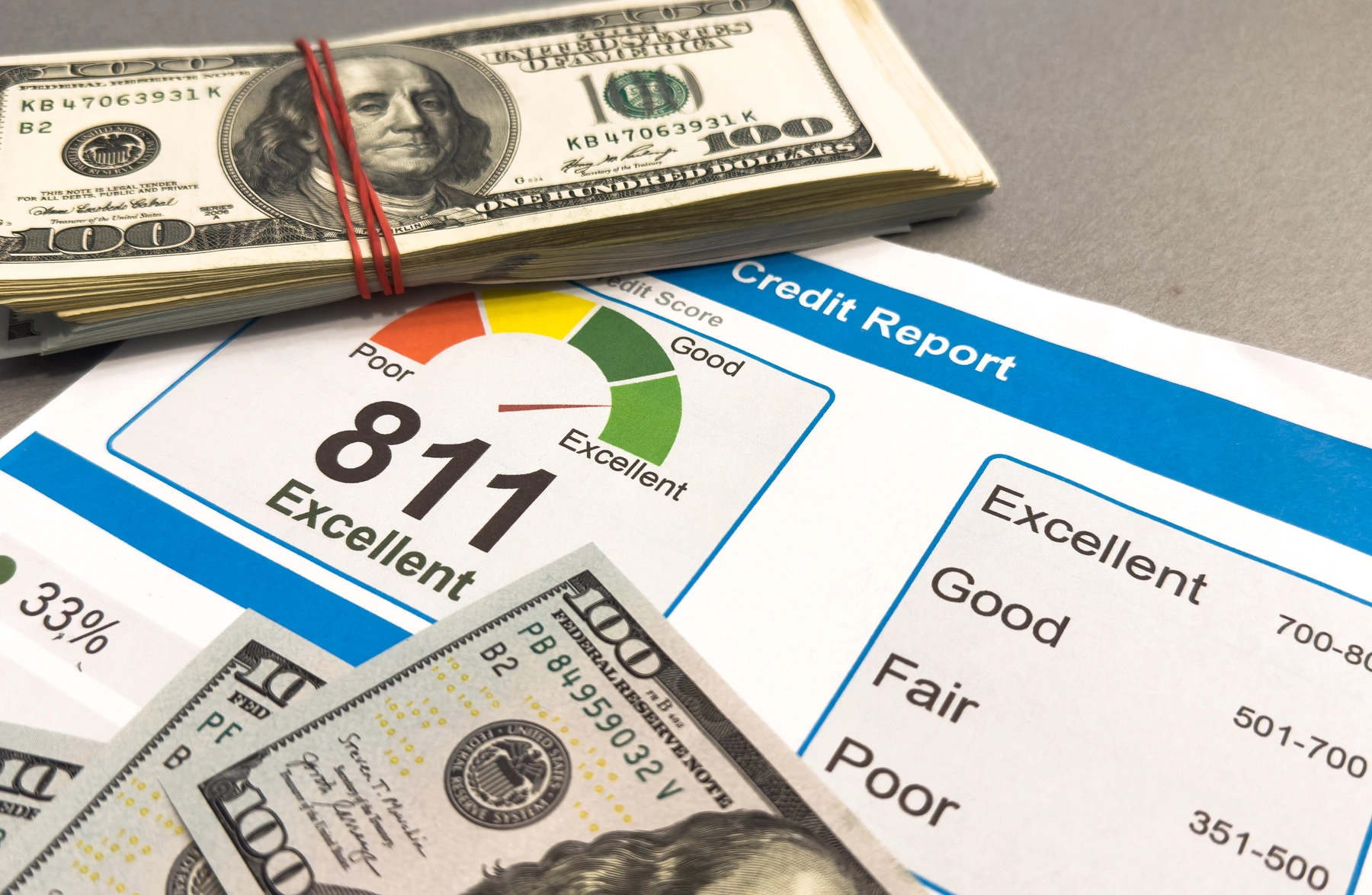
You know you have bad credit. Perhaps you had a medical bill that was sent to a collection agency or you went through a tough financial time in your past that still haunts your credit report.
But now, you need a vehicle to get around, and a car lease sounds like a good option because the monthly payments are usually lower than a car loan. So what exactly are you getting yourself into?
Well, for starters, the average credit score for a new-vehicle lease in the U.S. was 753 in Q3 2025 according to Experian’s State of the Automotive Finance Market report. This shows how much the car leasing industry caters to individuals with good credit, but that shouldn’t scare you off.
This article will show you how you can still get approved for a car lease even with bad credit and how to avoid some of the common pitfalls that befall many bad credit customers. First, we will discuss why it’s so much harder to get approved for a car lease with bad credit compared to a car loan.
Why Is It So Much Harder to Lease a Car With Bad Credit?
The reason why it is so much harder to lease a car with bad credit than to finance one is because lessors have to make an educated guess about what the vehicle will be worth at the end of the lease. When you have bad credit, lessors will make it harder for you to get approved, or they will increase your money factor, or they will ask for a large down payment because they think you are a risk.
Wolf Street analyzed Experian’s vehicle registration data and found that just 3.8% of new-vehicle leases in Q3 2025 had gone to subprime borrowers, compared with 18.9% in the third quarter of 2019 before the pandemic. This means that not as many lenders are willing to approve subprime borrowers, so the ones who do can charge more money for it.
Now that we’ve discussed the challenges of leasing a car with bad credit, we will break down some steps you can take to get approved and avoid some of the common pitfalls of bad credit leasing.
Our first step is to clean up your credit report before you apply.
Step 1: Clean Up Your Credit Report Before You Apply
Obtain Your Credit Report and Review for Errors
The first thing you should do before you even start looking for a vehicle is to obtain your credit report from each of the three major credit reporting agencies: Equifax, Experian, and TransUnion.
You can request a free credit report from each agency once a year at AnnualCreditReport.com. You should review each of your credit reports for errors, such as accounts that shouldn’t be on your credit report or accounts that show an incorrect balance or date. You should pay special attention to any collection accounts on your credit report because sometimes they contain errors, and if you get the error removed from your credit report it could raise your credit score to the point where you get placed in a better credit tier.
We will now take a look at what a better credit tier can do for you when it comes to the total cost of your lease.
Dispute Errors on Your Credit Report
This is where the importance of cleaning up your credit report before applying really starts to take shape. As we mentioned above, Experian reported the average monthly lease payment for a super-prime borrower in Q3 2025 was $592, compared to $624 for subprime borrowers. That difference of $32 may not seem like a lot but that’s not the whole story.
The other ways that subprime borrowers are charged more for a lease are larger down payments, security deposits, and higher money factors. When you combine those with an extra $3,000-$5,000 that subprime borrowers have to pay as a down payment, a subprime borrower may pay up to $8,000 more for the same leased vehicle than a super-prime borrower over the term of the lease.
It’s simple: every little bit your score increases before you enter a dealership is money saved. Working with a consumer advocacy firm that specifically handles credit report disputes can help find inaccuracies reported by collection agencies and dispute them on your behalf. It’s the most impactful thing you can do before applying for a lease.
Give Yourself a Timeline
Credit report disputes take 30 to 45 days to resolve. If you don’t need a car right away, give yourself 60 to 90 days to work on your credit report before applying for a lease. During that time, make all payments on time and keep credit card balances below 30% of their limits. This isn’t about hitting a particular number. It’s about ensuring that when the lender pulls your report, they see a trend going in the right direction.
Step Two: Shop for Lenders Before You Shop for Cars
Why Captive Finance Companies Are Your Best Bet
When most people shop for a car, they look for the car they want and then see if they qualify. You’re going to do this backward. First, you find out which lenders are actually approving subprime leases in this moment. Most captive finance companies, the finance arms owned by the automakers themselves, tend to be more willing to work with credit-challenged borrowers than banks or other lenders.
A verified finance director at a new-car dealership recently shared on the Leasehackr forum that he had just approved a couple with credit scores of 490 and 586 on a new Subaru WRX lease through Subaru’s captive lender. He advised bad-credit applicants to target Nissan, Kia, or Hyundai for lease specials, noting their captive finance companies were more open to lower-credit buyers.
This is the kind of knowledge that matters. The manufacturers willing to approve subprime leases can shift as inventory levels, manufacturer incentives, and internal risk tolerance change. Stellantis brands, including Chrysler, Dodge, and Jeep, also remain relatively accessible through their Chrysler Capital arm.
Credit Unions and Fintech Lenders Offer Alternatives
Credit unions are one of the most underutilized paths to vehicle financing for bad-credit buyers.
Lead Editor at Kelley Blue Book Sean Tucker has advised shoppers to look into credit unions and think outside the bank. Data from the Federal Reserve backs this up, showing credit unions have the lowest auto loan delinquency rates in the industry. Programs like Peach State Federal Credit Union’s Fresh Start Auto Loan target credit union members with FICO scores under 640 and pair borrowers with financial counselors while reporting their payments to all three credit bureaus.
On the fintech side, startups like Lendbuzz use AI to evaluate creditworthiness beyond traditional FICO scores, looking at income stability, employment trends, and other alternative data to approve borrowers lenders can’t see.
Step Three: Guard Against Dealership Practices That Prey on Bad Credit Scores
The Dealer Markup Issue: A Known, Systemic Problem
This is where you have to be most vigilant. By coming into a dealership with a bad credit score, you’re entering a process that has consistently been shown to gouge bad credit borrowers. It’s called dealer markup, and it’s been a battleground for federal regulators for over a decade.
In the largest auto lending discrimination enforcement in history, the CFPB and Department of Justice ordered Ally Financial to pay $98 million after determining that over 235,000 minority borrowers were overcharged due to discriminatory dealer markup practices. Follow up settlements against Toyota Motor Credit, American Honda Finance, and Fifth Third Bank pushed the total to over $161 million.
Essentially, the issue is that a dealer can markup your interest rate by up to 2.5 percentage points above the rate the lender is requiring, and keep the difference.
Payment Packing and Junk Fees
However, dealer markup isn’t the only concern. In August 2024, the FTC wrung $20 million from Asbury Automotive Group for systematically concealing unauthorized add-on fees in monthly payments. Known as payment packing, it’s a tactic used to bury fees in consumers who are so excited to be approved that they don’t scrutinize the terms.
When a dealer quotes you a monthly lease payment of, say, $450, ask them to itemize it. There are a few common junk fees to look out for, including anything labeled paint protection, fabric protection, theft deterrent package, and extended warranty that you did not request.
Negotiating from Informed Ground
If you know three numbers when you walk into a dealership, you’re going to be in a much stronger position. Those three numbers are the vehicle’s selling price, the residual value at the end of the lease, and the money factor. The selling price is negotiable, just like a purchase, but the residual value is set by the leasing company and cannot be negotiated. The money factor is where most of the bad credit premium will be hidden, so you need to know the base rate in order to see how much the dealer has marked it up.
Don’t be afraid to ask the dealer directly what the buy rate is from the captive lender for your credit tier. If you ask this question, you’ll signal that you know how the process works, and you’ll be less likely to see that rate inflated.
Step Four: Leverage Real-World Strategies Known to Be Effective
The One-Pay Lease
One of the best strategies available for bad credit borrowers is the one-pay lease, in which you prepay some or all of the lease payments at the outset. We’ve seen documented cases of borrowers with scores as low as 580 securing relatively competitive terms through this strategy, particularly at credit unions that are willing to consider non-traditional structures.
The reasoning is simple enough. When you prepay, you’re dramatically reducing the leasing company’s risk since they already have the money. In some cases, this can flip a borderline denial into an approval, or it can push an approval from an onerous money factor into something more reasonable.
Co-signers and Multiple Security Deposits
If at all possible, adding a co-signer with good credit is still the best way to secure a lease approval if you have bad credit. Dealership personnel have reported approving leases for borrowers with scores as low as 590 when a qualified co-signer was added to the application. Essentially, the co-signer’s credit history becomes the lender’s security blanket.
In addition, some captive lenders will allow multiple security deposits, in which you pay additional refundable deposits in exchange for a lower money factor. With each additional deposit, you will lower your money factor. These deposits are fully refundable at the end of the lease, as long as you have fulfilled your part of the leasing agreement, unlike the down payment.
Lease Transfers as a Backdoor Entry
Leasing companies have their own rules and requirements. If your credit is not good enough to qualify for a lease, you might consider taking over a lease from someone who is looking to get out of theirs. You can find such listings on websites like Swapalease.
The good news is that you will be taking over a lease whose terms have already been negotiated and agreed upon, possibly by someone with good credit who received a favorable money factor.
The bad news is that the leasing company will still have to approve you for the transfer, and they will probably run a credit check on you to determine the risk of lending to you.
According to Swapalease, you should have a FICO score of at least 620 if you want to avoid paying an extremely high interest rate. It is not a loophole, but it might make it easier to get a lease than if you were applying for a new one.
Step Five: Build the Lease Into Your Credit Recovery Plan
On-Time Payments Reported to All Three Bureaus
If you make your lease payments on time, the leasing company will report each one as a positive tradeline on your credit report. Before you agree to a lease, make sure the leasing company reports to all three credit bureaus (Equifax, Experian, and Transunion). You want to use this lease as a stepping stone to better credit.
After a year or so of on-time lease payments (and wise use of other credit accounts), you will qualify for a much better money factor and lease terms when you need a new car.
Keep the Lease Terms Manageable
It is easy to get excited when you get approved for a lease, but do not get tempted by a car with a monthly payment that is beyond your means.
According to Jonathan Smoke, the chief economist at Cox Automotive, for every tier downgrade, the average interest rate increases by nearly 300 basis points; a two-tier downgrade increases it by more than 600 basis points. If you miss a single payment, you will undo all the good you have done to your credit score, and you might face fees that can cost you even more money than the missed payment would have.
Only take on payments you can afford. If it means leasing a car for three years instead of two, or driving a vehicle that is not as nice as the one you want, so be it. Your long-term credit score will be better off for it.
The Road Forward Starts with Your Credit Report
What You Can Do Right Now
You can lease a car with bad credit, but you will pay for it. In fact, the leasing company will probably make it cost more than it has to. The best thing you can do for yourself before you apply for a lease is to make sure your credit report is accurate. If you have any errors on it, along with collection accounts or other information that is not yours, your credit score will suffer for it, and leasing companies will use it against you.
Today, you can request a copy of your credit reports from each of the three bureaus. Go through them carefully, and if you find anything you do not recognize, including collection accounts that contain one or more inaccuracies, you may be able to dispute the information and get it removed.
Let FightCollections.com Work on Your Behalf
At FightCollections.com, we know how damaging collection accounts and other credit report errors can be. We specialize in helping consumers like you identify and dispute any inaccurate, misleading, or unverifiable information that is hurting your credit score. Many collection agencies routinely misreport information, and some use harassment and coercion to try to get you to pay debts you may not even owe.
You do not have to face any of it alone. If you are about to apply for a car lease and you believe your credit report is holding you back, let us help. We will provide you with a free consultation, review your credit report to identify information you can dispute, and work on your behalf to get as much of it removed as possible so you can approach a leasing company with the best credit score and history you can have.
Your credit report should reflect your true credit history, not a version of it that has been distorted by the errors of a collection agency.