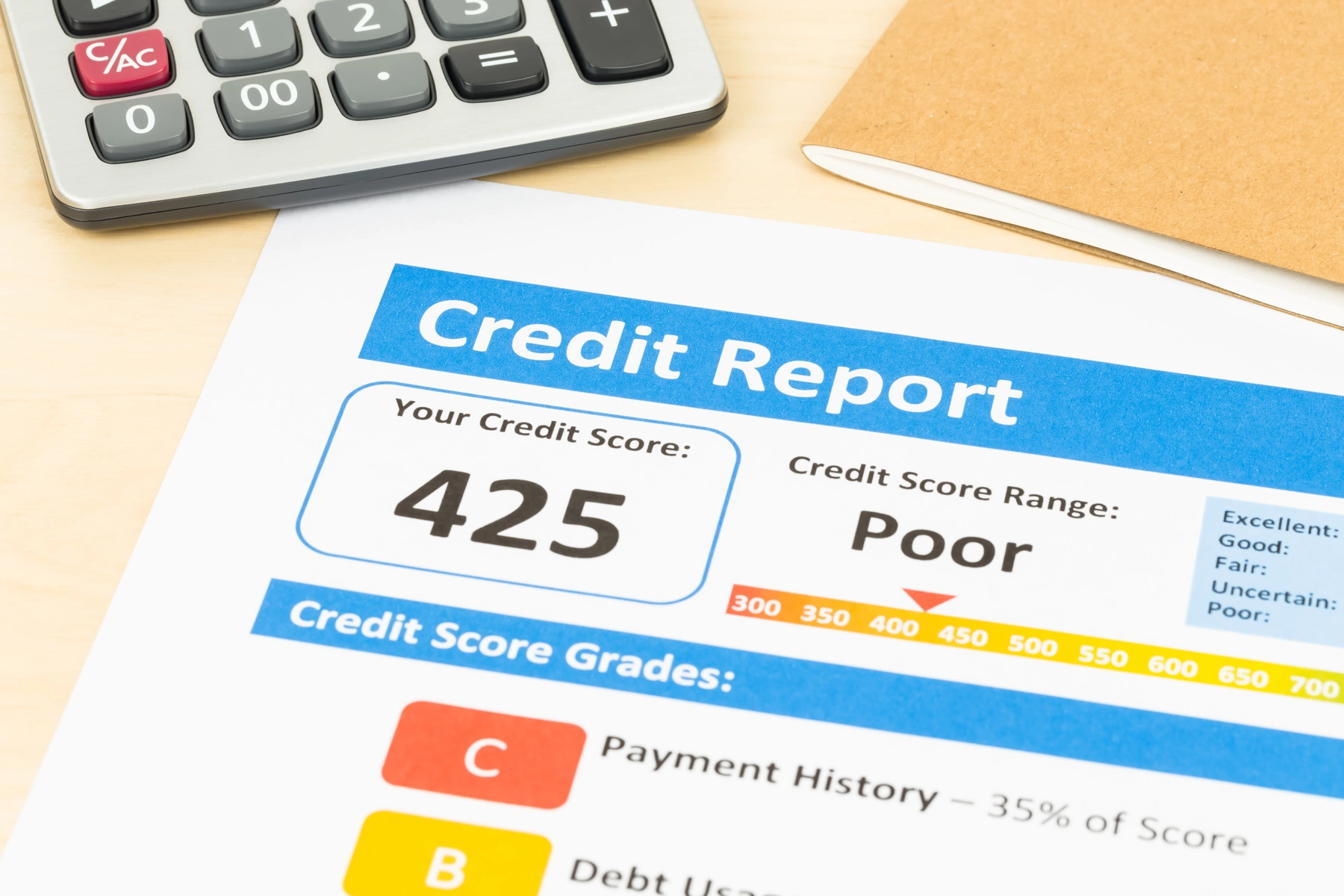
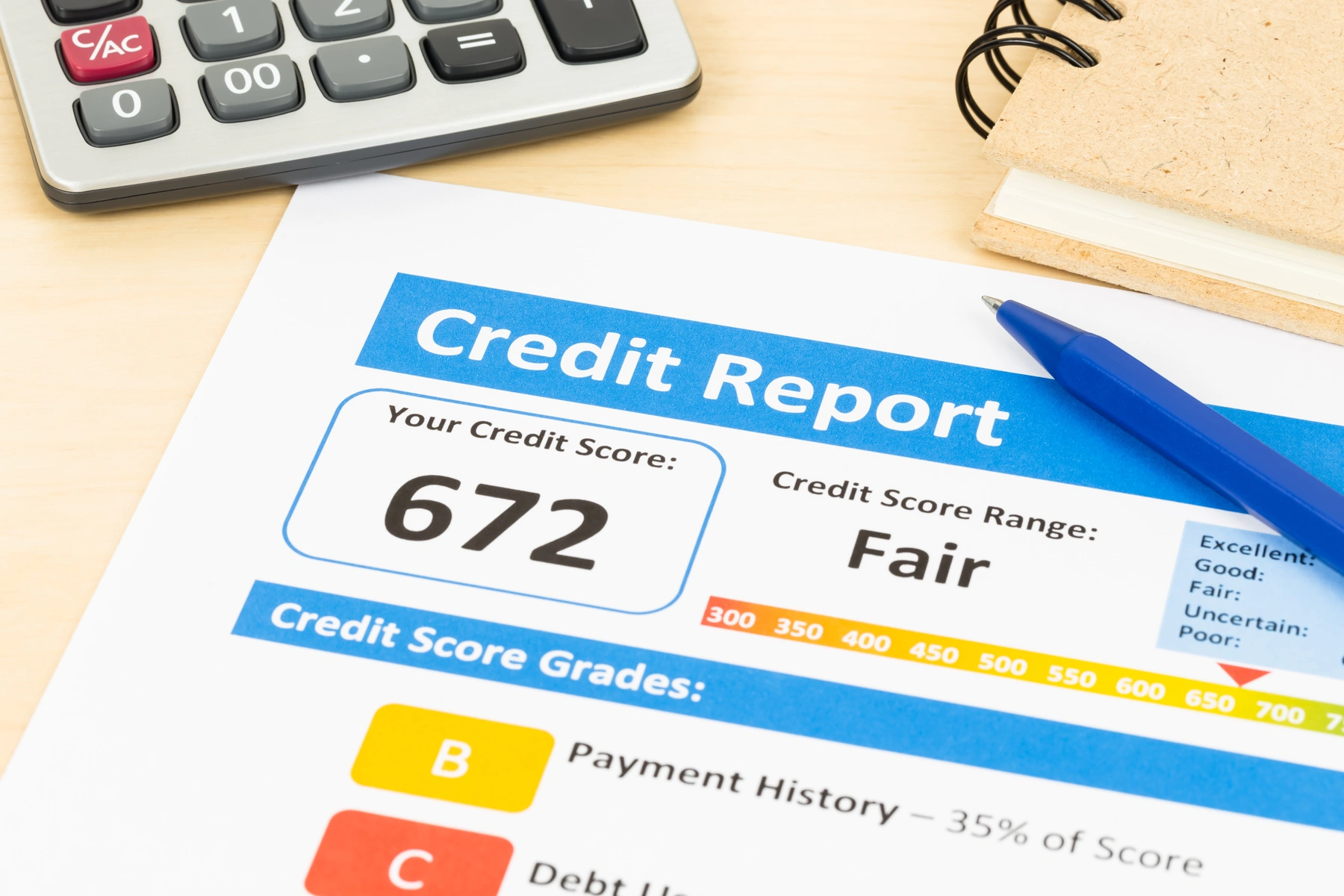
You go online or open an app to check your credit score for free, and it reads 720. You feel good about it, so you apply for a car loan or a mortgage.
Then you discover the lender pulled your report from a different bureau, and that score is 680. Not so good. Different bureau. Different score. Different outcome. Different interest rate.
But is that unusual? In 2016, Andrew Davidson & Co. released a study on VantageScore credit score variations between the three major credit bureaus. The study looked at 245 million scored U.S. consumers and found that at least 35 percent had at least one bureau score that was off 10 or more points from the tri-merge median. Seven percent were off by 40 points or more. That can be the difference between one rate tier and the next on a mortgage, car loan, or credit card.
Such discrepancies are considered routine in the credit reporting industry. For the millions of consumers who end up paying higher interest rates, being turned down for credit, or having collection accounts they never owed sent to a collections agency, it’s a big deal. If you’re dealing with a questionable collection account on your report, the difference between TransUnion and Equifax is not an abstract issue.
Why This Matters When Dealing With Collections
If you have an inaccurate collection on your credit report and are trying to get it removed, the difference between TransUnion and Equifax is not merely academic. It could be that a collections agency is reporting a balance you dispute to one bureau but not the other. Or maybe one bureau is showing a paid collection, and the other is showing it as still unpaid. Maybe the error you see on one report is absent from the other.
It is not a coincidence. It is not an anomaly. It is not a mistake. It’s the way the system works. Understanding how and why your credit scores are different at each bureau is the first step to protecting yourself. The credit scoring system is not broken. It was built this way.
There Is No Law Requiring Creditors to Report to All Three Bureaus
Most consumers assume that every time a lender extends credit, it reports to all three bureaus.
That is not true. In fact, there is no federal law that says a creditor or a collections agency is required to report anything to any of the credit reporting agencies. Reporting is voluntary and costs the companies money. Many companies, especially smaller credit unions, community banks, and specialty lenders, report to only one or two of the credit bureaus.
This means that an otherwise perfect payment history on your credit union auto loan may appear on TransUnion but not Equifax. Your otherwise perfect rent payments to a rent reporting service may appear on Experian and TransUnion but not Equifax. A collections agency may report a collection account you’re disputing to Equifax but not TransUnion.
This means each credit bureau has a different picture of your credit history, and when a credit score calculation is run on it, the result is different. Not because the calculation is different. But because the inputs are different.
Each Bureau Has Its Own Matching Criteria
Even when the same information is sent to each of the three bureaus, sometimes it doesn’t end up attached to the right person’s file. That’s because each credit bureau has its own criteria for matching information sent to it by creditors with the right consumer credit file. Sometimes the information gets lost and attached to the wrong file, or it doesn’t get attached at all.
A Credit Report May Contain One Error on One Report and Not Another
Credit report errors are a big problem for consumers, who sometimes discover they have accounts on their credit reports they don’t recognize or other problems like incorrect addresses or birth dates. Sometimes one credit report will contain an error another will not. Each agency uses a secret formula to decide whether any given report pertains to you or someone else. There is no industry standard. The secret formula combines weighted values of your name, address, and Social Security number.
When enough of them match, it appends the report to your file. The issue is that they consider seven of nine digits of your SSN to be a full match, so siblings, parents and children, or even unrelated people with the same name can end up with someone else’s report attached to their file. This is what the industry calls a mixed file. It happens more often than you think.
The consumer advocacy lawyers estimate that 2 to 4 million Americans have mixed files. Since each agency uses a different secret formula, mixed file errors almost always occur with only one of the two agencies. This alone causes the scores to diverge.
The Errors Are Massive and Well-Documented
Federal Studies Exposed the Scale of the Problem
The Federal Trade Commission conducted a landmark study of the accuracy of credit reports. They selected 1,001 random participants. The results were devastating.
One in five Americans has a verified error on at least one credit report. Five percent have errors severe enough to receive worse loan offers than they qualified for. One in 250 consumers experienced a score change greater than 100 points after corrections were made to disputed errors.
Then-FTC Chairman Jon Leibowitz summarized the results: “One out of five Americans has an error on their credit report. And one out of 10 has an error on their credit report that might lower their credit score.” These are not abstract statistics. These are tens of millions of real people, paying more for credit than they should or being denied credit altogether. It has not gotten better.
Consumer Reports conducted two studies of volunteers. In 2021, 34 percent of ~6,000 participants found at least one error. By 2024, that number rose to nearly 50 percent. More than one quarter of the 2024 participants found serious errors such as incorrect debts or payment histories.
The Complaint Flood That Will Not Stop
Credit reporting has become the single largest category of consumer complaints filed with the Consumer Financial Protection Bureau. It is not even close. In 2023, credit and consumer reporting complaints comprised roughly 80 percent of all CFPB complaints. By the first quarter of 2025, over 1.28 million complaints were filed in a single quarter. That is almost the total number of complaints filed in all of 2023. The three largest complaint areas are:
- Incorrect information on your credit report
- Improper use of your credit report
- Problems with the investigation of an existing dispute
These are not edge cases. They are the defining feature of an industry that processes hundreds of thousands of disputes every month using automated systems that frequently lack significant human oversight.
What Happens When You Dispute an Error With One Bureau but Not the Other
Fixing TransUnion Does Not Fix Equifax
One of the biggest mistakes people make when disputing is believing that fixing a problem at one bureau fixes it at all three. It doesn’t. The three major credit bureaus do not share the same data, despite what they would like you to believe. If you successfully dispute a collection on TransUnion, it has no impact on the same collection appearing on Equifax or Experian.
If a collection agency is reporting the same false debt to two or three credit bureaus, you must dispute it at each one. The CFPB has made this clear. Each dispute is treated separately, and each will likely have a different outcome. One credit bureau may delete the item, while another may verify it as accurate using the same automated system.
The Automated Dispute Machine
When you dispute something on your report, the credit bureau does not “investigate” in the way you probably imagine. Instead, the credit bureau employee reviews your dispute and inputs one of 29 three-digit codes in a system called e-OSCAR. A short electronic message is then sent to the data furnisher.
So if you write a detailed dispute letter and include supporting evidence, it all gets condensed to a three-digit code and maybe a one- or two-line description. In fact, over 75 percent of disputes are handled through these automated systems. You have 30 to 45 days to resolve your dispute, but the amount of time and effort varies widely. The same disputed item can be verified as accurate by one credit bureau and deleted by another. This further increases the likelihood of a score mismatch.
The Real-World Cost of a Score That Does Not Match
How 20 Points Costs You Thousands
Credit score discrepancies between the credit bureaus are not merely numbers on a screen. They have a real cost in dollars. Mortgage lenders pull what’s called a tri-merge report, which compiles your credit scores from all three credit bureaus and uses the middle score for qualification purposes. So if your three scores are 740, 720, and 698, you qualify with a 720 credit score.
However, if your Equifax credit score is being dragged down by an error, then the middle score will be lower, potentially pushing you into a worse pricing tier. The Andrew Davidson study determined that for a $350,000 GSE mortgage with a 90 percent loan-to-value ratio, moving from one pricing tier to the next lowest costs the borrower between $3,000 and $5,000 in present value over the life of the loan. F
or a $200,000 mortgage, the difference between being in the best pricing tier versus a below-average tier is more than $200 per month and over $77,000 in interest over the life of a 30-year loan.
Collection Agencies Exploit the Gaps
Debt collectors are well aware of this fractured credit reporting ecosystem. Some collection agencies will only report to one or two credit bureaus. Others will report different balances or statuses to different credit bureaus. If you dispute a collection account on TransUnion and it gets removed, that same account may still be listed on Equifax and dragging down that credit score.
This situation creates a maddening merry-go-round. You think you’ve fixed the problem because one of your credit scores improves, only to find a few weeks later that a lender pulled a different credit report and the same derogatory account is still showing up. This is a system that incentivizes the debt collector and punishes the uninformed consumer.
What the Regulators Have Done and Undone
A History of Fines That Never Seem to Solve the Problem
TransUnion and Equifax have a long and storied history with regulators. In January 2025, the CFPB ordered Equifax to pay $15 million for failing to properly investigate consumer disputes, including ignoring documents submitted by consumers, allowing previously deleted errors to reappear, and using flawed software that miscalculated scores for hundreds of thousands of consumers.
TransUnion is not faring much better. In 2017, TransUnion and Equifax were ordered to pay a combined $17.6 million in restitution and $5.5 million in fines for deceptively marketing credit scores to consumers. In 2022, the CFPB sued TransUnion for violating that consent order by continuing to use dark patterns to trap consumers into recurring payments.
Enforcement Has Weakened at the Worst Possible Time
In February 2025, the CFPB voluntarily dismissed its enforcement action against TransUnion with prejudice, meaning the case cannot be refiled. This happened even as CFPB complaint filings are surging 89 percent year-over-year and FCRA lawsuits are up 37 percent compared to 2024. The retreat of federal enforcement makes it more important than ever for consumers to understand their rights and take action on their own behalf. The bureaus have shown repeatedly that they will not police themselves.
When the regulator steps back, the burden falls entirely on the consumer.
Why Your Scores Are Different Because the System Profits From Confusion
Knowledge is Your First Line of Defense
There is nothing mysterious about the difference between your TransUnion score and your Equifax score. It is the entirely predictable result of a system where three private companies independently collect data from voluntary reporters, use proprietary algorithms to match it to consumer files, and process disputes through automated systems that consumer attorneys have described as Kafka-esque.
You have the right under federal law to obtain free credit reports from all three bureaus every week at AnnualCreditReport.com. You have the right to dispute inaccurate information. You have the right to demand that a bureau conduct a reasonable investigation. And you have the right to take legal action if it fails to do so.
What You Can Do Right Now
Check your reports from all three bureaus. Compare them line by line. Look for accounts that appear on one report but not another, balances that do not match, and collection accounts you do not recognize or have already resolved.
If you find errors or inaccurate collection accounts on your credit reports, you do not have to navigate this system alone.
FightCollections.com specializes in disputing erroneous items with the credit bureaus and holding collection agencies accountable when they engage in deceptive or illegal reporting practices. The credit bureaus and the collectors who feed them data are counting on you not knowing your rights. Do not give them that advantage.