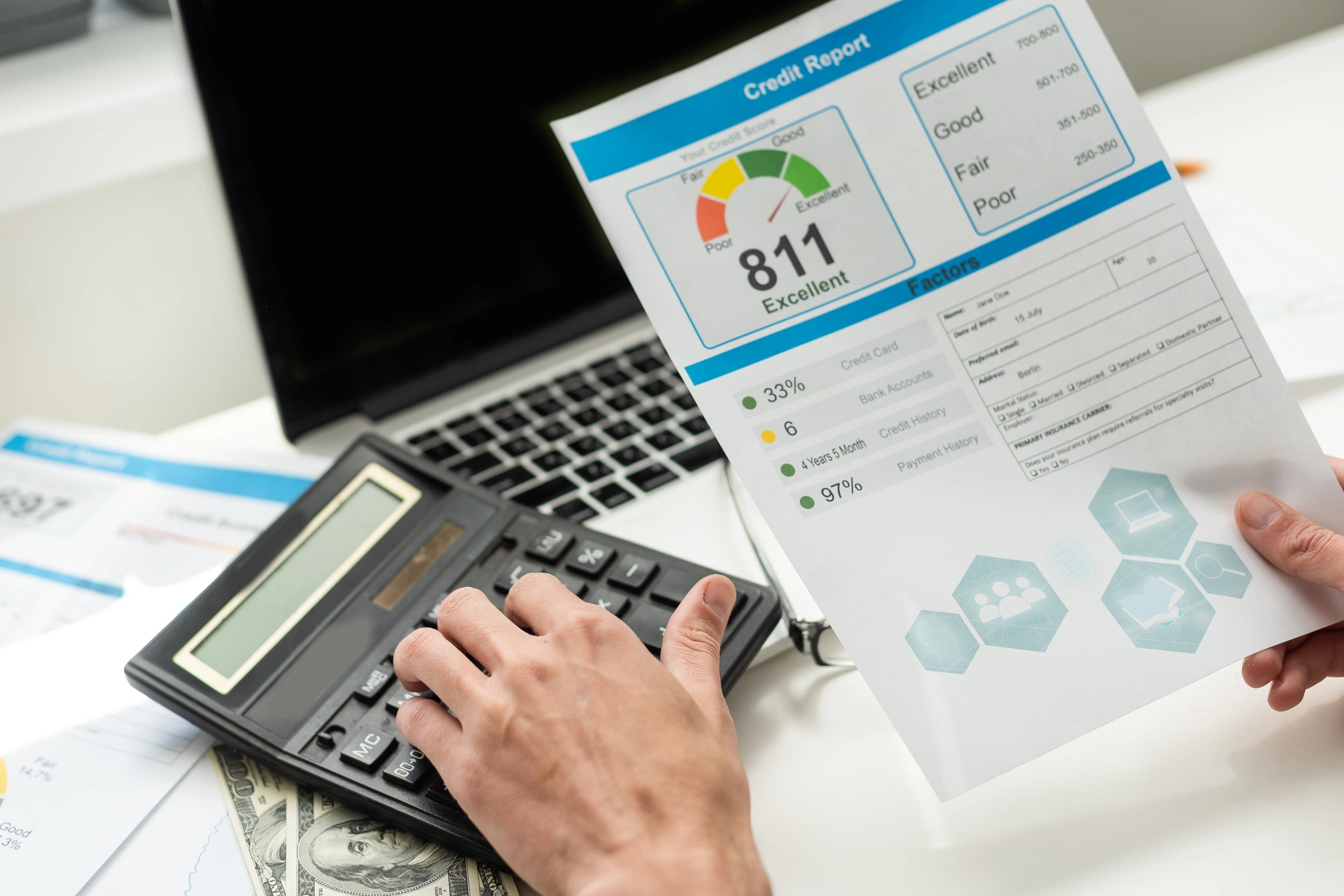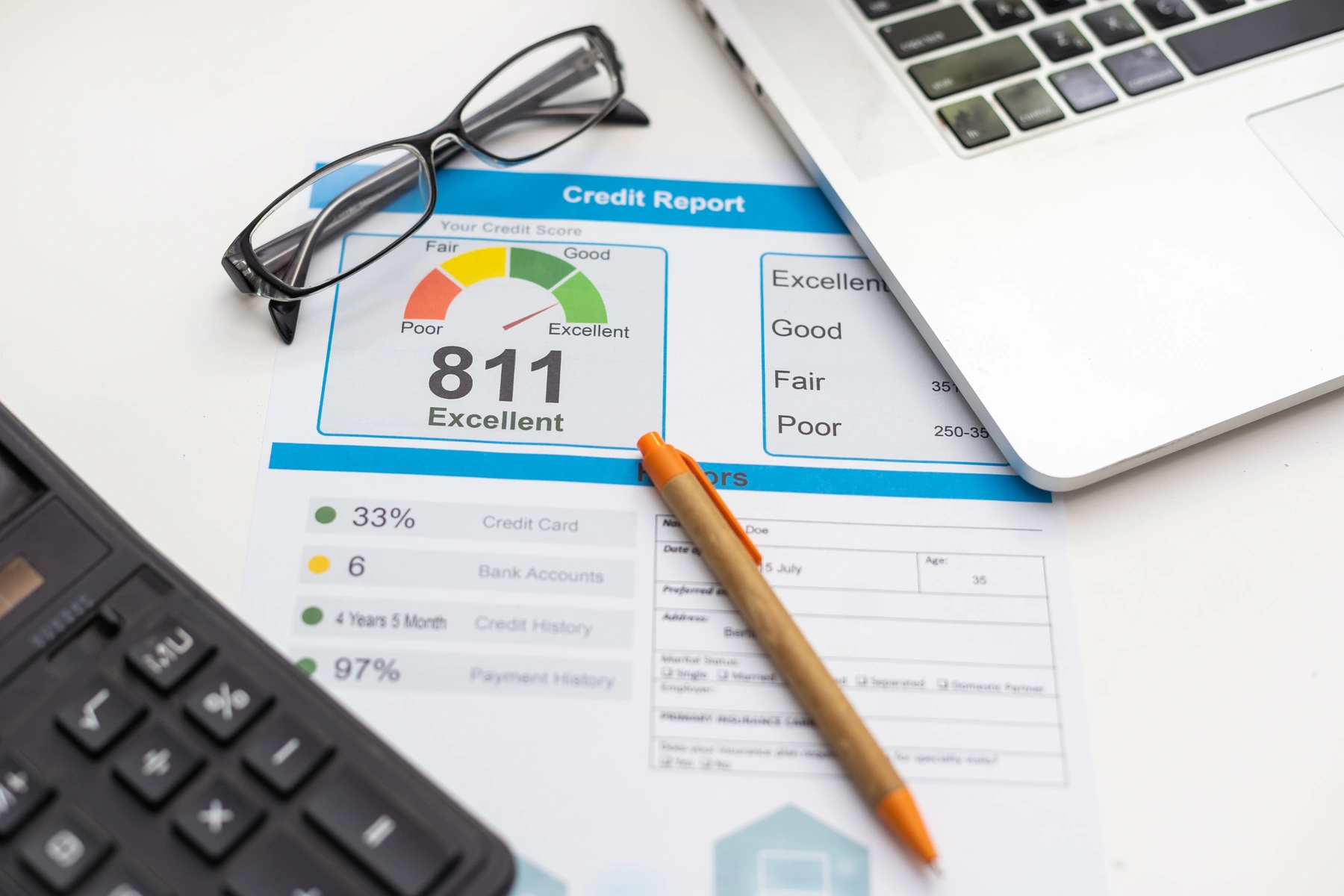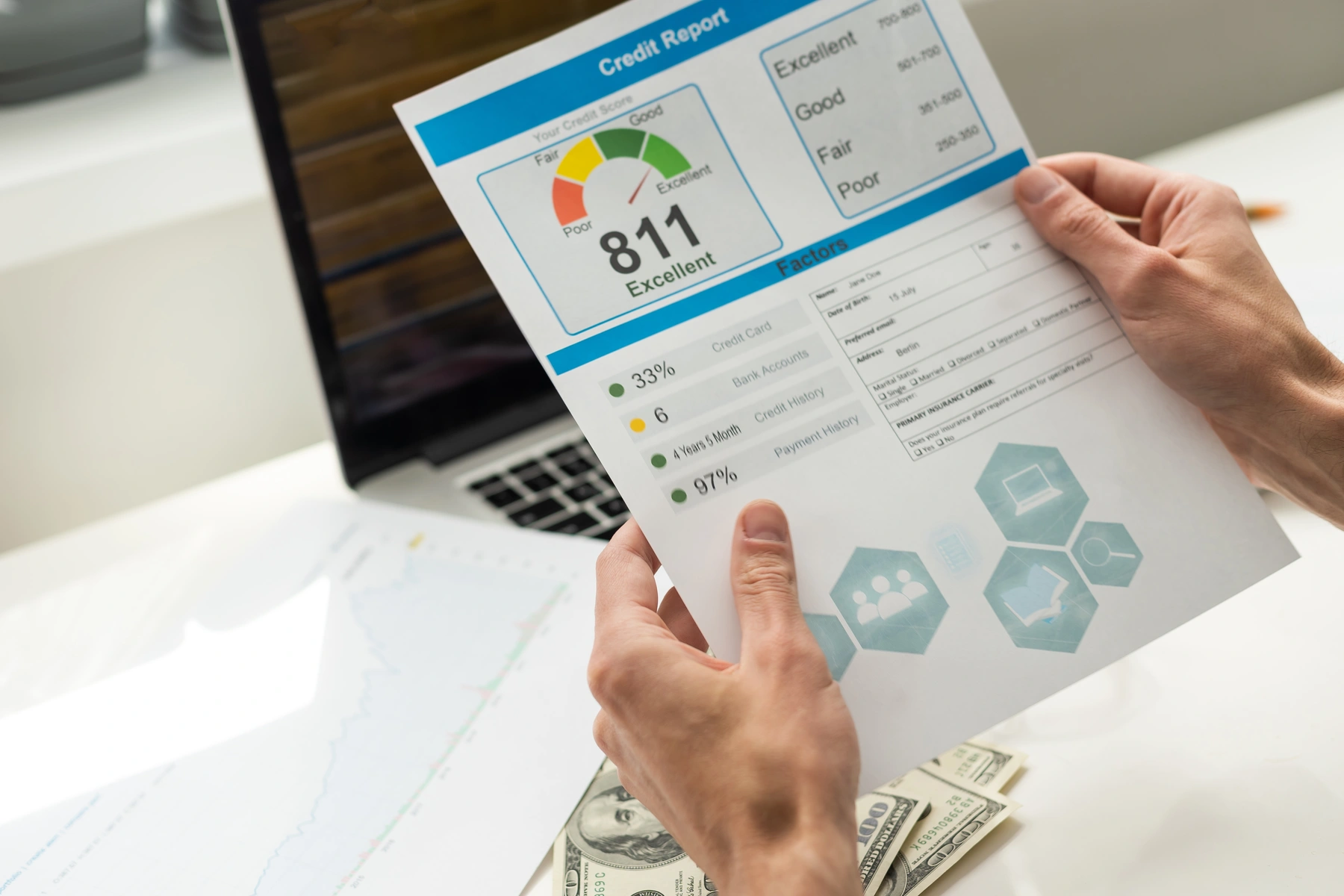

An open line of credit is a type of revolving credit that allows you to borrow money up to a maximum limit and repay the funds borrowed and re-borrow them if needed.
It’s different from a loan, which is given to you as a lump sum that you pay back once and then the account is closed.
Examples of open lines of credit include credit cards, home equity line of credit (HELOCs), personal line of credit and lines of credit for businesses.
How open lines of credit work can be complex despite their seemingly simple definition. For millions of consumers with revolving debt, it’s not immediately clear the implications of how lenders treat open lines of credit and the way they report to the credit bureaus.
Why You Should Care About Open Lines of Credit
If you’re involved in collections, have disputed debts or poor credit, you likely have an open line of credit. As of the fourth quarter of 2025, total household debt in the United States totaled $18.8 trillion, according to the Federal Reserve Bank of New York, while credit card debt alone climbed to $1.277 trillion.
While these figures might seem abstract, they represent very real monthly bills, very real interest and very real collection calls when consumers fall behind on their payments. Understanding the ins-and-outs of open lines of credit is the first step to navigating your way through trying collections situations, whether you’re in collections or simply trying to repair your credit.
Different Types of Open Lines of Credit
There are several types of open lines of credit you might be familiar with. They include:
Personal Line of Credit
A personal line of credit is a line of credit offered by a bank or credit union that can be used for a variety of expenses, anything from consolidating debt to financing large purchases.
Home Equity Line of Credit (HELOC)
A HELOC allows you to tap into your home’s equity, that is, the difference between what you owe on your mortgage and how much your home is worth, by borrowing against it. HELOCs often have variable interest rates, which means your monthly payments might fluctuate based on how much you borrow and how high or low interest rates climb.
Business Line of Credit
Like a personal line of credit, a business line of credit provides businesses with a revolving credit option they can use at their discretion to pay for everyday operational costs or other larger business expenses.
Credit Cards
When you’re approved for a credit card, you receive a maximum borrowing limit that can be used to make purchases, balance transfer debt or access a cash advance.
How Do Open Lines of Credit Work?
The mechanism of an open line of credit is relatively simple: You’re approved for a certain limit. You draw on the account when you need it. You pay your balance down, which restores your available credit. You can use an open line of credit as many times as you want within the lifespan of the account without the need to reapply for a loan or initiate another credit inquiry.
This availability is how open lines of credit are different from closed-end credit products such as a home equity loan, auto loan or personal loan, all of which provide a lump sum that you’ll pay off before the account is closed.
HELOC Rates Are Reaching Historic Highs
The Danger of Variable Rates With Open Lines of Credit
For the most part, open lines of credit are associated with variable interest rates. This means that the interest rate on your debt will increase or decrease parallel with some index, often the prime rate.
In 2022 and the beginning of 2023, the Federal Reserve approved eleven consecutive rate hikes, bringing the prime rate from 3.25 percent to 8.50 percent. As a result, the average interest rate on a HELOC rose to historic highs, climbing to 10.16 percent in early 2024 from a record low of 3.86 percent in 2021.
For someone with a $50,000 HELOC balance, that meant their monthly interest-only payments rose to $423 from $161, a difference of more than $3,100 annually, according to data from Bankrate. Consumers who have grown accustomed to the lower monthly payments will be in for a rude awakening, and those who are already struggling to make payments will be vulnerable to collection attempts.
Despite recent dips in interest rates, “borrowing against home equity is still expensive,” says Greg McBride, CFA, Bankrate’s Chief Financial Analyst. “Rates remain near their highest levels in 20 years and are likely to stay elevated for a long time to come.” “However, HELOCs, a common way to tap into a home’s equity, are not as affordable as they used to be,” he said, adding that “the rate is still hovering above 8%, and some are as high as double digits.”
Open Lines of Credit
Credit Cards and Revolving Debt
Credit cards are one of the most popular open credit products in the U.S., with approximately 191 million Americans having at least one credit card and an average of 7.1 credit cards per person, according to Experian’s 2025 State of Credit data.
In fact, the total credit limit of U.S. consumer credit cards is now over $5.7 trillion. Credit cards offer convenience to consumers and are expensive; the average interest rate across all credit card accounts was 20.97% in Q4 2025, according to the Federal Reserve.
The Consumer Financial Protection Bureau’s (CFPB) 2025 Credit Card Market Report revealed that credit card interest charges totaled $160 billion in 2024, up from $105 billion in 2022. The 52% increase in two years is largely due to both higher rates and higher balances.
Miss a credit card payment, and you’ll be charged a late fee. The penalty APR can rise to over 29%. If you fail to pay, the account will eventually be charged off and sold to a third-party debt collector. In some cases, consumers have received harassing phone calls from third-party debt collectors who misrepresent the debt, attempt to collect on a time-barred debt or fail to verify the debt upon request.
Home Equity Lines of Credit (HELOCs) and the Dangers of Secured Debt
A HELOC allows homeowners to borrow money using the equity in their home as collateral, typically up to 80% or 85% of the home’s value, minus any outstanding mortgage balance. The total outstanding home equity debt increased about 10% in 2024, and the average HELOC balance is $45,157, according to Experian’s 2025 study.
The main difference between a HELOC and a credit card is that one is secured, with a HELOC, you’re using your home as collateral for your debt, and if you fail to pay, the lender can foreclose on your property. HELOCs can be especially risky for consumers who are already struggling with debt, as third-party debt collectors that purchase charged-off second liens may pursue foreclosure.
In 2024, attorney Julie Greenfield gave a presentation to the California Lawyers Association, called “The Revenge of the HELOCs.” She explained that old second liens from the mid-2000s that were previously charged off or discharged in bankruptcy are now coming back to life because the value of homes has increased, making them collectable again.
In some cases, homeowners thought these debts were long paid off, but the deeds of trust remained active.
Personal and Business Lines of Credit
A personal line of credit is similar to a credit card, except you won’t receive a physical card — you’ll receive a credit limit and can draw on it when you need it. The interest rate will generally be between a credit card and a HELOC, ranging from 10.75% to 20.75% (depending on your creditworthiness and whether the line of credit is secured).
A business line of credit offers a similar arrangement for small businesses that need to fill a gap in cash flow. According to Federal Reserve’s Small Business Credit Survey, 37% of small businesses applied for a loan, line of credit or merchant cash advance in 2024, and 56% said they needed the funds to support operating expenses.
For a small business, having access to an open line of credit can be the difference between meeting payroll and having to close up shop.
What Open Credit Lines Do to Your Credit Report and Score
The Utilization Ratio and Why It’s So Important
Credit utilization, which is the ratio of your current balances to your total available credit limits, accounts for about 30% of your FICO score. It’s the second most important factor, after payment history.
According to FICO’s own literature, you should aim to keep utilization below 10% to build and maintain a strong credit score. And Experian data indicates that people with the best credit scores tend to have utilization below 10%. The average credit utilization rate nationwide remained about 29% from 2023 through 2024, according to Experian’s Consumer Credit Review.
Those with fair credit, between 580 and 669, had average credit utilization rates of about 61%. And those with scores above 800 had utilization in the single digits.
Every open line of credit counts toward this calculation. With one important exception, however.
FICO does not consider balances on home equity lines of credit (HELOCs), which are secured by real estate, when calculating your revolving utilization. This means you won’t be penalized the same way for having a $100,000 balance on a HELOC as you would for owing $100,000 on credit cards. That’s worth keeping in mind if you’re deciding which type of product to use to borrow money.
What Happens When a Line of Credit Gets Sent to Collection
When you default on an open line of credit, the original lender will usually charge it off after about 180 days of nonpayment and sell or assign it to a collection agency. The collection account will then be listed as another derogatory item on your credit report, adding to the damage already done by the missed payments.
Collection agencies often buy charged-off revolving accounts for mere pennies on the dollar and then try to collect the full amount, plus interest and fees. They may also report the wrong balance, omit the name of the original creditor or apply an incorrect date that makes the debt look younger than it really is.
All of these errors can further decrease your credit score and make the associated negative information remain on your report for a longer period of time than it should.
You have the right to request validation of any debt a collector claims you owe, under the Fair Debt Collection Practices Act. And if the collector can’t provide that proof, the disputed item should be removed from your credit report. That’s particularly valuable with old revolving debts, which may have incomplete records after changing hands multiple times.
What Lenders Can Do to Your Open Line of Credit Without Notice
Frozen Lines and Reduced Limits
The credit line was approved so I can use it whenever I need it, right? The answer is no. Almost every single credit agreement for a credit line gives the credit provider the right to lower your credit limit, lock up your account, or even revoke your credit line due to changes in your credit score, changes in the value of the collateral used, or even due to changes in the economy.
In 2008, during the credit crisis, credit providers like Bank of America, Citigroup, JPMorgan Chase, Washington Mutual, and Wells Fargo froze, slashed, or canceled millions of HELOCs (Home Equity Line Of Credit), which left many households in a bad financial position.
According to Moody’s Economy.com, in 2008, close to 8.5 million households had zero or negative equity in their home. The credit providers froze, cut or canceled those credit lines just when people needed them the most.
History Repeats Itself
If you think that the credit crisis of 2008 is a one-time event, you’re wrong. In 2020, in the midst of the COVID-19 pandemic, Chase and Wells Fargo stopped accepting applications for HELOCs. Chase stopped accepting HELOC applications for 5 whole years and only resumed in 2025, while Wells Fargo stopped in May 2020 and still hasn’t resumed as of the first quarter of 2026.
At the time, Amy Bonitatibus, Chief Marketing Officer of Chase, said in a statement that “due to the economic uncertainty, we are temporarily pausing new applications.” A Wells Fargo spokesman, Tom Goyda, said in a statement that “we are carefully managing risk” in light of “market uncertainty” and uncertainty over how the economy will recover.
I’m sure those statements comforted people who relied on those credit lines for financial support during one of the most financially trying times in recent history. The moral of the story is that a credit line is a tool and not a guarantee. The credit provider has the power to freeze, cut or cancel your credit line at any time and for any reason and they usually do so when you need it the most.
What Can You Do If Open Credit Lines Became a Headache
Know Your Rights Under Federal Law
The FDCPA (Fair Debt Collection Practices Act) prohibits debt collectors from engaging in deceptive, unfair, and abusive practices while collecting debts. This includes misrepresenting how much you owe, threatening actions they cannot legally take, or calling you at odd hours.
The FDCPA also states that if you send a written cease-and-desist letter to a debt collector, they must stop contacting you. The FCRA (Fair Credit Reporting Act) gives you the right to dispute errors on your credit report. If there is a collection for an old credit line on your credit report, and if the collection has an error in the amount, date, or chain of ownership, you can dispute it with the credit bureaus. The agency must respond to the dispute within 30 days.
If it cannot confirm the debt, the item must be deleted.
Why You Should Never Handle Collection Disputes Alone
Collection agencies are highly structured operations that know exactly how to squeeze payments out of consumers even on debts that are maybe, could be, and often are entirely inaccurate, expired, or uncollectible. They count on the simple fact that consumers aren’t knowledgeable about their rights and won’t fight back.
The current regulatory environment has only emboldened this approach. The Consumer Financial Protection Bureau, the nation’s most powerful consumer agency, has been gutted since early 2025, with enforcement actions halted, guidance documents rescinded, and personnel cut by nearly 88%.
The resulting regulatory void means consumers have fewer protections than they’ve had at any point in the past fifteen years. Working with a consumer advocacy firm that knows the Fair Debt Collection Practices Act (FDCPA), the Fair Credit Reporting Act (FCRA), and the common practices of collection agencies is one of the best ways to ensure your rights are respected and your financial future is secure.
The Bottom Line on Open Lines of Credit
A Tool That Demands Respect
Open lines of credit are one of the most powerful financial tools available to American consumers and businesses. They allow you to access cash on demand, only pay interest on the amount you use, and can offer significantly lower interest rates than credit cards if structured as a secured product like a HELOC.
But the flexibility that makes these tools so valuable also comes with hidden risks that only materialize during periods of financial strain. Variable rates can trigger sharp increases in your monthly payments without warning. Lenders can close or reduce your line of credit at the worst possible moment.
Defaulted revolving debt can be sold to a third-party collector that inflates your balance, mischaracterizes your debt, and employs all manner of psychological manipulation to get you to pay up. And old credit lines you thought were closed long ago can come back from the dead years later in the form of a zombie debt attached directly to your house.
The best course of action is to remain vigilant, check your credit report frequently, and remember that an open credit line is a contractual agreement where the lender retains the vast majority of the leverage.
Take Action to Protect Your Credit
If you are being contacted by a debt collector about an old line of credit or if you have discovered a collection account related to an open line of credit on your credit report, do not attempt to handle the situation by yourself.
FightCollections.com specializes in removing disputed marks from consumer credit reports and in bringing offending debt collectors to justice when they break the law. Contact us today for a free consultation and take the first step toward reclaiming control of your financial future.