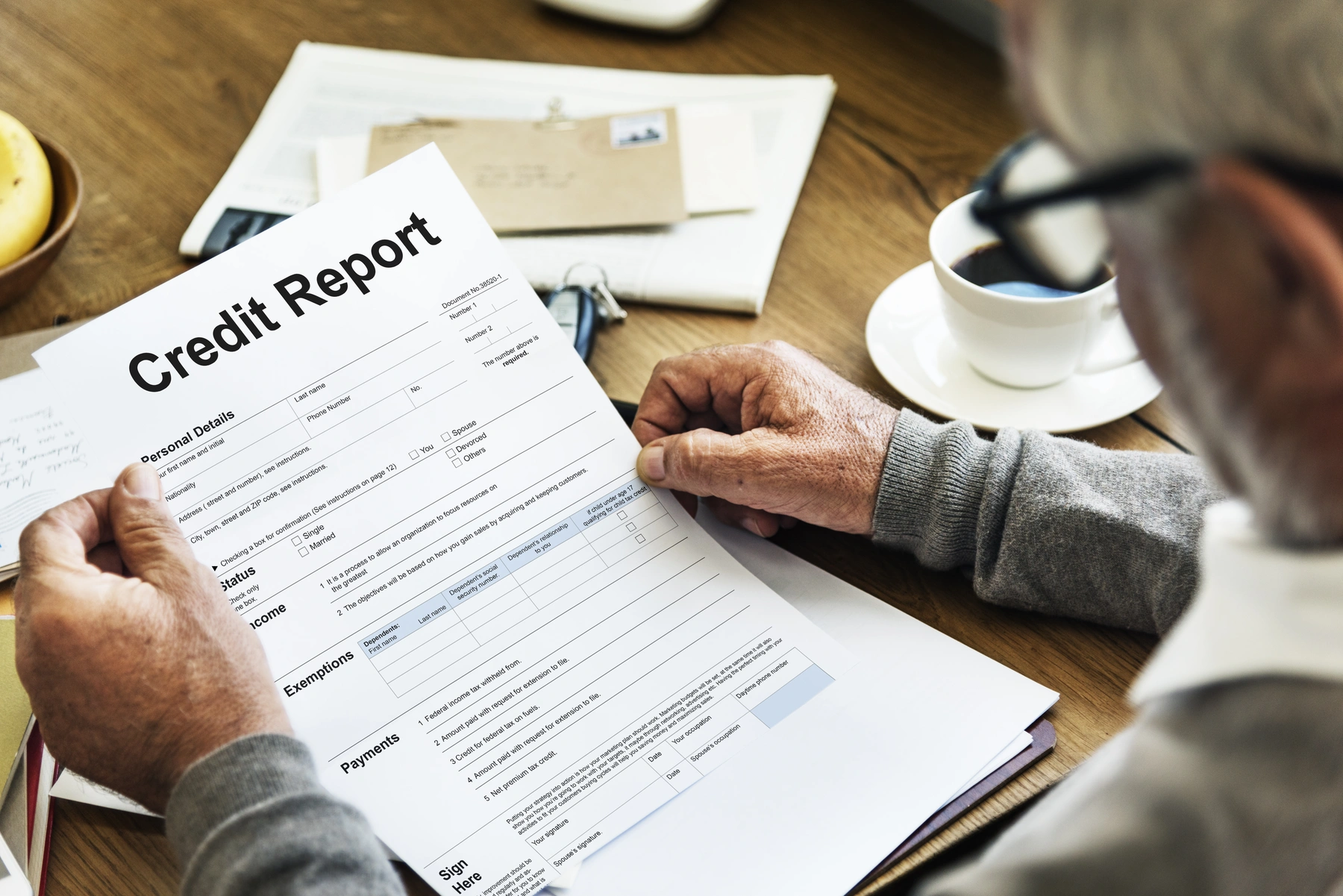

Credit scores are the unsung heroes of the financial world. They’re always there, quietly working behind the scenes, until one day something goes terribly wrong.
You opened up your credit score, expecting to see the usual, maybe an uptick, a downtick, but at least the same, and instead found it dropped like a stone.
You’re not alone, and you’re not crazy.
The national average FICO credit score took a hit in April 2025, dropping to 715 and marking the largest year-over-year decline since the Great Recession in 2009. That two-point drop is the lowest national average in several years, but it doesn’t come close to telling the whole story. In reality, millions of Americans have seen their credit scores drop by 50 points, 100 points, or even 150 points seemingly overnight.
Clearly, something is very wrong with credit scores. Let’s find out what it is, and what we can do to fix it.
This Article: Your Credit Score’s Triage Report
When someone comes into the emergency room, the medical team doesn’t play guessing games. They order tests, run diagnostics, find out what’s wrong, and develop a treatment plan based on that information.
This article is going to do the same thing for your credit score. We’ll walk through the most common reasons behind plummeting credit scores, help you determine whether it’s something you did or something that was done to you, and give you a plan to regain your score. In some cases, you might not like the prognosis very much.
Diagnosis #1: Debt Is Crushing Credit Scores Across the Country
Household Debt Reaches an All-Time High at an All-Time High Rate
The first diagnosis is also the most apparent, and it’s also the most universal. U.S. consumers owe more debt than ever before in history. Total U.S. household debt reached $18.59 trillion in the third quarter of 2025, according to the Federal Reserve Bank of New York, up by more than $4.4 trillion since the end of 2019.
Credit card balances alone reached an all-time high of $1.277 trillion by the end of 2025. That’s a 66 percent increase from their pandemic low and over $350 billion more than the previous record. The average balance per person increased to $6,523, and utilization rates hit 35.5 percent, up from 29.6 percent in 2021.
Sky-High Interest Rates Make Matters Worse
And that’s where the situation goes from an emergency to a full-blown crisis. The average APR on interest-accruing accounts hit 20.97 percent by the fourth quarter of 2025. New offers averaged 23.77 percent. Both of those are records, according to the Federal Reserve.
Chief Credit Analyst at LendingTree Matt Schulz put the situation in stark relief: “I’m not surprised that credit scores are slipping. Millions of Americans are struggling mightily in the face of stubborn inflation, high interest rates, a difficult job market and overall economic uncertainty, and tough times often force tough decisions.” Many of those tough decisions involve carrying higher credit card balances for longer, which leads to higher utilization rates, and lower credit scores.
In 2024 alone, consumers paid $160 billion in credit card interest charges, up from $105 billion in 2022. These aren’t changes in consumer behavior. This is a system rigged to make a bad situation worse.
Diagnosis 2: There May Be Errors On Your Report That You Didn’t Approve
The Error Epidemic No One Talks About
This is the diagnosis that changes everything. Your credit score may be lower because of reasons unrelated to your behavior. The Federal Trade Commission conducted a landmark study in 2012 that found one in five consumers had a confirmed error on at least one credit report. Five percent had errors so significant they resulted in higher interest rates on loans or the loans themselves being denied altogether. Those numbers have worsened over time.
A 2024 analysis by Consumer Reports of CFPB data found complaints about incorrect information on credit reports had increased by 168 percent over a two-year period, from approximately 165,000 in 2021 to more than 443,000 in 2023. In 2024, the total number of credit reporting complaints eclipsed 2 million for the first time.
Errors can include accounts you don’t own, balances being inaccurately reported, on-time payments being marked late, paid collection accounts and debts from another person being incorrectly assigned to you. Any of these errors can cause your score to plummet overnight, and most people never find out about the error because they never check.
The Credit Bureaus Aren’t Fixing What They Broke
If the error rates aren’t concerning enough, the credit bureaus’ response to them is abysmal. A CFPB report released in September 2021 that covered data up until that point found that collectively, Equifax, Experian and TransUnion had issued meaningful responses to less than 2 percent of consumer complaints.
In 2019, the rate was nearly 25 percent. The system built to fix errors isn’t working. In January 2025, the CFPB sued Experian, accusing the credit bureau of conducting what it referred to as “sham” investigations into consumer disputes. The complaint alleged Experian had failed to forward more than 2 million disputes to the companies that furnished the data, often accepted responses that were on their face illogical and sent consumers confusing notices about the results of investigations.
Consumer advocates have been describing this phenomenon for years. “Experian and the other credit bureaus will virtually always simply parrot back what the creditor or debt collector that furnished the information says,” Ariel Nelson, senior attorney at the National Consumer Law Center, said. “It’s like having a judge who always rules for the defendants. That’s not a dispute system. That’s a rubber stamp.”
Diagnosis 3: Events In Your Life That Got You Hit by Surprise
The Student Loan Cliff That Hit Millions Overnight
If you have federal student loans, February 2025 may have been the worst month for your credit score in years. That’s when the Department of Education resumed reporting delinquencies after a five-year hiatus that included a pandemic forbearance followed by an on-ramp grace period.
The impact was immediate. In a single month, 6.1 million consumers had student loan delinquencies added to their credit files. The student loan cliff. More than 2.2 million borrowers saw their scores drop by 100 points or more, with some experiencing drops of over 150 points. Collections resumed on May 5, 2025, with 5.3 million borrowers already in default.
The student loan cliff disproportionately affected younger borrowers. Gen Z experienced the largest average FICO Score drop of any generation, with 14 percent dropping by 50 points or more. Many had established their credit profiles during the forbearance period and had no notion that delinquent student loans would retroactively decimate what they had built.
Identity Theft Is a Silent Score Killer
The second ambush diagnosis is identity theft. The FTC received more than 1.1 million identity theft reports in 2024, a 9.5 percent increase from the previous year, with credit card fraud accounting for nearly 450,000 of those cases. When a thief opens accounts in your name, maxes out credit lines, and disappears, the damage strikes four of the five FICO scoring factors at once. Total fraud losses totaled $12.5 billion in 2024, and victims can spend months or even years trying to get fraudulent accounts scrubbed from their reports.
If your score dropped and you can’t trace the cause to accounts you actually hold, identity theft should be taken as a serious possibility.
Diagnosis 4: The Paradox of Doing Everything Right
Why Paying Off Debt Can Actually Lower Your Score
This might be the most infuriating diagnosis on the list. You did the right thing. You paid off your car loan. You paid off a credit card. You paid off an old collections account. Then your credit score dropped. Paying off an installment loan reduces your credit mix, which accounts for 10 percent of your FICO Score. The scoring system has determined that consumers with no active installment loans are a statistically higher risk than consumers who are actively paying off one.
Closing a credit card removes its credit limit from your total available credit, which can cause your utilization ratio to balloon even if your spending hasn’t changed. The typical damage ranges from 10 to 25 points, though some consumers have reported drops of 40 or more.
In most cases, the damage is temporary and will recover within 30 to 60 days. But the phenomenon exposes a basic conflict in the scoring system: it incentivizes debt management, not debt repayment.
The Zero Utilization Trap
Making matters worse, carrying a zero percent utilization ratio actually produces lower scores than carrying a one percent utilization ratio. The system requires evidence of borrowing and repayment activity in order to produce optimal scores. Consumers who pay off all their credit cards and then stop using them can experience score drops because the model interprets the absence of activity as a lack of information.
Top FICO scorers (at 795 or above) use an average of just seven percent of their available credit. The system doesn’t reward being debt-free. It rewards looking like you can manage debt responsibly without ever paying it down to zero.
The Cure: A Three-Step Plan to Recovery
Get all three credit reports and do a complete analysis
Before we can treat the symptoms, we have to know exactly what is on your credit report. Since the pandemic, everyone in the United States is entitled to a free credit report each week from all three agencies through AnnualCreditReport.com. Grab one from Equifax, Experian, and TransUnion, and line them up side by side.
Now, look for accounts you don’t recognize, balances that don’t look right, late payments you know you made on time, and collection accounts you either paid or never owed in the first place. Since one in five credit reports contains at least one confirmed error, there’s a good chance you’ll find something you didn’t do.
File a dispute for everything
If you find something that isn’t accurate, you have the right to dispute it under the Fair Credit Reporting Act. File a dispute with the credit reporting agency (CRA) the error is being reported on, as well as with the entity that provided the information. The CRA has 30 days to investigate and respond.
However, if they dismiss your dispute, don’t take that as the final answer. As we learned from the CFPB’s lawsuit against Experian, the big three credit agencies have a history of doing the bare minimum on investigations, simply rubber stamping whatever the originating entity says. If your dispute was dismissed and you still believe the information is incorrect, you can file a complaint with the CFPB or reach out to a consumer rights attorney.
Get your utilization ratio under control and keep those payments coming
While you wait for the disputes to process, work on the two biggest parts of the formula. Your payment history accounts for 35 percent and your utilization ratio accounts for 30 percent. Combined, those two factors account for almost two-thirds of your credit score.
If your ratio has climbed above the 30 percent mark, pay down your balance before the end of your statement period. If you’ve paid off a credit card, don’t close the account. Instead, leave it open, as it will keep the credit limit in your total available credit calculation and prevent your ratio from climbing higher still. Set your minimum payment to auto pay for each of your accounts to ensure you never miss a payment.
If you’re having trouble with delinquent student loan payments, look into income-based repayment plans from the Department of Education. If you believe identity theft has impacted your score, file a report at IdentityTheft.gov, initiate fraud alerts with all three credit agencies, and dispute any accounts you believe to be fraudulent.
Rehabbing Your Credit Report
It’s Not Your Fault
Credit reports in the United States are under serious stress right now. Record levels of household debt, the reappearance of delinquent student loan payments on credit reports, a credit report dispute system that resolves less than two percent of all complaints properly, and a regulatory apparatus that is rapidly losing its teeth has put the credit reporting ecosystem in a place where millions of credit scores are falling, and it’s not the fault of the consumer.
When your credit score drops, it feels deeply personal. But as we’ve seen today, the reality is that the vast majority of the time it’s a systemic problem. Inaccurate accounts on your report, debts you never signed up for, accounts opened by an identity thief, and credit scoring quirks that ding you for paying off debts you owe are all issues that are not your fault. The first step in any recovery is the right diagnosis.
FightCollections.com Is On Your Side
If you suspect there are errors on your credit report, if a collection agency is reporting a debt you never owed, or if you just need help navigating the dispute process, FightCollections.com was created specifically for that scenario. We specialize in finding inaccurate and unverifiable items on credit reports and bringing credit bureaus and collection agencies to task under the law.
You don’t have to just sit back and accept a credit score that doesn’t accurately reflect your financial reality. Reach out today for a free consultation, and let us do a full diagnostic on your credit reports. The system might be broken, but your rights under the FCRA are very much intact.