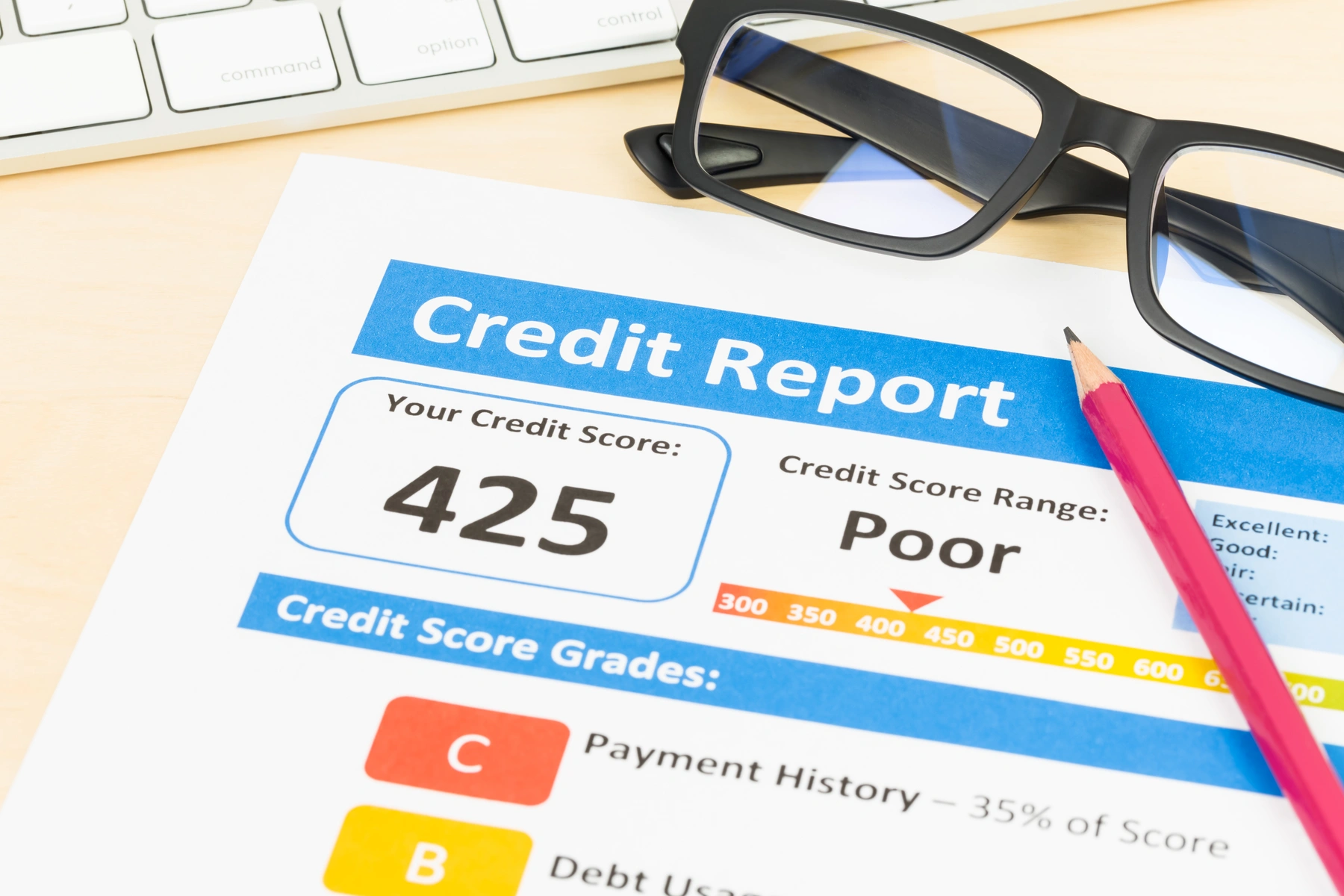

For the tens of millions of Americans struggling with collections, charge-offs, or other credit issues, a car isn’t a luxury item; it’s a necessity. You need a car to get to work, to take the kids to school, and to live your life.
When your credit is damaged, the need for a car can lead you into leases that end up costing you thousands of dollars more than they should. And that need is exactly what some dealers and lenders are counting on.
Knowing the lay of the land before you ever step foot onto a car lot is the most important thing you can do to protect yourself.
The Credit Score Reality Check
What Lessors Actually Require
To lease a car, you need better credit than to buy one, and the reasons are pretty straightforward. When you lease a car, you don’t actually own it. If you default, the leasing company doesn’t have much recourse, because you didn’t have that much invested in the vehicle in the first place.
As Kelley Blue Book explains it, when leasing you have little or no skin in the game, and all you stand to lose is whatever down payment you made. That lack of equity makes leasing companies much more finicky about approvals.
According to Experian Automotive, the average credit score for new-car lessees in the United States is 753. That’s not a typo. A full 83 percent of all new-vehicle leases go to borrowers with scores above 660. Borrowers with scores under 500 account for a mere 0.27 percent of leased vehicles.
If your credit score is in the 500s or low 600s, you’re playing in a game that was designed for someone else.
The Score on Your App Is Probably Wrong
Here’s something almost everyone gets wrong: the credit score you see on Credit Karma, your bank’s app, or most free monitoring services is probably a VantageScore. Few captive lenders use VantageScores at all, preferring FICO’s auto-enhanced credit scores, which can be 40 to 60 points higher or lower than your VantageScore.
So, that 640 you thought you had might be a 590 to Toyota Financial Services or GM Financial. Spend the few bucks to buy your actual FICO Auto score from myFICO.com before you head to the dealership. It will save you from the gut punch of walking in assuming you’ll qualify for one interest tier only to find you’re actually two tiers deeper.
What Bad Credit Actually Costs You on a Lease
The Money Factor Penalty
Leases don’t use interest rates like other financing products. Instead, they use something called a money factor. This is a small decimal number that represents your finance charge.
If you multiply a money factor by 2,400, you get the approximate APR equivalent. A prime lessee might get a money factor of 0.00125, which is roughly equivalent to 3 percent APR. But a subprime borrower on the exact same car could see a money factor of 0.0035, which works out to roughly 8.4 percent APR.
That spread is huge in dollar terms. Industry examples show that a prime lessee who is paying about $350 per month with $2,000 due at signing on a mid-range sedan could be looking at about $489 per month with $3,500 due at signing if their credit is subprime. Over a standard 36-month lease, that cost difference can be $8,600 or more for the exact same car.
The Hidden Markup Nobody Mentions
The money factor your lender sets is called the buy rate. But there is another layer that most consumers don’t even know about. Dealerships are allowed to mark up the money factor above the buy rate and keep the difference as profit.
Research from the Center for Responsible Lending shows that dealerships impose an average hidden interest rate markup of 2.47 percent above the buy rate across all borrowers. For consumers with weaker credit, that hidden markup ranges from 2.84 percent to 5.04 percent.
That isn’t a rounding error. CRL estimates that across all consumers, dealer rate markups cost borrowers $25.8 billion in extra interest over the lives of their financing agreements.
Even worse, their research shows that rate markups increase the odds of default by over 12 percent and the odds of repossession by 33 percent for subprime borrowers. The very practice of marking up rates makes it harder for you to keep the car you’re paying extra to drive.
Where the Real Danger Lives
Enforcement Actions Tell the Real Story
To get a sense of the worst of the auto loan market, you need to look at what regulators have found.
In the last decade, federal and state authorities have imposed over $700 million in settlements and fines on auto lenders and dealers for predatory practices aimed at subprime borrowers.
The most significant was a settlement last year by 34 state attorneys general against Santander Consumer USA for funding subprime borrowers into loans they were very unlikely to be able to repay. According to court documents, nearly half of the subprime borrowers Santander funded between 2013 and 2015 defaulted on their loans.
California Attorney General Xavier Becerra said the company had “profited by putting these disadvantaged consumers in loans with exploding interest rates, on terms they could not meet.”
Bait-and-Switch Isn’t Just a Theory
In December 2024, the FTC announced its largest auto dealer settlement ever, fining Leader Automotive Group $20 million for systematic bait-and-switch tactics. Nearly 80 percent of customers were charged for add-on products they never asked for, with markups over 99 percent.
A month later, the FTC sued Lindsay Automotive Group after it found that 88 percent of customers paid more than $2,000 above the sticker price.
These aren’t just anecdotes. In August 2024, the FTC charged Fortune 500 dealer group Asbury Automotive with payment packing and racial discrimination. Black customers were charged $298 more on average for add-on products than white customers, while Latino customers were charged $214 more.
If you have bad credit, you are the exact target these dealers most want to take advantage of because you’re least likely to challenge them.
What Predatory Lending Looks Like
Last year, the CFPB and New York Attorney General sued subprime lender Credit Acceptance Corporation after it found that the company expected nearly 40 percent of its loans would never be paid off in full, but still issued them with average APRs of 22 percent.
CFPB Director Rohit Chopra said that the company was concealing the true cost of its loans to car buyers, causing financial distress.
In one instance detailed in the complaint, a customer with two dependent children was charged over $13,000 on a deal in which the dealer only required $5,614. After paying $7,600 to Credit Acceptance, her vehicle was repossessed and sold at an auction, and she was sued for an additional $7,500.
These stories aren’t aberrations. They are the inevitable consequence of a system optimized for extracting the maximum revenue possible from people with the least ability to defend themselves.
Alternatives to Leasing
Why You Should Buy Used Instead
If you have a credit score under 620, a lease is probably not the right product for you. The average credit score for a used-car loan is 691, more than 60 points below that for a lease. The vehicle itself is the collateral for a purchase loan, which means the risk to the lender is far lower and approvals are easier to get.
Credit unions are almost universally suggested by consumer advocates and finance experts as the place to start if you have bad credit and need to buy a car. They usually have more forgiving underwriting than banks or captive finance companies, and their rates are usually lower because they’re nonprofits. If you have a credit union nearby, that’s where you should begin, before you visit any dealership.
Lease Assumptions and Subscriptions
You can also assume a lease from someone looking to get out of theirs, through services such as Swapalease. The terms are often shorter and the payments already negotiated. But this is not a way to avoid credit score requirements, the leasing company still has to approve you for the transfer, and most now require at least a 680.
There are also car “subscription” services like Flexdrive or Hertz My Car that offer month-to-month access to a vehicle, either with no credit check or a minimal one. But there is a trade-off, these cost $500 to $1,000 a month or more, though insurance and maintenance are included, and you can walk away penalty-free whenever you want.
This could be a stopgap for someone who needs a car now while they try to raise their credit score.
If You’re Still Going to Lease
What You Can Negotiate
If you’ve decided you still need to lease despite the drawbacks, there are some things you can negotiate to make the process less painful. First, ask the dealer for the “buy rate money factor.” This is the interest rate the finance company charges the dealer before markup. You can check current manufacturer money factors on Web sites like CarEdge or Edmunds Forums, where members often post them.
If your score is very close to the threshold for a better interest rate, ask the dealer to ask the finance company to “bump” you to the better rate. If you have a 648 credit score, for example, and the cutoff for Tier 3 is a 650, sometimes the finance company will bump you up. This can save you hundreds over the term of the lease.
You can also ask if the finance company will accept multiple security deposits in lieu of a down payment. They are refundable at the end of the lease, and each one will reduce your money factor. Conversely, down payments are lost in the event the car is totaled or stolen. According to Edmunds, one-pay leases are almost guaranteed to get marginal applicants approved, assuming that such a large payment is feasible.
Negotiation Tips for Leasing
Don’t negotiate based on monthly payments alone. Dealers can manipulate that number by lengthening the term, inflating the residual, or hiding fees in the cap cost. Insist on seeing the money factor, residual, cap cost and each fee itemized and separate before you agree to anything.
Obtain financing from your bank or credit union prior to applying with the dealer. Even if it’s not the best rate, having a 2nd offer from a different party gives you leverage and a basis for comparison. Read every single line of the lease contract, especially the disposition fee, mileage penalties and wear and tear description. These are the items that subprime lessees get hit with the hardest.
Fix the Main Problem
Your Credit Report Could Be Falsely Hurting You
Before accepting any financing terms with bad credit, you might want to make sure your credit report is accurate first. Most people don’t realize how common credit report errors are, and misreported collections, balances and obsolete negative items can lower your credit score for no good reason.
If collections are hurting your credit score, they may be disputable. Collection agencies are known for reporting false information, failure to validate debts and harassing consumers in ways that violate federal law. You have rights under the FDCPA and FCRA, and by exercising your rights you can greatly improve your credit.
Take Action Before You Sign Leasing Papers
FightCollections.com can help you deal with any inaccurate, unfair or unverifiable collection accounts on your credit report. If the accounts are causing a bad credit report and shouldn’t be there, we can help you dispute them. Don’t allow a damaged credit report to talk you into a lease deal that will cost thousands of dollars more than it has to.
Have your report reviewed before you enter the dealer lot. The few weeks it takes to clean up errors and dispute any questionable accounts can be the difference between an affordable deal and one that will haunt you for years.
Contact FightCollections.com today to see what your options are.