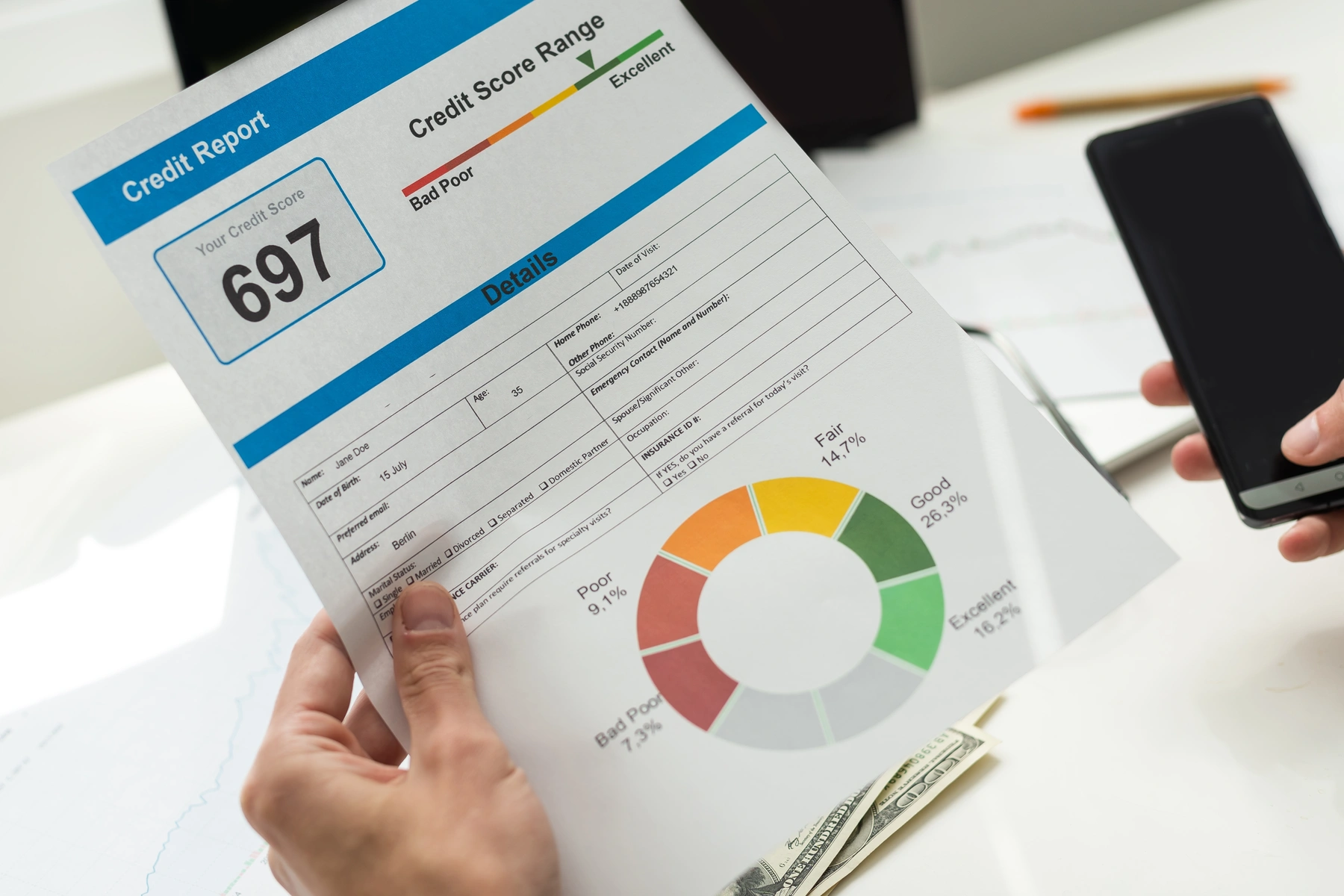

Few credit myths have real-life consequences like the credit dispute myth that says filing a dispute on your credit report will reduce your credit score.
It’s a fear that keeps millions of consumers in the United States staring at incorrect collections, misreported balances, and accounts that don’t belong to them, but are too afraid to file the one thing federal law created to protect them. The net result is a system in which the consumers who need to file disputes the most are the least likely to do so.
The question that remains is simple: does disputing a charge hurt your credit score? The short answer, as confirmed by every major credit reporting agency, every credit scoring company, and every federal regulatory body, is no.
But the long answer shows a system riddled with technical complexities, special mortgage rules, and a dispute process so broken that the Consumer Financial Protection Bureau (CFPB) has already fined each of the three credit reporting agencies for failure to properly investigate.
In this article, we are going to cover:
- What happens to your credit score when you dispute a charge
- Where the real risk actually is
- What the federal data says about consumers who file disputes versus those who don’t
By the end of this article, you will understand that the risk of disputing is almost always less than the risk of doing nothing.
What Actually Happens to Your Credit Score When You Dispute a Charge
The Direct Impact Is Zero
When you dispute information on your credit report that you believe to be incorrect, the credit reporting agency will place a temporary note on the account that says it’s being investigated. That note, by itself, adds or subtracts zero points from your credit score. Experian puts it very clearly on their website: “A dispute does not affect credit scores.”
Rod Griffin, Senior Director of Consumer Education and Advocacy at Experian, has made the same point very publicly: “There is no penalty for disputing information. A dispute does not affect lending decisions in any way. Consumers should absolutely dispute information they believe to be inaccurate.” This is not a controversial position among credit experts. It is the consensus.
US Bank makes an equally clear statement on their customer support page: “Disputing a transaction does not adversely affect your credit score.” Disputing a charge is intended to help consumers, not hurt them.
Where Temporary Score Movement Can Occur
The nuance comes in how different credit scoring models handle accounts that have been flagged as disputed. Older versions of the FICO credit score, including the Classic FICO credit score used in the majority of mortgage lending, may temporarily ignore a disputed account in certain calculations.
If the disputed account contains negative information (like a delinquency or a balance due), excluding it will give a temporary credit score benefit. If the dispute is lost, and the account is placed back in its previous state, the temporary benefit will be lost. The newer versions of the FICO scoring models (FICO 9 and FICO 10) include disputed accounts in the calculation, which eliminates the temporary benefit.
If you are monitoring your credit reports and scores for free via Credit Karma or Capital One, you should also be aware that they use the VantageScore, which treats disputes differently than the FICO scores used by lenders. Members of the myFICO forums have reported both scenarios.
One member documented a 24 point FICO score increase when they disputed an outstanding charge-off account with Equifax because the negative account was temporarily disregarded.
Another member reported a 60 point FICO score decrease after dispute comments were removed from several old derogatory accounts, which caused the accounts to be factored back into the score. The score changes were the result of the treatment of the account, not the dispute.
The Real Risk Assessment: Disputing vs. Ignoring
The Real Cost of Doing Nothing Is Quantifiable
The Federal Trade Commission (FTC) conducted the most comprehensive government credit report accuracy study ever in 2013. The study concluded that 1 in 5 consumers had at least one confirmed error on at least one of their three credit reports, and 1 in 20 consumers had errors that were causing them to be placed in a risk tier that would cost them more for credit.
The 1 in 20 statistic equates to 10 million consumers who may be paying more for credit because of errors they never bothered to dispute.
These errors have dollar and cents consequences. A consumer who has been incorrectly migrated from a prime credit score to a subprime credit score because of an incorrectly reported collection may pay thousands of dollars more in interest payments over the life of a car loan or a mortgage.
In 2021, Consumer Reports conducted an investigation using almost 6,000 volunteers and found even higher error rates. The study found that 34% of volunteers found at least one error on their credit reports, and 11% found errors related to debts they didn’t owe or payments that were incorrectly reported as late.
What Really Happens to Consumers Who Dispute?
In the FTC study, of the consumers who actually filed a dispute, 80% experienced some type of modification to their credit report.
Additionally, 20% of the consumers who disputed errors on their credit reports experienced credit score improvements, which placed them in a lower risk tier (and lower interest rates). One in 20 consumers experienced score improvements of more than 25 points.
Howard Shelanski, Director of the FTC’s Bureau of Economics, stated, “These are eye-opening numbers for American consumers. [The study’s] results should make it clear to consumers that they need to check their credit reports regularly to make sure they don’t include errors.” This wasn’t an advocacy statement from a consumer group; this was a statement from the federal agency charged with ensuring competitive markets.
The Only Case Where Disputes Really Matter
How Credit Report Disputes Are Handled by Automated Underwriting Software
The only case where an active dispute can actually cause a problem is with a mortgage application. Credit disputes are not hurting your credit. The problem is that Fannie Mae, FHA and USDA automated underwriting systems (the software that actually reviews your credit data) will flag the disputed derogatory item and potentially require special handling.
Fannie Mae’s underwriting system, called Desktop Underwriter, will first review your credit report with all of the credit items. If your mortgage application is approved with the disputed items, you’re good to go. If the file cannot be approved with the disputed credit report information, the system will run without that account.
If the loan is approved with the disputed accounts excluded, the lender can either use a new credit report with the dispute removed and resubmit the file, or they can manually underwrite the loan. Most lenders do not like to do manual underwriting because that means higher costs and more stringent guidelines.
Why Lenders Require Removal of Credit Report Disputes
The Federal Housing Administration (FHA) loan guidelines require the removal of all credit disputes except medical credit disputes during the mortgage process. If the aggregate outstanding balance of all disputed derogatory accounts exceeds $1,000, the file must be downgraded to a manual underwrite.
The United States Department of Agriculture (USDA) has a similar requirement but with a $2,000 threshold. Consumer advocates say that policy punishes borrowers for exercising their legal rights.
Chi Chi Wu, senior attorney at the National Consumer Law Center, co-signed a letter to the Federal Housing Finance Agency, arguing that penalizing consumers for exercising their FCRA dispute rights potentially violates the Equal Credit Opportunity Act. The clear advice is to complete all credit report disputes at least 6 months prior to applying for a mortgage.
Additionally, you should avoid any new credit report disputes during the mortgage application process unless it is an identity theft or fraud issue.
Why the Credit Report Dispute System Is Failing Consumers (and How It Affects Your Credit Score)
Understanding the e-OSCAR System
When you send a credit report dispute letter to a credit reporting agency with supporting documents, that letter goes into a system called e-OSCAR. e-OSCAR is an automated credit report dispute system that is jointly owned by the three major credit reporting agencies.
A credit reporting agency employee reviews your credit report dispute, selects one of 29 standardized credit report dispute codes to categorize your issue and then sends that credit report dispute code, along with minimal additional information, to the original creditor or collection agency that placed the item on your credit report.
A 2007 Congressional report found that the same 4 codes were used in over 90 percent of all credit report disputes. The National Consumer Law Center (NCLC) documented in their landmark credit report dispute study that as many as 80 percent of consumer credit report disputes are received in the form of written credit report dispute letters, often with detailed explanations and documentation. All of that credit report dispute documentation is reduced to a 2 or 3 digit credit report dispute code.
Ariel Nelson, a Senior Attorney at NCLC, explained that the inherent bias is akin to a “judge who always enters a not guilty verdict without hearing the evidence.”
What the Enforcement Record Reveals
Federal authorities have brought enforcement actions against all three major credit bureaus for mishandling disputes. In January 2025, the CFPB imposed a $15 million penalty against Equifax for ignoring consumer documentation, allowing previously deleted errors to reappear, and using faulty software that generated incorrect scores for hundreds of thousands of consumers.
In the same month, the CFPB sued Experian for conducting what it called “sham investigations” rather than properly investigating disputes. TransUnion was charged as a recidivist in 2022 for violating a prior consent order. CFPB Director Rohit Chopra stated, “TransUnion is an out-of-control repeat offender that believes it is above the law.”
These enforcement actions confirm that when disputes are mishandled, the fault lies with the bureaus, not with the consumers who filed them. For consumers, the enforcement actions have an important consequence. The system is rigged to resolve disputes in your favor if you have documentation, even if the bureaus needlessly make the process difficult.
An unsuccessful initial dispute does not mean the information is accurate. It may mean only that the investigation was faulty, which is precisely what federal regulators have found time and again.
Credit Card Charge Disputes: A Separate Process with Separate Protections
What the Fair Credit Billing Act Guarantees
Disputing a charge on your credit card statement is a completely different legal process from disputing inaccurate information on your credit report. Credit card charge disputes fall under the Fair Credit Billing Act, which mandates that the issuer must acknowledge your dispute within 30 days and resolve it within two billing cycles.
During the investigation, the issuer may not report the disputed amount as delinquent and may not attempt to collect the disputed amount from you.
Under federal law, your maximum liability for unauthorized credit card charges is $50, and most major issuers offer zero-liability policies. If the issuer fails to follow FCBA procedures, it forfeits up to $50 of the disputed amount even if the charge ultimately proves valid. These protections are in place explicitly to encourage consumers to dispute suspicious or erroneous charges without risk.
Why Credit Card Disputes Do Not Touch Your Score
A credit card billing dispute is a conversation between you and your card issuer about a specific transaction. It doesn’t create a dispute code on your report, it doesn’t change the way your account is scored, and it doesn’t indicate to future lenders that you’re a risk. The creditor reviews the charge and either removes it or rules it valid.
The one time a credit card dispute might indirectly affect your score is if the creditor changes your reported balance or credit limit during the review period, which can affect your utilization ratio. This is uncommon and only temporary. The actual dispute won’t have any effect on your score whatsoever.
The Risk You Can’t Afford to Take Is Saying Nothing
Reframing the Risk Question
The question was never whether disputing a charge hurts your credit score. The question is what happens to your credit score, your interest rates, and your financial future if you leave errors unchallenged. The FTC found that one in five Americans had a confirmed error. Consumer Reports found the number to be as high as one in three. The cost of those errors is measured in higher monthly payments, denied applications, and lost opportunities over time.
Filing a dispute does not hurt your credit score. Every major authority says so. What may hurt your credit score is the outcome of the dispute, and all the data indicates the outcomes favor consumers who take action. The 20 percent of consumers in the FTC study who were moved into better credit tiers as a result of disputing didn’t get there by saying nothing.
The risks of disputing are limited and contained: potential temporary changes to your credit score from outdated FICO scoring models, which will be resolved once the dispute is resolved, and issues related specifically to mortgages that you can avoid simply by timing your dispute correctly.
The risks of not disputing are wider and more far-reaching: You’ll be paying higher interest rates. You’ll be getting denied for mortgages and jobs. You’ll be allowing a system that federal regulators have found to be fundamentally flawed on multiple occasions to define your financial identity without challenging it.
Get Help from FightCollections.com
If you’ve obtained your credit reports and discovered accounts you don’t recognize, balances that seem incorrect, or collections that shouldn’t be listed, you don’t have to go through the dispute process alone.
At FightCollections.com we know how to identify inaccurate and unverifiable information on your credit reports and dispute those items through the proper legal channels provided by the Fair Credit Reporting Act.
Visit the FightCollections.com website today to find out how the dispute process works and to explore how our experienced staff can support your efforts to manage your credit report.
The only credit score risk you should be worried about is the risk you’re taking by doing nothing at all.