Most people think that opening a savings account will hurt your credit score. This is not true. Having a savings account is not reported to the credit reporting agencies, so credit scoring models like FICO or VantageScore are not affected by it.
However, there are some instances where bank accounts can affect credit scores. For instance, if someone sends the account to a collection agency, it will be recorded on your credit report. A recent survey found that 67 percent of Americans believe in at least one common credit myth. The most common myths are that savings accounts affect credit scores and that checking credit scores can lower credit scores.
Credit scoring models are based on the following factors:
- Credit history
- Credit utilization ratio
- Credit history length
- Credit mix
- Credit inquiries
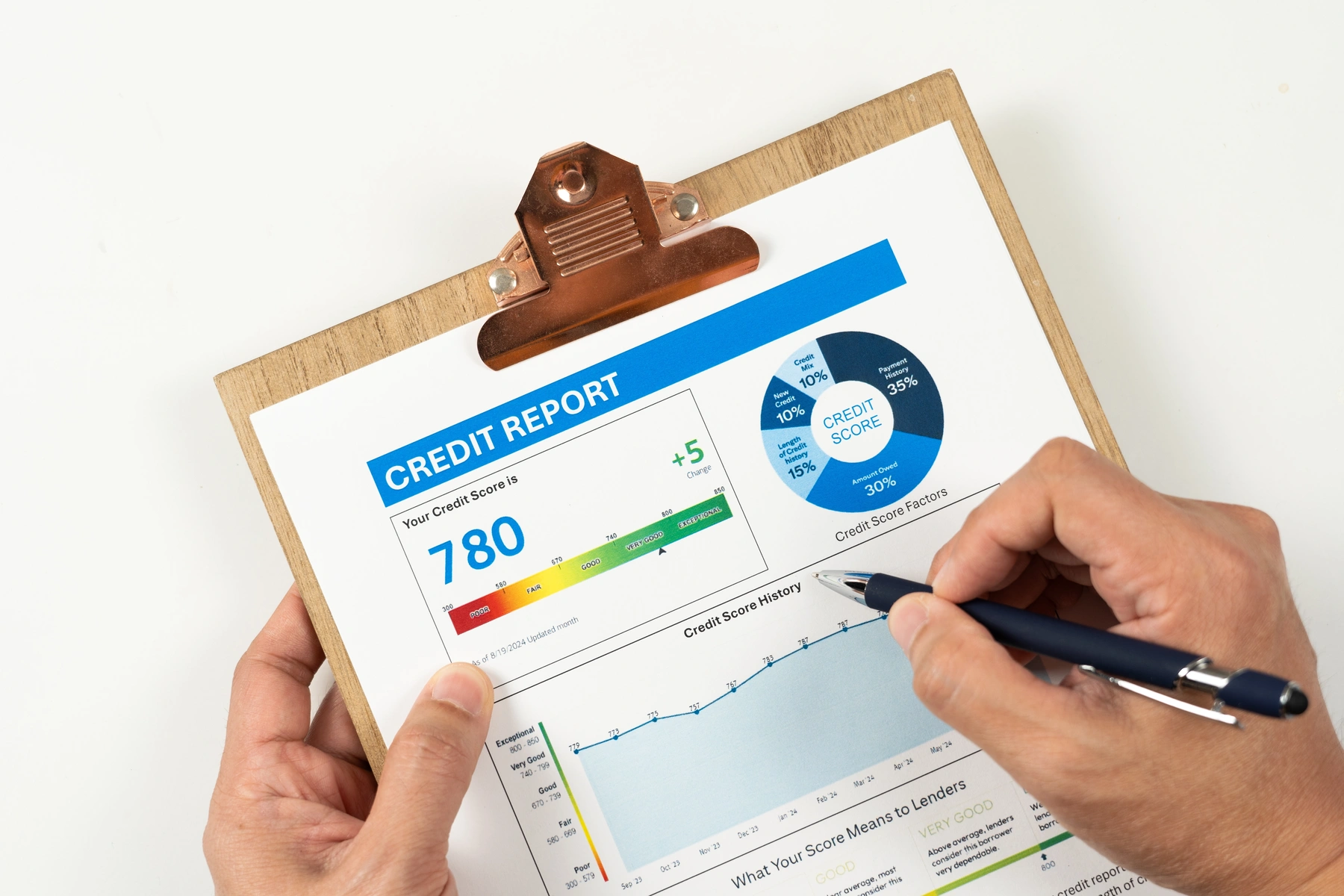
Credit history is the largest factor at 35 percent of the total credit score, followed by credit utilization ratio at 30 percent, credit history length at 15 percent, credit mix at 10 percent, and credit inquiries at 10 percent. Credit scores do not take into account how much money is in bank accounts. There is no credit score factor associated with having a savings account, checking account, or even just a pile of cash.
What the Credit Scoring Models Intentionally Omit
FICO clearly states in its Consumer FAQs that credit scores do not consider the amount of cash you have, so the amount of money you save will not affect your FICO Scores. Experian goes into further detail on its Consumer Blog. Since a savings account does not involve borrowing, it will not be listed on your credit report.
This distinction is crucial. The credit scoring model was intended to evaluate the way you borrow money, not the way you save money. If you have $100,000 in savings but no credit history, you will not have a FICO credit score. If you have $12 in savings and a flawless history of credit card payments, you will have an excellent credit score.
This design decision has had huge repercussions, which is part of why the Consumer Financial Protection Bureau has concluded that nearly three-fourths of Americans with no emergency savings had credit scores below 660. The credit system was never designed to reward savers.
What Actually Happens When You Open a Savings Account
The ChexSystems Check That Most People Never Even Heard Of
When you walk into a bank or apply online to open a savings account, you will be subject to a background check of sorts. But this is not a credit check, at least not in the way that most people think of it. Instead, the bank will conduct a soft inquiry with a specialized consumer reporting agency called ChexSystems or a similar service called Early Warning Services.
ChexSystems is currently used by approximately 80 percent of U.S. commercial banks and credit unions. It collects information on your deposit account history, such as overdrafts, bounced checks, accounts closed by the bank, and unpaid fees. It generally reports negative information only, and any individual record will remain on your report for five years.
The most important thing for you to remember as a consumer is that ChexSystems will not show up as an inquiry on your Equifax, Experian or TransUnion credit report. It will not impact your FICO score or your VantageScore. ChexSystems and the credit reporting bureaus are entirely separate.
When a Bank Will Actually Pull Your Credit
While the overwhelming majority of large banks use nothing but ChexSystems or Early Warning Services to screen applicants for savings accounts, there are some exceptions to the rule. Certain banks and credit unions will initiate hard credit pulls when you apply for a deposit account.
For instance, Skyla Credit Union very clearly states on its website that a hard inquiry will occur when you open a checking and/or savings account. Other banks that have been known to do a hard pull include: Woodforest National Bank, Neighbors Federal Credit Union, and Department of Commerce Federal Credit Union.
A hard pull for opening a bank account will cost a consumer 3 to 5 credit score points temporarily. This will age off within a few months, but it's a real effect that consumers should be aware of before applying.
If you are going to be applying for a mortgage or auto loan in the near future, it's worth asking any bank or credit union directly if they are going to do a hard pull before you agree to open the account.
The Hidden Dangers Where Savings Accounts Can Hurt Your Credit
The Overdraft-to-Collections Pipeline
The most common way that a savings or checking account can hurt your credit score has nothing to do with opening the account. It has to do with letting the account go negative and then not resolving it. The process is straightforward. Your account goes negative due to an overdraft or fees. The bank charges fees on top of the overdraft. If you don't pay the negative balance, then the bank will charge off the debt (usually 60 to 120 days) and sell it to a 3rd party debt collector.
Once that debt collector owns the debt, they can and will report it to Equifax, Experian and TransUnion. The collection account will remain on your credit report for 7 years from the date of original delinquency, and will affect your credit score the whole time.
When Forgotten Accounts Become Collection Nightmares
One of the most destructive scenarios is when accounts that consumers thought they had closed get sent to collections. The bank charges a monthly maintenance fee after the consumer thought the account was closed. The fee puts the account into a negative balance. The bank adds additional fees. A few months later, it all gets sent to collections. This can happen even with small amounts.
Although the newest versions of the FICO scoring model disregard collection accounts under $100, some older versions of the FICO model used by lenders still consider all collection accounts. A $35 bank fee that turns into a $150 collection account can still dog consumers for years. This is also where shady debt collectors come in. Debt collectors may attempt to collect on debts that were already paid, that are beyond the statute of limitations, or that were never properly verified. Consumers have the right to demand verification of the debt under the Fair Debt Collection Practices Act (FDCPA), and they should exercise that right before paying anything on an old bank account debt.
New Types of Products That Are Blending Savings and Credit Together
Credit-Builder Loans You’re Also Using to Save
There are a growing number of financial products that are actively blending savings and credit reporting together. None of these products were available 10 years ago and they represent a major shift in the potential for savings information to be used within credit reporting.
Self, Chime and CreditStrong all offer products where monthly payments are made into something akin to a savings account, while at the same time the payments are reported to the credit reporting agencies as payments on a loan or credit card. Self has found that customers who started with credit scores under 600 had an average credit score increase of 47 points after 12 months of on-time payments, according to a study by TransUnion in 2025.
These aren’t savings accounts, but they’re in a grey area and it can be confusing for consumers. When someone opens a Self credit-builder loan and sees their savings balance increase as their credit score increases, they might start to feel that the advice that savings accounts have no impact on your credit score is wrong even though it’s still technically accurate when it comes to typical bank savings accounts.
Alternative Credit Scores That Consider Banking Data
Perhaps the most important shift, however, is the development of credit scores that incorporate banking and savings data directly.
UltraFICO, from FICO and Experian, allows consumers to opt-in to using their checking and savings account data in determining their credit score. According to FICO, 70% of consumers who have an average balance of $400 or more in their accounts could potentially have an UltraFICO Score that is higher than their traditional FICO Score.
VantageScore took it a step further with the launch of its VantageScore 4plus model in 2024, which considers open banking data including checking and savings accounts. In pilot programs with Patelco Credit Union and Michigan State University Federal Credit Union, 33% of subprime consumers and 41% of near-prime consumers were moved to a higher credit tier when the open banking data was factored into the scoring model. This isn’t just a marginal improvement, for one in three subprime borrowers, their banking behavior paints a very different picture of their creditworthiness than their credit file does.
What the Regulators Are Doing
Open Banking
Federal regulators have taken notice of this disconnect between banking behavior and access to credit. In October 2024, the Consumer Financial Protection Bureau finalized its Section 1033 open banking rule, which would require banks to share consumer data, including balances and transaction history, with third-party companies when consumers authorize it.
“Too many Americans are stuck in financial products with lousy rates and service,” then-CFPB Director Rohit Chopra said at the time. “This rule will give people more power to get better rates.” If the rule were to ultimately go into effect, it would enable consumers to share their savings data with credit scoring companies.
But the rule was stayed in July 2025 by the new leadership of the CFPB, and there’s uncertainty about whether it will ultimately be implemented. In August 2025, the CFPB issued an Advance Notice of Proposed Rulemaking, a sign that it may revise the rule rather than finalizing it as written.
Enforcement Actions Highlight System Flaws
The disconnect between banking behavior and credit reporting has already led to harm for consumers, and regulators have intervened.
In 2017, the CFPB levied a consent order against JPMorgan Chase for a $4.6 million civil penalty related to violations on checking account screening information. The then-director of the CFPB, Richard Cordray, provided the following explanation for the enforcement action, “because Chase did not have adequate processes to ensure the accuracy of the information it was reporting about consumers, and failed to properly disclose the disputes and denials of applications, the Consumer Bureau is imposing a penalty.”
While the consent order related to ChexSystems data, and not data on one of the three major credit bureaus, the same principle applies. Banks are providing information about you to screening agencies to determine your ability to obtain an account, and the accuracy of that information is not guaranteed. You have the same rights under the FCRA to dispute ChexSystems reports as you do to dispute credit reports.
Conclusion
What This Means for Your Credit Report Today
The basic answer is still the same. Opening a standard savings account at a typical American bank will not impact your credit score. It will not show up on your credit report and the ChexSystems inquiry used to screen your application is not visible to FICO or VantageScore.
But the exceptions are important to keep in mind. If you are opening an account at a credit union, ask them whether they will perform a hard credit inquiry. If you have ever abandoned an overdrawn account, you need to understand that the outstanding balance may be in collections and could be actively hurting your credit report right now. And if you are using a credit-builder product that ties savings to credit reporting, you need to understand that your payment history on that product will definitely impact your credit score.
The separation between savings accounts and credit scores is real, but it is slowly developing holes from all sides. Alternative credit scoring models, open banking, and new financial products are all moving toward the same outcome. Your savings behavior tells a story about your creditworthiness and the industry is slowly learning how to read it.
Take Action to Protect Your Credit Report
If you have items on your credit report that you believe are not accurate, whether they are from a bank account that you let go into collections, a debt that you have already paid, or an account you never opened, you have legal rights. Collection agencies are required to validate debts when you dispute them, and credit bureaus are required to investigate disputes.
Do not contact collection agencies directly. Do not admit that you owe debts you are not certain you owe. And do not assume that a small bank account fee that went to collections is not worth fighting. Under the FDCPA and FCRA you have powerful legal rights that collection agencies hope you never learn about.
FightCollections.com specializes in helping consumers remove inaccurate and unfair items from their credit reports. If you are struggling with collection accounts from old bank debts, overdraft fees you do not recognize, or any other disputed items on your credit report, contact us for a free consultation.
You deserve a credit report that accurately reflects who you are, not one distorted by the errors and deceits of debt collectors.