
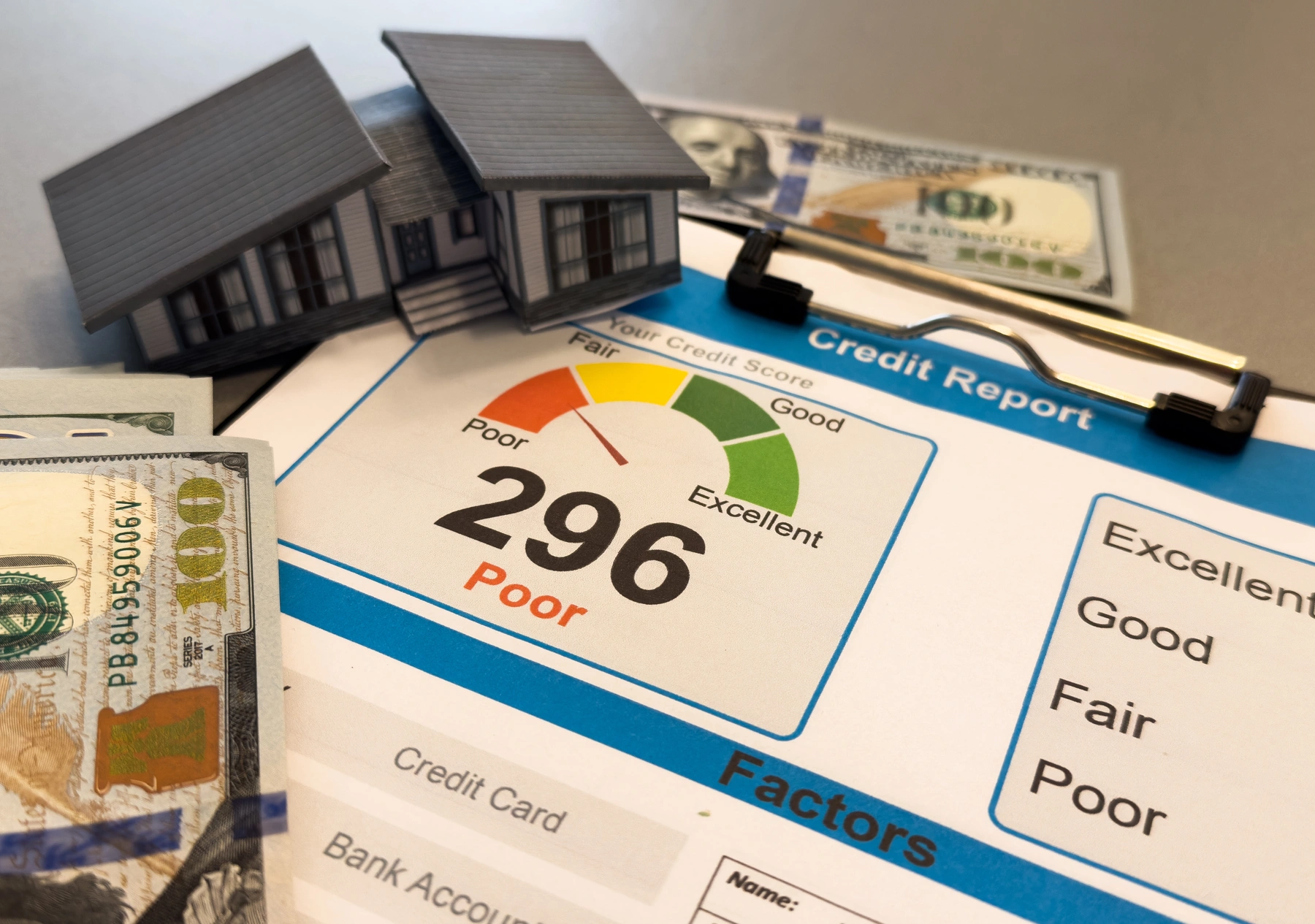
You have probably checked your credit score at some point. Maybe it was through a banking app, a free monitoring service, or a pre-approval letter that arrived in the mail. The number staring back at you felt definitive, like a grade stamped on your financial transcript.
But what if that number is wrong? Not wrong in the way a restaurant overcharges you by a few cents, but wrong in a way that costs you thousands of dollars over the life of a mortgage, pushes you into a higher insurance bracket, or gets your loan application denied at the dealership. That is not a hypothetical scenario.
Why Healthy Skepticism Is Your Best Financial Tool
Most consumers treat their FICO score the way they treat a doctor’s blood pressure reading. They assume the system producing the number is reliable, the data feeding it is accurate, and the institutions interpreting it are using the same version they saw online. Every one of those assumptions deserves scrutiny.
The credit reporting system in the United States was not designed to serve you. It was designed to serve lenders, insurers, and landlords who pay the three major credit bureaus for access to your financial history. You are the product, not the customer. Understanding that dynamic is the first step toward protecting yourself from a system that has very little incentive to get your score right.
What the Federal Government Found When It Actually Checked
The Landmark FTC Study That Exposed the Problem
The most rigorous investigation into credit report accuracy in American history was conducted by the Federal Trade Commission and published on February 11, 2013. Researchers from the University of Missouri-St. Louis and the University of Arizona audited nearly 3,000 credit reports belonging to 1,001 randomly selected consumers, working alongside Fair Isaac Corporation itself to verify their findings.
The results were staggering. One in five consumers had a confirmed error on at least one of their credit reports. Roughly 13% saw their actual FICO score change after those errors were corrected, and 5.2% had mistakes serious enough to push them into a worse credit risk tier. That 5% figure might sound modest until you scale it across the roughly 200 million Americans carrying credit files. It translates to approximately 10 million people actively being overcharged or denied credit because of someone else’s mistake.
Howard Shelanski, then-Director of the FTC’s Bureau of Economics, called the findings “eye-opening.” FTC Chairman Jon Leibowitz went further, describing the error rate as “highly troubling” in a nationally televised interview. The FTC’s 2015 follow-up study found that among consumers with unresolved disputes, 70% still believed the information on their reports was wrong.
Fast forward to 2024. In January, I wrote about the newest credit reporting complaint statistics from the Consumer Financial Protection Bureau. The situation has only grown more dire. Credit reporting complaints have remained the top source of complaints to the bureau for more than three years.
In 2024, the CFPB received over 2.5 million complaints about credit reporting, a 182% increase over the monthly average for the previous two years. Complaints about “incorrect information on your report” rose 247% from a year earlier. About 70% of those complaints related to data belonging to someone else entirely.
In 2021, the big three credit bureaus provided meaningful relief in fewer than 2% of complaints the CFPB deemed covered. That’s right, folks. Of 100 people who complain about a credit reporting issue to the federal government, 98 get no relief. And about 90 of those people have already tried to resolve the issue with the credit bureau before involving the feds. There are multiple reasons why your credit score might be wrong. You also might not be looking at the right credit score at all.
The FICO version problem nobody talks about
When you say, “my FICO score,” you’re probably referring to one of at least 16 different versions of the FICO credit score in current use. The most common is FICO 8, which was introduced in 2009.
Until recently, however, anyone applying for a mortgage that would be sold to Fannie Mae or Freddie Mac had their credit evaluated with much older models dating to the early 2000s. Car lenders use industry-specific FICO scores that weight the underlying data differently. Your credit card issuer uses yet another FICO variant.
Each of these versions calculates the score differently, so the same data can produce different scores depending on which version a lender uses. Someone with a FICO 8 score of 740 might have a 720 with the FICO version used by their mortgage lender. That 20-point difference doesn’t mean the borrower got any riskier; it just means the underlying system is a mess that has never been standardized around a single FICO model.
The free score that might mislead you
The situation is more confusing when consumers view their scores for free. Credit Karma, Capital One, Chase, and dozens of other platforms show consumers a VantageScore credit score, which was developed jointly by the three major credit bureaus. VantageScore also uses a 300-to-850 range, which leads many consumers to believe the score is equivalent to a FICO score. It is not. A recent actuarial study by Milliman of over 4 million Fannie and Freddie mortgages showed that VantageScore 4.0 runs an average of 1.44% higher than Classic FICO.
For some borrowers, the average spread was 21 points. Lending professionals I interviewed say they often encounter borrowers who are surprised to find a 30-50 point difference between a free score and a tri-merge report.
The simple fact is, borrowers enter the mortgage market with a bad score. They are not aware they do not qualify for a particular rate tier. They have made application decisions based on a credit score that is not actually being used in the transaction. The free score is not really wrong, but it induces a false sense of security that is often shattering when it is removed.
What a wrong credit score actually costs you in real dollars
The mortgage math is brutal
Credit scores are not just abstract representations of creditworthiness. They are pricing mechanisms. Lenders price mortgages in 20-point increments. This means every notch up or down the FICO ladder impacts what you pay. If a borrower’s credit score is artificially suppressed by one tier, they are not merely inconvenienced. They are being overcharged for the entire life of the loan.
Based on late 2025 data, if we assume a $300,000 30-year fixed rate mortgage, the difference between a 620 FICO and 760 or better is about $156 per month or more than $56,000 over the life of the loan. For a $400,000 loan, the difference jumps to nearly $74,000 in excess interest. These are not corner cases. This is what it costs to get the credit score wrong for millions and millions of borrowers.
The damage extends well beyond your mortgage
The data on auto loan interest rates is similar. According to Experian, in the first quarter of 2025, borrowers in the top credit tier were paying 5.18 percent interest on new auto loans while those in the bottom tier were paying 15.81 percent.
Based on a $30,000 car loan over 60 months, that spread would cost the lower-tier borrowers over $9,500 in additional interest payments. Insurance pricing is probably the most underappreciated consequence of all.
In 2025, the Consumer Federation of America found homeowners with poor credit scores pay nearly $2,000 more per year on homeowners insurance, regardless of the risk profile of the home itself. In one remarkable finding, it showed that a homeowner with a poor credit score in the safest possible neighborhood is paying the same premium as a homeowner with an excellent credit score in the 71st percentile for disaster risk.
In other words, your credit score outweighs whether or not your house is going to burn down or float away.
The Dispute System Was Not Built to Help You
How the Process Is Supposed to Work
Under the Fair Credit Reporting Act, consumers have the right to dispute inaccurate information on their credit reports. Once a dispute is filed, the credit bureau must investigate within 30 days, extendable to 45 if the consumer provides additional documentation. The bureau forwards the dispute to the data furnisher, which is typically a creditor or collection agency. If the information cannot be verified, it must be removed.
That is the process on paper. In practice, consumer advocates and federal regulators describe a system that is broken at its foundation. The CFPB’s December 2025 analysis found that about 90% of consumers who filed federal complaints had already attempted to resolve the issue directly with the bureau. They turned to the government because the dispute process itself failed them.
Why the Bureaus Side with Creditors, Not Consumers
Chi Chi Wu, a senior attorney at the National Consumer Law Center who has testified before Congress on credit reporting multiple times, offers perhaps the most direct assessment of how the system actually operates. She describes the dispute process as a “travesty” and explains: “The fundamental problem with the credit reporting dispute process is the utter and complete bias against consumers. After a furnisher responds to a dispute, the bureaus’ main response is to parrot whatever the furnisher says.”
NCLC attorney Ariel Nelson reinforced that characterization, comparing the system to a courtroom where the judge always rules for the defendant. The credit bureaus do not independently investigate. They do not call consumers. They do not review the supporting documents consumers painstakingly gather and send. They simply ask the entity that reported the information whether the information is correct, and when that entity says yes, the case is closed.
This is not a conspiracy theory. It is the explicit finding of the nation’s top consumer financial regulator. CFPB Director Rohit Chopra put it bluntly in 2022: “America’s credit reporting oligopoly has little incentive to treat consumers fairly when their credit reports have errors.” The CFPB backed those words with enforcement actions, ordering Equifax to pay a $15 million penalty in January 2025 for flawed investigations and suing Experian that same month for conducting what the agency called “sham investigations” of consumer disputes.
Real People Who Paid the Price for Credit Report Errors
Denied at the Dealership Over a Coding Glitch
Nydia Jenkins of Jacksonville, Florida, was pre-approved for a car loan at $350 per month in January 2022. When she returned to the dealership three months later, an Equifax coding error had shifted her credit score by 130 points. The dealer denied her loan. She ended up at a buy-here-pay-here lot paying $504 per month, an extra $2,352 per year, for the same type of vehicle.
Jenkins was not alone. The Equifax glitch affected approximately 2.5 million consumers between March and April of 2022, with roughly 300,000 experiencing score shifts of 25 points or more. Jenkins brought a class action. Equifax’s CEO assured investors that the effect was not going to be “meaningful.” That extra $154 per month that Jenkins paid for years was apparently not meaningful enough.
An $18.6 Million Verdict Over a Mixed File
Julie Miller of Marion County, Oregon, learned in 2009 that her Equifax report was a mixed file. It showed a false Social Security number, an incorrect birthdate, and collection accounts that were not hers.
Over two years she contacted Equifax eight times, by letters, phone calls, and faxes. Equifax never investigated. One of its own representatives testified at trial that company policy was to investigate and correct files only after a lawsuit was filed. Miller’s complaints were routed to a subcontractor overseas. A federal jury awarded her $18.6 million, later reduced to $1.8 million on appeal.
The case remains one of the largest individual verdicts under the Fair Credit Reporting Act.
Conclusion The System Will Not Fix Itself
The evidence is all one way, from every source that has looked at it.
Federal studies say one in five credit reports contains errors. CFPB complaint data shows the problem growing by orders of magnitude. The dispute system is structurally biased toward the entities reporting information rather than the consumers harmed by it. And the proliferation of scoring versions ensures that the number you see online is almost certainly not the number a lender will use to price your loan.
None of this is going to change because the credit bureaus suddenly decide to prioritize accuracy. Their customers are lenders and insurers, not you. Their revenue comes from selling data and scoring products, not from ensuring that the data is correct. The incentive structure points in exactly the wrong direction for consumer protection.
Take Action Before a Wrong Score Costs You Money
If you suspect errors on your credit report, or if you have been denied credit, charged a higher rate, or contacted by a debt collector over an account you do not recognize, do not assume the system will sort itself out.
Pull your free reports from all three bureaus through AnnualCreditReport.com, which now offers permanent free weekly access. Review every account, every balance, and every personal detail.
If you find errors, file disputes in writing via certified mail with return receipt requested. Be specific about each inaccuracy and include copies of any supporting documentation. Check all three bureaus because an error may appear on one report but not the others.
If the bureaus fail to correct legitimate errors, or if you are dealing with collection accounts you do not owe, you do not have to fight this alone.
FightCollections.com specializes in holding credit bureaus and debt collectors accountable under the Fair Credit Reporting Act and the Fair Debt Collection Practices Act. Under these federal laws, consumers who have suffered real harm from inaccurate reporting may have legal remedies available, including the potential recovery of damages.
Contact our team for a free consultation to understand your rights and your options.