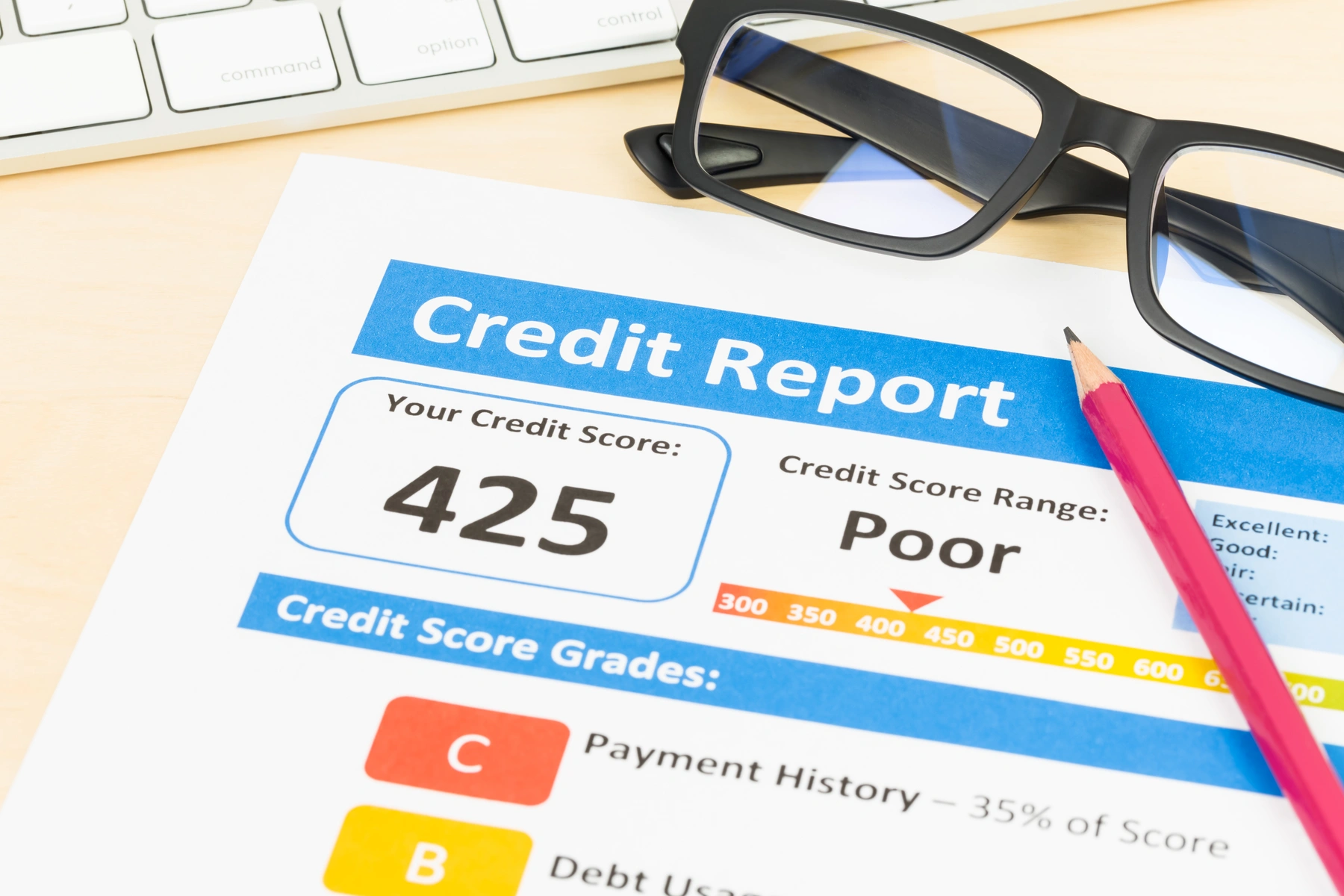

Afterpay is one of the most popular Buy Now, Pay Later (BNPL) services that Americans use to split purchases into four interest-free payments.
In 2024, an estimated 86.5 million people used a BNPL service, and that number is only growing. But the top question that consumers ask about Afterpay reveals just how confusing this space has become:
Does Afterpay affect your credit score?
The short answer is more complicated than Afterpay wants you to believe. While the company does not report any payment data to the three major credit bureaus, unpaid Afterpay debt can still land on your credit report through a back door that most consumers never see coming.
And the regulatory environment that was supposed to bring clarity to this industry collapsed in 2025, leaving consumers in a no-mans-land between outdated rules and emerging risks.
Why This Matters Right Now
The rules governing how BNPL services interact with your credit profile changed dramatically in 2025.
The federal government withdrew its only attempt to regulate Afterpay like a credit card, FICO announced new scoring models that will incorporate BNPL data for the first time, and states began passing their own patchwork of consumer protection laws.
If you use Afterpay, understanding this new terrain is not optional.
What Afterpay Actually Reports to the Credit Bureaus
No Hard Pull, No Reporting, No Credit-Building Benefit
When you sign up for Afterpay and make a purchase, the company performs a soft credit check. This is the same type of inquiry that happens when you check your own score through a free monitoring app. It does not appear on your credit report, and it does not affect your score.
The Pay Monthly product may involve a hard inquiry to set your APR, but the standard Pay-in-4 installment plan does not.
Here’s the part that surprises most people:
Afterpay does not report any payment activity to Equifax, Experian, or TransUnion.
Not your on-time payments.
Not your late payments.
Not your account balances.
As far as the major credit bureaus are concerned, your Afterpay account does not exist.
Block, the parent company that acquired Afterpay for $29 billion in January 2022, has been explicit about this policy.
Juan Hernandez, Head of Underwriting and Credit at Block, stated in a June 2025 blog post that the company “will not report to credit bureaus in the United States until we have evidence that BNPL data will be used to help customers’ credit scores, not hurt them.”
The company argues that current credit scoring frameworks were not built for short-term installment products and could penalize responsible BNPL users.
The Awareness Gap That Puts Consumers at Risk
Block’s caution might sound reasonable in isolation, but it creates a dangerous information gap for consumers.
According to a 2025 LendingTree survey, 62 percent of BNPL users mistakenly believe that paying their installments on time helps build their credit score. Only 13 percent correctly understand that it does not.
That means roughly two out of three Afterpay users think they are building credit when they are actually getting zero benefit from their responsible payment behavior. This misconception matters because it influences financial decisions. A consumer who believes Afterpay is building their credit history might choose it over a credit card that would actually report positive payment data to the bureaus.
But there is another way that Afterpay debt can hurt your credit score even if the company does not report it. And it’s a consequence that few consumers expect.
How Unpaid Afterpay Debt Can Still End Up on Your Credit Report
A Common Misconception: Afterpay Never Affects Credit Scores
Many people believe that Afterpay has no impact whatsoever on their credit report or credit score. The company itself contributes to this perception. But this claim obscures an important detail.
While Afterpay itself does not report to the credit bureaus, its parent company partners with several debt collection agencies. These third-party collectors do report to the credit bureaus. And unpaid Afterpay debt can eventually wind up with a debt collector.
How Afterpay Debt Collection Works
When you miss an Afterpay payment, the company charges a late fee. After a second missed payment, Afterpay will attempt to collect the debt itself. If the company cannot recover the funds, it may sell the debt to a third-party collection agency.
This is where the credit reporting issue arises.
Some of the debt collectors that work with Block (Afterpay’s parent company) report delinquent accounts to the credit bureaus. This means that unpaid Afterpay debt can appear on your credit report even though Afterpay itself does not report payment activity.
Not all debt collectors that acquire Afterpay debt report it to the credit bureaus.
What to Do If You Find Afterpay Debt on Your Credit Report
First, verify that the debt is legitimate and that the collection agency has the legal right to pursue it. You can dispute the entry with the credit bureau if you believe it is an error. If the debt is valid and you want it removed, you may be able to pay for deletion.
In some cases, a debt collector will agree to remove the credit reporting entry if you pay the outstanding balance.
The 2025 Regulatory Vacuum
The Rise of State Laws as Federal Oversight Collapses
The Consumer Financial Protection Bureau (CFPB) is the primary agency responsible for regulating consumer financial products in the United States.
In 2025, the federal government withdrew its only attempt to regulate Afterpay like a credit card, leaving a regulatory vacuum. But state-level consumer protections are not uniform, and they may not match the federal rules that applied before 2025.
FICO’s New Credit Scoring Models
A Big Change for Buy Now, Pay Later Users
In 2025, FICO announced new scoring models that will incorporate BNPL data for the first time. However, it is not yet clear how the scoring models will treat BNPL accounts compared to other credit obligations. It may take time for the new models to be adopted industry-wide.
But once they are, your Afterpay payment history could affect your credit score even if Afterpay itself does not report it.
The Bottom Line: Afterpay and Credit Scores
Does Afterpay affect your credit score?
The answer is technically yes, but not in the way that most people expect. Afterpay does not report payment data to the credit bureaus, which means on-time payments will not improve your score.
However, unpaid Afterpay debt can appear on your credit report if the company sells it to a third-party debt collector that reports to the bureaus. And new FICO scoring models announced in 2025 will factor BNPL accounts into credit score calculations for the first time. The cost of this oversight adds up over time.
How Afterpay Can Damage Your Credit Score Even Though It Never Reports to a Bureau
The Third-Party Collections Loophole
If Afterpay doesn’t report to the credit bureaus, how could it possibly affect your score?
The answer is what happens when you don’t pay.
After a missed payment, Afterpay assesses late fees that are capped at 25% of the purchase or $68, whichever is smaller. Your account is frozen, and the company will try to charge the payment method on file again.
If somewhere between 60 and 120 days go by without successful payment, Afterpay can sell or transfer the debt to a third-party collection agency. Most third-party collection agencies report unpaid debts to all three major credit bureaus.
A single collections account, even for a relatively small Afterpay purchase, can remain on your credit report for up to seven years. This creates what consumer advocates describe as an “asymmetric risk.” You don’t get rewarded for on-time payments, but you’re penalized for missed payments.
The CFPB confirmed this loophole extends across the entire BNPL industry, with collection accounts appearing on credit reports and hurting scores even when the original BNPL loan was never reported.
Real-Life Consumers Are Being Blindsided
The confusion is real. Social media is littered with consumer complaints about Afterpay debts being sent to collections without notice.
One Threads user described being informed her Afterpay account had been sent to collections after one missed payment, plus additional fees. She’d lost her job and received conflicting information about whether she should pay the collection agency or Afterpay directly.
These are not isolated incidents. Consumers who thought they had a basic payment plan are suddenly dealing with a collections agency and a derogatory credit report. Afterpay doesn’t publicly disclose which third-party collection agencies it works with in the US, so consumers have no way to prepare for or respond to these events.
If a collections account from Afterpay appears on your credit report, and you believe it contains inaccuracies, that may be a dispute you can challenge under federal law.
How Afterpay Compares to Other BNPL Providers
Affirm Now Reports Everything
Not all BNPL providers handle credit reporting the same way.
Affirm became the first major BNPL provider to report all US loans to credit reporting bureaus, starting with Experian in April 2025 and TransUnion in May 2025. Every pay-over-time loan, including pay-in-four installment plans, now shows up on credit reports. Affirm explicitly markets itself as “the only major BNPL provider reporting all loans in the United States.”
Klarna, Sezzle, and Zip Take a Different Approach
Klarna reports its long-term interest-bearing loans to TransUnion, but not its popular pay-in-four plans.
Sezzle offers an opt-in credit builder tool called Sezzle Up that reports loan activity to Equifax, Experian, TransUnion, and Innovis. Outside the program, Sezzle does not report.
Zip, like Afterpay, reports nothing to the credit bureaus.
The upshot for consumers is there’s no industry standard for credit reporting among BNPL providers. Two consumers can make the same purchase from two different providers and experience vastly different outcomes.
If you need or want to build credit, the BNPL provider you choose is just as important as whether you make timely payments.
The Feds Stepped Back, and States Are Rushing to Fill the Void
The CFPB Rule That Was and Then Wasn’t
In May 2024, the Consumer Financial Protection Bureau (CFPB) issued an interpretive rule that would have classified BNPL digital accounts as credit cards under federal law. This would have meant that companies like Afterpay would have been required to investigate disputes, provide billing statements, and offer the same consumer protections that credit cardholders have enjoyed for decades.
But the rule never took effect. The Financial Technology Association sued, arguing that BNPL products are fundamentally different from credit cards. And after the presidential administration changed in January 2025, the CFPB began the process of repealing the rule. By May 2025, it was officially repealed.
And in June 2025, the agency confirmed that it would not be re-issuing any kind of replacement rule, explaining that the original interpretation had applied “an ill-fitting regulatory framework” to BNPL products.
New York Takes the Lead at the State Level
In the absence of any federal regulations, states have now begun to create their own. New York became the first to enact a comprehensive BNPL law when, in May 2025, Governor Kathy Hochul signed the Buy Now Pay Later Act. The act will require BNPL providers to become licensed in the state, will extend dispute protections to consumers, and will render loans offered by unlicensed BNPL lenders void. This means that lenders who haven’t received licenses will have no legal recourse for collecting debts.
Then, in December 2025, a coalition of seven state attorneys general announced that they were launching a joint investigation into the six biggest BNPL lenders, a list that includes Afterpay.
“As the federal government rolls back protections, it is up to the states to protect consumers and ensure they are fully informed about the products they are purchasing,” said Connecticut Attorney General William Tong, in a statement. “Buy now, pay later products can be a blessing or a curse, depending on the terms. It is our job to ensure that these companies are transparent and fair.”
The other states involved in the probe include California, Colorado, Illinois, Minnesota, North Carolina, and Wisconsin.
The Arrival of New FICO Scoring Models Could Radically Shift the Landscape, Someday
FICO Score 10 BNPL Models Are on Their Way
On June 23, 2025, FICO announced that its new Score 10 BNPL and Score 10 T BNPL models will be the first major credit scores to incorporate Buy Now, Pay Later data. The models were developed as part of a year-long study that FICO conducted with Affirm, which involved more than 500,000 consumer records.
Under the new models, multiple BNPL loans will be grouped together and reported as one, rather than each loan being reported as a brand new account, a move intended to keep frequent users from being unfairly dinged.
According to FICO’s research, 85% of consumers will see their score change by 10 points or less under the new models. Consumers with five or more BNPL loans tended to see score increases, or experience no change at all. The models were also designed to reward younger consumers who may have made their first foray into credit via BNPL, rather than a credit card.
The Catch That Matters If You’re an Afterpay User
Ok, here’s the thing: FICO’s new models can only score BNPL data that is actually reported to the credit bureaus. And Afterpay has very explicitly said it will not report that data. So even when FICO Score 10 BNPL becomes widely adopted, Afterpay users will not reap any benefits, unless Block changes its mind.
And since most lenders are still using FICO Score 8, a model that FICO released in 2009 and that has no awareness of BNPL whatsoever, the chasm between what’s theoretically possible and what consumers will actually experience could persist for years.
This is a really important point for anyone who uses Afterpay and is hoping that it will one day help their credit score. The scaffolding for BNPL credit reporting is being constructed, and Afterpay has declined to step inside. That means you avoid the downside risk, but you also will not reap the rewards.
What This Means for You as a Consumer
Treat Afterpay as Invisible Debt That Becomes Visible When You Fall Behind
The most important thing to understand about Afterpay and your credit score is the asymmetry.
Responsible use earns you nothing on your credit report. A single default can saddle you with a collection account that lingers for seven years. The CFPB’s own research shows that 61 percent of BNPL borrowers have subprime or deep subprime credit scores, and these are the consumers who can least afford a collections hit.
Do not assume that because Afterpay skips a hard credit check at sign-up, it cannot affect your credit down the road. If you use Afterpay, budget for those installments as seriously as you would any other bill.
Know Your Rights When Collections Come Calling
If an Afterpay debt ends up with a third-party collection agency, federal law still applies. Under the Fair Debt Collection Practices Act, collectors must validate the debt in writing if you request it.
Under the Fair Credit Reporting Act, information on your credit report must be accurate, verifiable, and complete. If a collection account stemming from Afterpay contains errors, incorrect balances, or lacks proper documentation, you have the right to dispute it.
The BNPL industry has grown so quickly that collection practices have not always kept up with consumer protection standards. Errors in balances, duplication of accounts, and incomplete documentation are not uncommon. You do not need to accept a negative mark on your credit report at face value.
The Bottom Line on Afterpay and Your Credit Score
An Evolving Landscape That Demands Attention
The answer to whether Afterpay affects your credit score is deceptively simple on the surface and deeply complicated underneath. Today, Afterpay cannot help your score and can only hurt it through the collections process. Tomorrow, new FICO models and state regulations may change that equation, but only if Afterpay decides to participate in the credit reporting system it has so far refused to join.
The regulatory retreat at the federal level means consumers are more exposed than they were a year ago. And the 62 percent of BNPL users who believe they are building credit through on-time payments are operating under a misconception that no one in the industry seems eager to correct.
Protect Yourself by Taking Action
If you have an Afterpay-related collection account on your credit report, do not ignore it and do not assume it is accurate. Review the account details carefully and compare them against your own records. If anything does not match, you have the right to dispute it.
At FightCollections.com, we specialize in helping consumers challenge erroneous and unverifiable items placed on credit reports by collection agencies. Whether it is an Afterpay debt that was reported incorrectly or a collector that failed to follow proper validation procedures, we can help you understand your options and fight back.
Visit FightCollections.com to learn more about how we help consumers take control of their credit reports.