
You're paying on your car loan and see that its interest rate is no longer representative of your credit profile. You wonder if refinancing to a lower rate is an option. Then, if you're like most consumers, your next thought is, "But will applying for a new loan hurt my credit score?"
It's a fair concern. It's also one of the most expensive misconceptions in consumer finance today.
A July 2025 report by TransUnion found that there are 18 million borrowers nationwide that are paying above-market rates for their auto loans. Those borrowers are collectively missing out on billions of dollars in savings, and for many of them, it's the fear of a credit score drop that has stopped them from acting.
The Short-Term vs. the Long-Term
The answer to the refinancing and credit score question is not a simple yes or no. You need to consider it from two different perspectives. In the short term, yes, the refinancing process initiates a handful of technical changes to your credit report that can result in a small, short-lived credit score decrease. In the long term, no, because the lower monthly payment often put you in a stronger financial position that will more than offset those short-term credit scoring effects.
Here's a closer look at what happens in both scenarios so you can make an informed decision instead of making one based on fear and uncertainty.
What Happens to Your Credit Score in the First 30 Days
The Hard Inquiry Impact
When you submit a formal application for a refinanced auto loan, the lender requests your credit report, which is a so-called hard inquiry that other lenders can see on your credit file. A single hard inquiry can lower your FICO Scores by fewer than five points, according to myFICO.com.
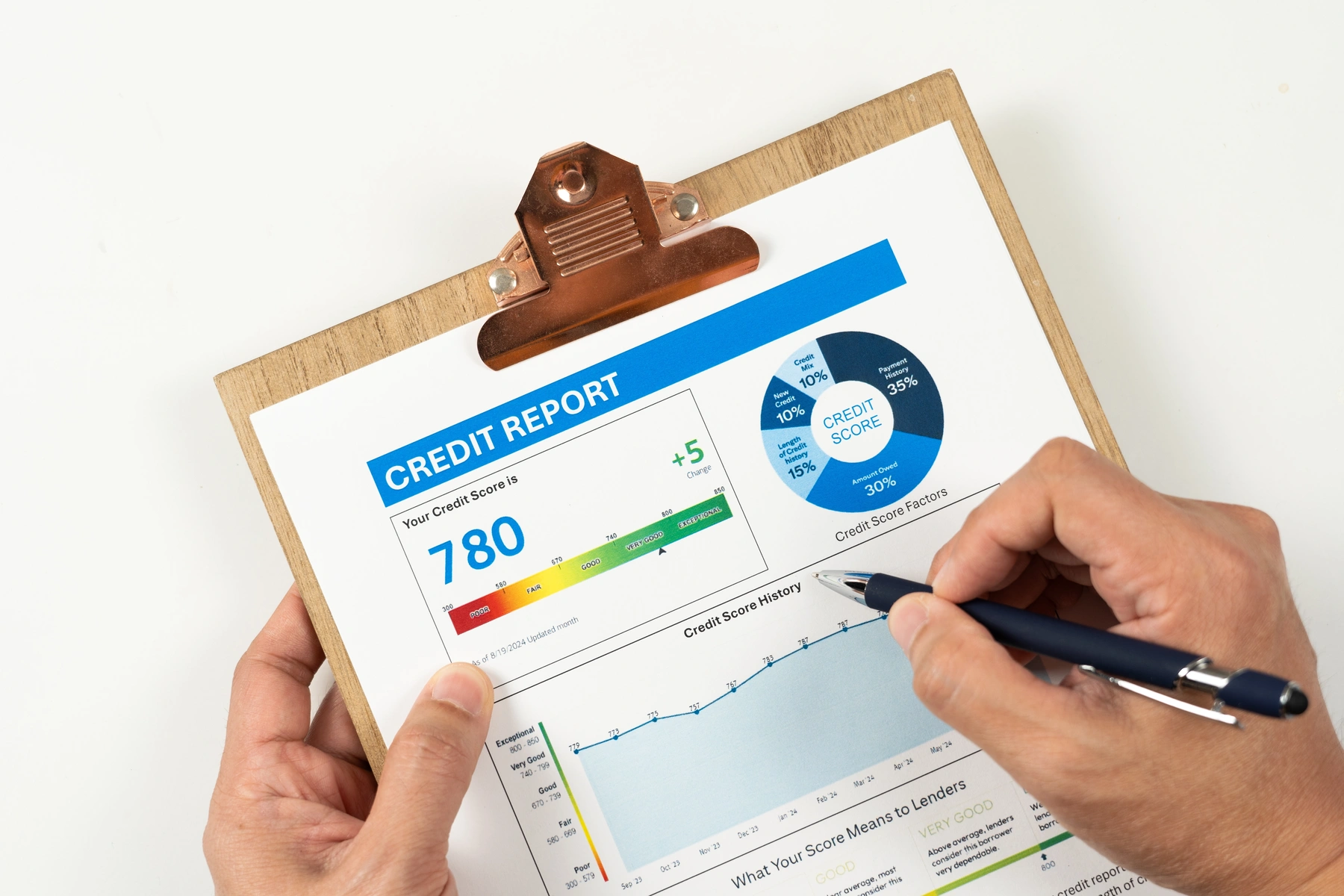
If you're like most people, you're surprised, as you've probably overestimated the impact of a hard inquiry because you're lumping it in with other derogatory marks, such as late payments or collections, which are much more significant. Hard inquiries account for only about 10% of your FICO Scores calculation. Your payment history, on the other hand, accounts for 35%. The hard inquiry itself will remain on your credit report for two years, but it will stop affecting your scores after 12 months under most scoring models.
The New Account and Utilization Impact
In addition to the hard inquiry, there are two other short-term effects of refinancing. First, when you close your existing loan and open a new one, it will lower the average age of the accounts on your credit report. The length of your credit history accounts for about 15% of your FICO Scores calculation, so a brand new account will bring down that average age.
Second, your installment utilization ratio will be reset. If you've paid down, say, half of your auto loan, you get credit for that on your credit report. A newly refinanced loan will go back to something close to the original 100% loan-to-value ratio, which isn't ideal for that factor.
Again, these are short-term impacts: The closed loan will remain on your credit report for 10 years and will continue to be factored into your length of credit history calculation, and your utilization ratio will improve as you make on-time payments on the new loan.
Credit scoring systems understand that it is perfectly normal for consumers to look for the best rate and have factored this into their credit scoring models so it does not penalize you. If you are rate shopping for an auto loan, multiple inquiries within a short period of time are all counted as a single inquiry for credit scoring purposes.
The rate shopping period allowed for FICO 8, 9, and 10 is 45 days, and 14 days for other FICO versions and VantageScore. The conservative approach is to keep your applications within a 14 day period to be safe. FICO also does not consider any auto loan inquiries in the 30 days prior to scoring your credit.
So if you apply and refinance within 30 days, the inquiry will not impact your credit score at all during this time period. What the Numbers Actually Show Experian's 2025 refinancing data shows that even VantageScore, which is a bit more sensitive to inquiries, typically only drops 5 to 10 points after refinancing. FICO typically drops less than 5 points.
For comparison, a single reported late payment can impact your credit score by 60 to 100 points. A collection can negatively affect your credit score by 100 points or more. The effect of a refinancing inquiry on your credit score is small compared to the negative affects that collections agencies and credit reporting errors can have.
The Long-term Credit Benefits That Most Articles Ignore
Lower Payments Make On-Time Payments Easier
This is where the short-term and long-term distinction matters. Payment history is the biggest factor in your credit score, and the biggest danger to your payment history is a monthly payment that is difficult to make. The amount of financial relief gained from refinancing is significant.
According to Experian's Q3 2025 report, the average consumer reduced their monthly payment by $77 and lowered their interest rate by approximately 2 percentage points. Savings reported by individual platforms are higher, with LendingTree reporting $142 per month and Caribou Financial reporting $159 per month on average.
Caribou Financial CEO Simon Goodall has translated those savings into more relatable terms, pointing out that given the median U.S. household has around $250 left over after all necessary expenses each month, the average reduction in monthly payments results in "almost a 50% increase in the average consumer's financial buffer." That extra buffer does more than reduce financial stress. It reduces the risk of missed payments, the single most impactful negative information that can appear on your credit report.
The Recovery Timeline
The general timeline for credit score recovery after refinancing tends to look like this:
- Month 1-3: The inquiry, the new account, and the credit utilization reset are all relatively new. If you experience any drop in your credit score, you will see it in this time period.
- Month 3-6: You have established a few months of on-time payments on your new loan. The hard inquiry is starting to lose potency with each month.
- Month 6-12: Most consumers will find that their credit scores have recovered or surpassed their original score. The hard inquiry will not be factored into your credit score after the 12-month mark, and every on-time payment you have made on your lower monthly payment loan is a positive mark on your credit report.
How Can You Minimize the Impact on Your Credit Score When Refinancing?
Initial Pre-Qualification With a Soft Inquiry
Most lenders now allow borrowers to prequalify for refinancing with a soft credit inquiry. This allows you to see your rates and terms without affecting your credit score. Lenders that currently offer soft pull prequalification include:
- Capital One
- Ally
- PenFed
- Caribou
- RefiJet
- RateGenius
The hard pull occurs if you decide to accept the loan terms and proceed with your application. This two-step application process allows you to shop around for rates and terms without any significant effect on your credit score. Use these soft pull prequalification options to compare rates and terms among multiple lenders before deciding which ones to formally apply with.
Bunching the Formal Applications Within a 14-Day Period
After prequalifying with your target lenders, it's essential to bunch the formal applications within 14 days to ensure that all credit scoring models count them as part of the same shopping event. Also, avoid missing a payment on your current loan. This can be a challenge during the refinancing process. Missed payments are more detrimental to your credit score than the hard credit pull.
What Hurts Your Credit Report Far Worse Than Refinancing Your Car Loan?
Inaccurate Information on Credit Reports
The Consumer Financial Protection Bureau's (CFPB) October 2024 Special Edition Auto Finance Supervisory Highlights reported that supervisory exams discovered that lenders were reporting thousands of inaccurate consumer loan details on credit reports. These inaccuracies included:
- Incorrect payment information
- Incorrect dates of delinquency
- Incorrect amounts owed after loan repayment or settlement
A hard credit pull might affect your credit score by five points or less, but reporting errors on your credit report can shave off 50 points, 100 points, or more.
In addition, these errors can remain on your credit report for years if they aren't disputed. This may have happened to you if you refinanced a car loan and the old lender continued reporting it, or the new lender inaccurately reported the loan. The CFPB received 52 percent of its consumer loan complaints about vehicle loans. Almost half of these complaints were about loan management issues, such as billing disputes and reporting errors after loan repayment or refinancing.
Collection Agency Involvement
Reporting errors can lead to further complications if not corrected. For instance, an old lender that fails to report the paid status after refinancing may report the loan as delinquent. The delinquent account can then be sold to a collection agency, which will start contacting you for a debt you don't owe.
Once the collection account shows up on your credit report, the damage can be severe, and it will be far worse than the effect of the hard credit pull.
Collection agencies aren't known for their consumer-friendly approach, either. They count on borrowers not knowing their rights or being too busy to dispute the information. That's why it's essential to make the distinction. A legitimate inquiry resulting from a refinance that may lower your credit score by a few points is a typical and healthy financial decision.
Refinancing Scams That Can Destroy Your Credit
How the Scam Works
The Federal Trade Commission has issued specific warnings about auto loan refinancing scams. In these schemes, fraudulent companies demand upfront enrollment fees of several hundred dollars, then instruct consumers to stop making payments to their current lender and pay the scam company instead. The company pockets the money while doing nothing to refinance the loan.
The consequences are devastating. While the consumer believes their refinance is being processed, missed payments pile up on the original loan. By the time the consumer realizes what happened, they may be facing not just a damaged credit score but the possibility of repossession.
How to Spot a Legitimate Lender
A legitimate lender or refinancing platform will never ask you to stop making payments on your current loan. They will never charge large upfront fees before providing any service. And they will always conduct a proper credit check as part of the application process, either through a soft pull for pre-qualification or a hard pull for a formal application.
If a company promises guaranteed approval regardless of credit history, demands payment before doing any work, or tells you to divert your monthly car payment to them, walk away immediately.
The Bottom Line on Refinancing and Your Credit Score
Meanwhile, the average refinancer in 2025 saved between $77 and $159 per month, money that makes staying current on all debts significantly easier.
Take Control of Your Credit Report Today
FightCollections.com specializes in identifying and disputing inaccurate items on consumer credit reports, including erroneous collection accounts and reporting errors that arise during loan transitions.
Our team understands the tactics that collection agencies use to pressure consumers into paying debts they may not legitimately owe, and we fight back on your behalf. Review your credit report today.
If something does not look right, reach out to FightCollections.com for a free consultation.